

I was really determined to not get pulled into all the Epstein stuff and was, for awhile, really pleased by my own forbearance. But that couldn’t really last and now I’m in and actively look forward to the time when I’m doing the dishes and can pop in another podcast with another unhinged Epstein conspiracy theory. What’s so pleasurable about this, I’ve realized, is — with JFK or any good conspiracy — that it really turns into a Rorschach Test of what you think is plausible. I’m far from being able to offer my own verdict on what I think was going on with Epstein, but I think I’m far enough in it that I can break it down into about six different theories of the case, each one of which offers kind of a different vantage-point on how you think the world works.1
The first is that Epstein is a “nothingburger.” I actually wrote a piece for Persuasion advancing this. The theory here is that Epstein certainly is guilty of some great number of the sex crimes for which he was sentenced and for which additional charges were about to be brought at the time of his death, that he really was connected with a large number of powerful people, but that he was basically a hanger-on, a somewhat gifted con man, and that the discovery of his existence shouldn’t change our underlying understanding of how the world works. The evidence pointing in this direction is largely the testimony of Ghislaine Maxwell. With time to think things over, Maxwell — if anything in her Florida testimony can be taken at face value — concluded that Epstein was, at the end of the day, a cheap trick. “He’s not that interesting,” she said. “He’s a disgusting guy who did terrible things to young kids.” But really, she insisted, it wasn’t on elaborate sex ring, there wasn’t a blackmail scheme. There was, she claims, a “lifestyle” that the outside world can’t understand and so there’s been a tendency to attach claims of conspiracy to what ultimately is about people with money or influence being magnetized to one another. A certain amount of what seems nefarious with Epstein is not particularly inexplicable. It’s not so crazy that different well-known people would hop rides on his jet or that he would cozy up to different well-known people. As Ezra Klein put it, “At the end of the day the Epstein estate was not actually that large. It’s not like he was sitting on billions of dollars.” He did have actual wealthy clients, and he may have stretched his importance to cultivating a vast network, but he did so by to some extent living beyond his means and it’s less than clear that he really left some vast footprint on the geopolitical landscape, as some of the more involved theories would have him doing. Some of the apparent bombshells in the Epstein case haven’t exactly detonated. The “Look Inside Jeffrey Epstein’s Manhattan Lair,” as The New York Times titillatingly titled one of its Epstein feature pieces, revealed dinner parties with crappy takeout food and long discussions about physics. The entertainment seemed often to center around a magician or a chalkboard wheeled out to sketch mathematical formulas. The excitement of one evening, as a letter by Woody Allen breathlessly reprinted by The Times, indicated, was the presence of an entymologist. Meanwhile, Maxwell — with many reasons not to lie — poured cold water on a few of the more popular theories. “This notion that he blackmailed men…I don’t believe that to be true,” she said. And of the idea that he was involved with Mossad or an intelligence agency, she said, “I would be very surprised if he did.” Epstein’s lawyer Alan Dershowitz — a deeply unreliable narrator in this case — nonetheless had the ring of common sense about it when he declared that Epstein said nothing to his legal team about intelligence ties. “That’s not something he would keep from his lawyers. That’s something he would tell his lawyers,” Dershowitz said. As Matt Taibbi argued on Racket News, the Epstein saga may be “the worst reported story of all time” with insinuations vastly outstripping evidence. If we stick to what we really know, the story often seems to collapse back into something much more quotidian than what the conspirators would like — someone who was “in between a money manager and a con man,” as Klein put it, who was guilty of sex crimes but wasn’t necessarily part of anything much larger than himself, and who certainly doesn’t warrant all the vast attention being paid to him.
We start to go down the rabbit hole a bit deeper when we try to work out exactly where the line was between his being a money manager and a con man. The argument on the side of his being a legitimate money manager was that, first of all, he really did work at Bear Stearns from 1976 to 1981 and there really was nothing particularly mysterious about that. He did fit the profile of what Ace Greenberg was looking for in junior recruits — “poor, hungry, and determined” and he really did have skills — a combination of being personable and good at math. The Vicky Ward profile of Epstein from 2003 — now more famous for what was cut — presents a largely-plausible image of an up-and-coming financier. At Stearns, he figured out a few skills that would prove marketable later on. He was an expert in options, which would be useful in tax evasion strategies for rich clients. And when he set himself up in his own business, dealing with tax strategies for the ultra-wealthy, it seemed to be of a piece with what he had learned at Bear Stearns. Seen in this way the business empire he gradually built for himself — and which was so perplexing when he first came into public consciousness around 2000 — does make a certain amount of sense. He had a unique set of skills in terms of understanding both a grey zone of offshore wealth and the needs of ultra-wealthy clients. In an interview with Ward, Leslie Wexner said, “I think we both possess the skill of seeing patterns. Jeffrey sees patterns in politics and financial markets, and I see patterns in lifestyle and fashion trends.” And to people who see Epstein as being entirely a scam, the accounts of him that surface in Ward’s profile depict someone who really was working hard. Ward describes him as being a combination of “real-estate agent, accountant, lawyer, money manager, trustee, and confidant” — and of being a brutally hard-nosed representative of his clients, something like a combination of Gordon Gekko and Reginald Jeeves. Given the current image of Epstein as this free-floating dark matter, there’s a surprising butler-like subservience in how he described himself to Ward: “I always describe [a billionaire] as someone who started out in a small home and as he became wealthier had add-ons,” he said. “It’s a large house that has been put together over time where no one could foretell the financial future and their accompanying needs.” The notion is that Epstein really did have a niche he had worked out for himself — not the kind of job that you would see in the help wanted pages but a plausible-enough job as the red right hand to a select clientele of billionaires, and if he also skimmed off the top, as Leslie Wexner later alleged, well, you would ultimately expect no less from Jeeves himself. Even some garish details of the Epstein story — like that in the mid-‘80s he was pitching himself as a ‘bounty hunter’ for missing wealth — do surprisingly seem to check out. An acquaintance recalled that he was with Epstein when they went together to the Cayman Islands and walked out with bank certificates that had been lost in the midst of offshore trades.
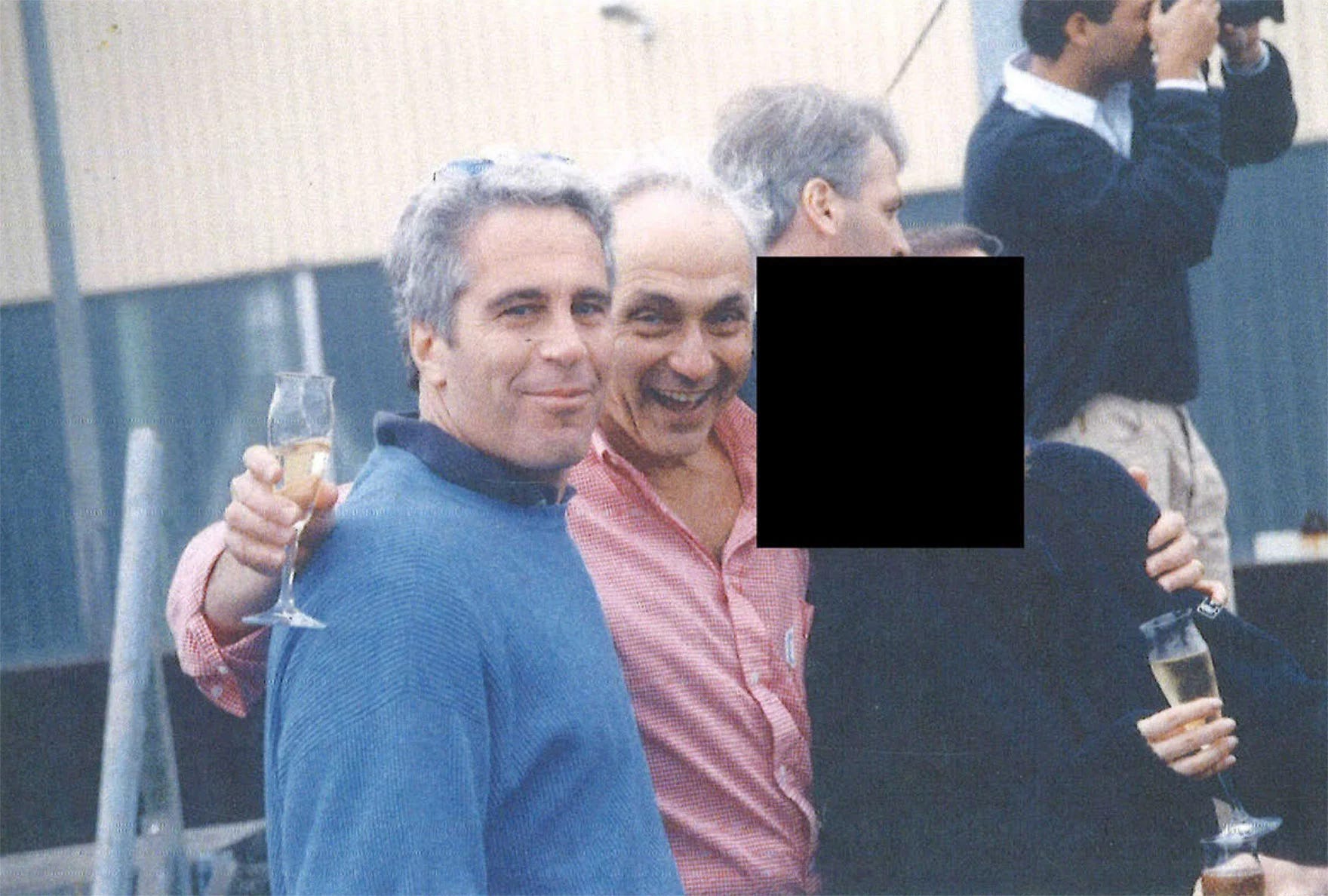
But even as Ward was reporting her largely favorable piece about Epstein, she also uncovered some of the darker side of Epstein’s finances. A critical point in his rise to wealth was his involvement in the Towers Financial Corporation, a complicated Ponzi scheme that bought up an insurance company and used that as a raiding vessel in a series of attempted takeovers. Steven Hoffenberg, who ran Towers, would end up serving 20 years in prison and in a series of jailhouse interviews with Ward depicted Epstein as a real villain of the operation — an architect of the scheme who at some point flipped and served as an informant for the prosecution and then got off scot-free while Hoffenberg took the whole rap. Epstein’s history as a con man comes a little more clearly into focus with Thomas Volscho’s discovery (later supplanted by New York Times reporting) of the story of Michael Stroll, a video game executive who was persuaded in 1982 to invest $450,000 with Epstein for a supposed crude-oil deal that Epstein promptly absconded with. If the original version of Epstein’s rise — that he left Bear Stearns in 1981 opening up his shop as a niche money manger for billionaires only — is a fabrication, the real story may be more like what happened to Stroll, that he used his reputation from Bear Stearns to run a series of crude scams and Ponzi schemes, which culminated in his partnership with Hoffenberg. To Hoffenberg, what Epstein really specialized in was “playing the box” — carrying out a financial scam with a psychological element involved so that “even if the crime was uncovered the victim would be unable to do anything about it, either because of social embarrassment or because the money was tucked away in a place where they couldn’t either find it or get it.” If the lines of Epstein’s ‘legitimate’ and ‘illegitimate’ businesses start to cross when he becomes Leslie Wexner’s right-hand man in 1987, it’s also possible to see that as part of the scam. Wexner’s financial advisor Harry Levin, asked to meet with Epstein, immediately identified him as a fraud, but Epstein somehow succeeded in getting himself hired anyway, convincing Wexner that the by-the-book Levin was somehow defrauding him and then gradually pushing out Wexner’s entire circle and running his operations much in the way that he seems to have run things for (and ultimately defrauded and betrayed) Hoffenberg. The image of Epstein that comes through here is something between Francis Urquhart of House of Cards and Ratfucker Sam of Succession, the person who is entrusted with the dark side of somebody’s operation and who, not entirely surprisingly, proves themselves wholly untrustworthy and bites the hand that feeds them. Thought about in this way, Epstein is both an outsized figure and also somewhat cut down to size. He comes across as a cartoon villain — endearing himself to his various employers by, as Ward wrote in 2021, clearly “lacking any sort of moral compass” — but also as being at the end of the day a con man subject to the vicissitudes of the con artist business. Volscho, a professor of criminology who seems to know more about Epstein than anybody alive, complicates some of the more lurid Epstein stories by claiming that, around 1986, Epstein was flat broke — with his New York City landlord suing him for non-payment of rent. From this vantage-point he seems less like an all-powerful mastermind and more just another creature of the garish ‘80s — think Jordan Belfort or Michael Milken — who managed to get out in time, moving on from the career-ending Ponzi scheme with Hoffenberg to greener pastures with Wexner and eventually Leon Black and laundering his reputation through his various institutional affiliations.
Where things really get tricky — I’ve heard people describe this as “a rabbit hole within the rabbit hole” — is when the notion of Epstein as an intelligence asset comes in. Once again, Ward is a critical source of information here. In 2019, in The Daily Beast, she reported the much chewed-over comment that Alex Acosta, the prosecutor who cut Epstein the 2007 sweetheart deal, had decided to back off because “Epstein belonged to intelligence.” Ward went significantly further in her 2021 Rolling Stone article when she reported, “Four separate sources told me — on the record — that Epstein’s dealings in the arms world in the 1980s had led him to work for multiple governments, including the Israelis.” Epstein himself had bragged that he used to work for the CIA. And the former Israeli agent Ari Ben-Menashe claimed that Epstein had deep ties within Israeli intelligence. In an online interview, the mathematician Eric Weinstein lays out an arresting picture of how Epstein might have functioned as an intelligence asset. Epstein, argues Weinstein, may well have been a later-day version of Eli Cohen, the Israeli spy who obtained access to upper levels of Syria’s political and military apparatus. Epstein, he said, is best thought of as a “construct” — money pouring into him to support a high-flying lifestyle and then once he was in place as an asset being manipulable in different directions, as a lobbyist, as a honeypot, or as an agent of influence. Go in this particular direction in your Epstein researches and you find yourself with a very different view of how the world works. It’s very close actually to the depiction of the modus operandi of intelligence agencies in Catherine Belton’s Putin’s People and Craig Unger’s American Kompromat. Belton describes the latter-day KGB moving huge amounts of money to the West, using businessmen to set up various slush funds in the ‘80s and ‘90s. Unger depicts both Robert Maxwell and Donald Trump as belonging to the same sort of profile — constructs propped up by intelligence money that could then manipulate the spheres that they were a part of. To Weinstein, there’s a very simple equation here. Maxwell falls off his yacht in 1991 with his wealth vanishing. That same year, Epstein pops up with an enormous amount of money and dating Maxwell’s daughter Ghislaine. The clearest explanation for what was happening, if you go down this route, is that Israel was worried about an anti-Israel turn in the U.S. with the election of Bill Clinton and Epstein was being slotted into place as an agent of influence to help keep the U.S. and Israel linked. As Ward writes, “Epstein decided to go one step further and compromise influential people by recording them doing things they wouldn’t want made public.” That view of things — which has I think emerged as the most popular understanding of Epstein — is that he was at the center of a whole geopolitical entanglement. As does sometimes happen — it certainly seemed to happen in Robert Maxwell’s case — he may have been spying for multiple governments, and was also out in business for himself, and he becomes something like a “node,” a conduit for information that, as Hoffenberg told Ward, was “at a level that is very serious and dangerous.”
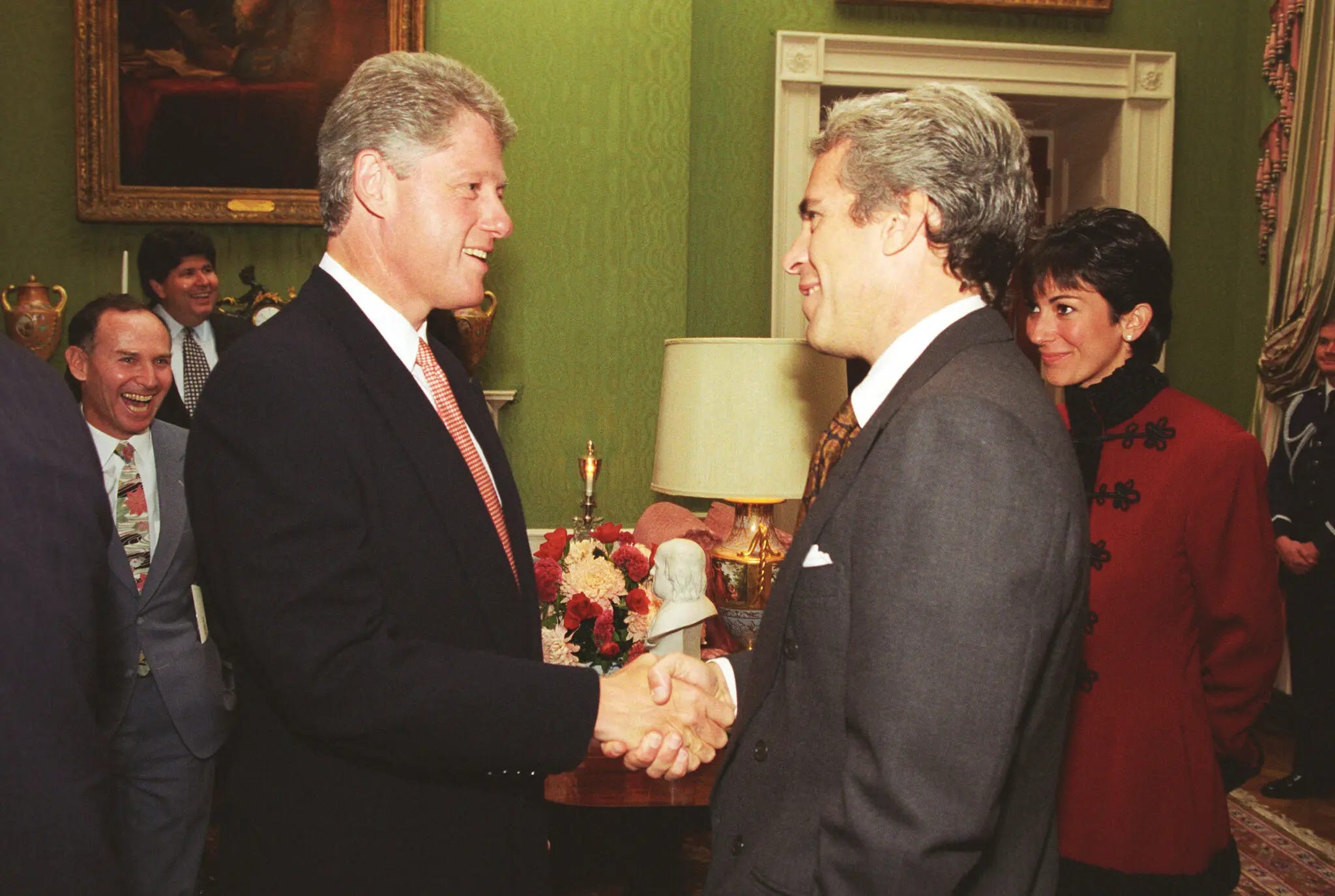
Another variation of the Epstein-as-a-spy theory was unveiled by the journalist Murtaza Hussain and Drop Site News. “It’s not to say that he worked for the Mossad. I think he was actually much more powerful than that,” said Hussain. For her part, when Ghislaine Maxwell was asked by the Deputy Attorney General if there were Epstein connections that had been under-explored, she answered, “Off the top of my head I can think of Ehud Barak.” Maxwell seemed clearly to be trying to get rid of the question, but Hussain and Drop Site very much took her at her word and unveiled a corker of a theory that portrays Epstein — and Les Wexner — very differently. Instead of Wexner being an innocent retail executive taken in by Epstein, as he usually appears in most versions of the Epstein story, he becomes a hub for intelligence activity. It’s not exactly fully fleshed out, but the chain runs from Epstein working together with former Deputy Attorney General John Pottinger in New York in the mid-‘80s with the “tax avoidance” largely a front as they worked on arms shipments connected to Iran-Contra, and with Southern Air Transport, the airline that the CIA used throughout Iran-Contra, eventually rerouting itself to Ohio, under Epstein’s auspices, and becoming Wexner’s transport arm. The notion is that Epstein was one of the brokers of the complicated operation by which the U.S. funneled arms to Israel with Israel in turn arming Iran and with Epstein intertwined with the money that flowed through offshore accounts to facilitate the deals; that Epstein’s friendship with Ehud Barak probably developed out of this; and that by the ‘90s Epstein was able to facilitate Southern Air Transport’s repurposing to Wexner’s business empire, while continuing his high-level contacts with Israel. “Epstein was part of this global transnational network of people who was free of any institutional constraints. So the Mossad was in some way very beneath him,” said Hussain.
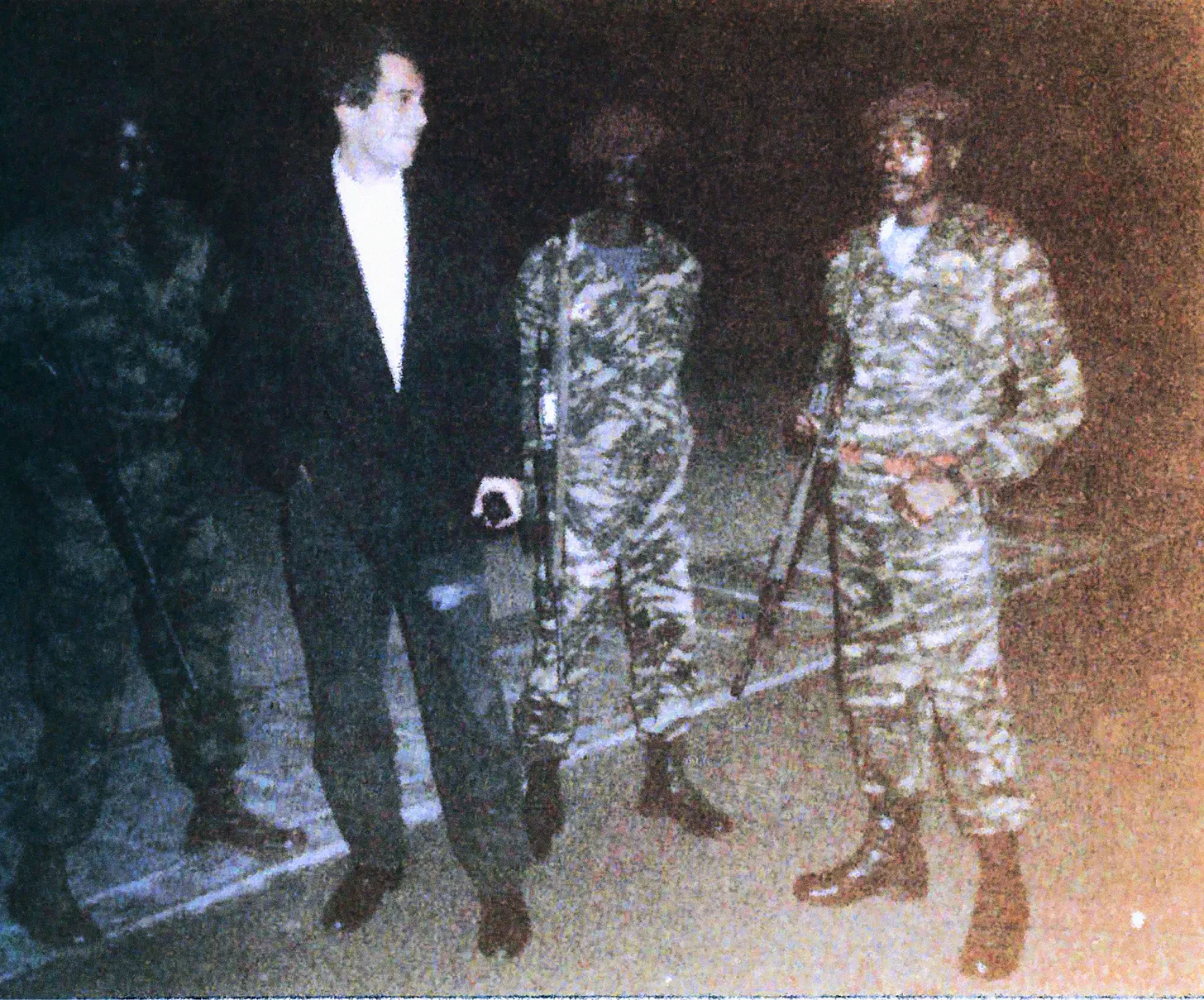
That leads into the next view of Epstein, which sees him on a much more international scale. In this version of things he becomes an arms dealer and hyper-connector on the model of what Robert Maxwell or Adnan Khashoggi were doing in the ‘70s and ‘80s. Ward seems to have bumped into this in her reporting without knowing what to do with it. Epstein had claimed that he was advising foreign leaders ranging from Vladimir Putin to Mohammed bin Salman. “According to my sources in the intelligence world, this is hyperbole — but also not completely ridiculous,” Ward ambiguously wrote. The story of Epstein as an arms dealer goes back to 1981 and his connection with the British defense contractor Douglas Leese. Epstein worked with Leese throughout the ‘80s was close enough to the family to describe himself as a godfather to a child in an e-mail, and had a falling-out in the late ‘80s. Volscho thinks that Epstein was an advisor on financial matters to Leese. Accounts of Epstein in this period seem to mark him out as being over his head on international affairs, but it’s not unreasonable to think that he learned the ropes even if he estranged himself from Leese. He claimed to essentially be running the port of Djibouti. He pops up in the 2010s in arms deals from Cote d’Ivoire to Mongolia. This piece of the Epstein puzzle sticks out like a strange addendum, a sore thumb, from Vicki Ward’s reporting. It becomes central to an emergent left-wing view of Epstein. “The Jeffrey Epstein story makes no sense unless you realize that he was deeply entrenched in the foreign policy elite, a fact that gave him much of the impunity he enjoyed for most of his life,” Jeet Hear recently wrote in The Nation. This, again, is largely about Israel — with Epstein in the 2010s showing up as a broker for Ehud Barak selling Israeli surveillance technology around the world. But another view of things makes Epstein even more global than that, a kind of international dark entity dedicated to facilitating the endeavors of anybody powerful enough to pay him a significant commission. “It was the sense that I had met something unholy,” said Eric Weinstein of his meeting with Epstein, and some of that does come through in his this new view of Epstein — that it wasn’t just the sexual misconduct and the shady financial dealings, that he really was something very close to a Bond villain, acting in an almost-perfectly unlicensed international way, with near-total immorality and total immunity, making his living, as he allegedly bragged, “from arms, drugs, and diamonds” and likely with tax evasion and sex trafficking thrown in.
This seems like a good place to end it. I’m nowhere near deep enough to have my own kind of theory. But what’s left is six very different versions of who Epstein was — and each one belonging to its own dimension of how the world works. In one, he’s basically a flam-flam man with a nice lifestyle. In another, the wealth is unusual but checks out more than not. In another, he’s a more devious con artist preying off a string of increasingly wealthy clients. In another, the center of focus is more political than financial and he becomes an intelligence asset with the businesses more a front than anything else. In another, he’s less a pawn of political entities than a player in the post-Cold War landscape where wealthy entities and the more secret sides of government are often inextricable. In another, he’s the free space on the board, beholden to no one and with his finger in the pie of everything. There is a body of evidence behind every one of those suppositions, and it’s all the more complicated given that he seems to have been a pathological liar and cultivated an air of mystery and had his business evolve several times. It does seem like some shoes are dropping now — the leak of the Ehud Barak e-mails, for instance, shed light on a basically unknown aspect of the Epstein story, as does this vast more recent tranche — but it’s still all enigmatic enough that, at this point, how you see Epstein likely depends as much on you as what the real truth was about him.
I wrote this a month ago, then decided that Epstein was for dorks only, and decided to post now that Epstein has come roaring back into the news. I haven’t really digested the revelations from the latest released e-mails. This piece already feels a little dated to me but may be a useful primer for people who are having trouble — as is really easy to do — getting oriented to the story.
tired of men's detached hot takes. it's only "the way of the world" because of this precise strain of detachment.
All very interesting. The real story here is that hundreds, possibly thousands of young people were savaged for years by these men, their lives ruined, and nobody (except one woman) has ever been held accountable. It’s a story of unchecked power, greed, and inhumanity.