

On or around February 2026, human character changed?
Look. I know I shouldn’t be baited by an article in GQ, but a pair of recent articles did get to me — GQ’s profile of the “looksmaxxing” model Clavicular and Sam Kriss’ tour of San Francisco in Harper’s — and this is the first time where I’ve really felt there to be a coherent worldview emerging among young people that I fundamentally do not understand. Or, to put it another way, it’s the first time where I’ve really felt like I’m getting old.
What is the worldview?
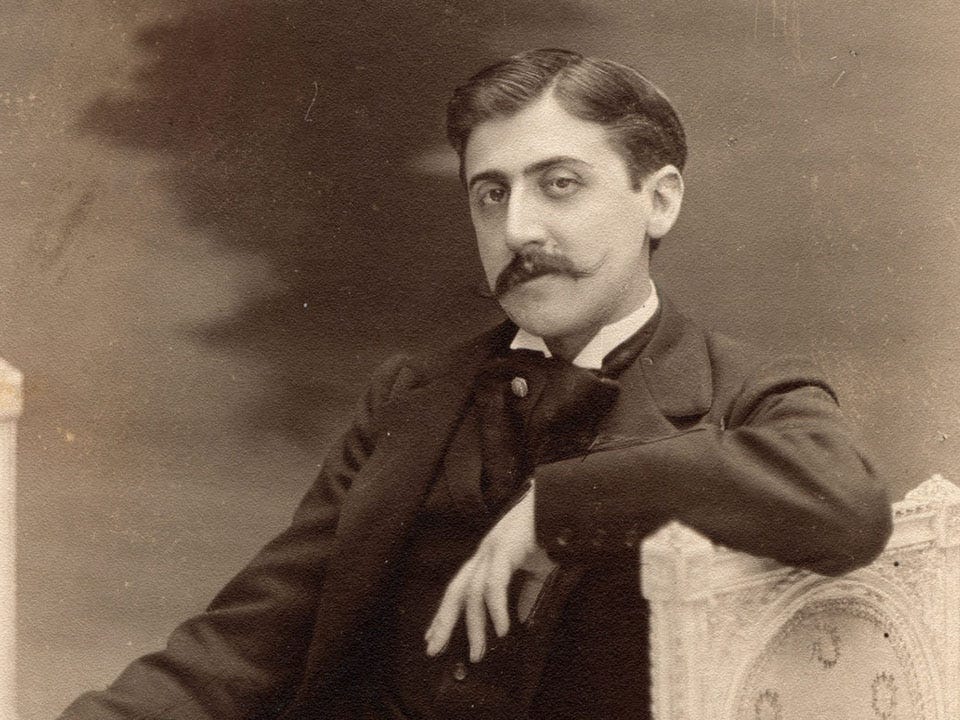
First of all, there is an almost complete rupture with the past. This actually is on a more solid foundation than the usual apathy of young people. The notion is that what matters is technological advancement, and the past consists essentially of the primitive people who made it as far as to upload our consciousness into the digital future. As Martin Gurri puts it, “Impermanence means nothing more than the incompatibility of the present with even the recent past” — the past is no longer a deep river of tradition and continuity, it’s a barren soil from which emerges the twin rivers of electrical engineering and video imagery, which make our life in digital space possible. Or, as Clavicular puts it when the GQ reporter gets concerned for the state of his inner life and encourages him to read Proust, “this is like a booksmaxxxing jester” — the past just becomes something else competing for our attention and offering highly limited utility.
Second is technofuturism. If the past ceases to be any kind of a guide, it logically follows that we harness our horses to the future — to whatever the future may bring. At the moment the future seems to be AI, so everybody is cheerfully turning themselves over to AI — Roy Lee, in Kriss’ piece, more enthusiastically than most with his company for implanting AI in a nearby device and allowing you to cheat on an interview or a date or whatever else it might be. Probably the sophisticated way to put this is in Ray Kurzweil’s The Singularity Is Near. Kurzweil’s argument is that technology has started to progress so rapidly — on an exponential rather than logarithmic scale, in his terminology — that the ‘singularity event’ in which machines surpass human intelligence becomes the only real certainty, the one true eschatology. Certainly, the advent of self-learning, rapidly-improving LLMs speaks to the prediction he made in 2005. The ethical corollary to that is that whatever the machines choose to do is probably right. The terminology of ‘technofuturism’ implies a link to the original Futurist movement — to their celebration of speed and form, the very beautiful art they sometimes made with its machine-like sheen, although it probably should also be remembered that they became enthusiastic Blackshirts at the earliest possible moment under the premise that Mussolini and his iron sensibility embodied the future. With machine skills further advanced, the nihilistic stakes are raised even further. “For a long time, we’ve been saying that we’re worried that A.I. might cause all humans to die,” said the AI skeptic Katja Grace of her experience with the technofuturist community. “It never occurred to us that we would have to add a coda — ‘And, also, we think that’s a bad thing.’”
With the shift to digitalization, the world becomes almost entirely a game. This is Kriss’ view of the reigning atmosphere in San Francisco:
One of the pervasive new doctrines of Silicon Valley is that we’re in the early stages of a bifurcation event. Some people will do incredibly well in the new AI era. They will become rich and powerful beyond anything we can currently imagine. But other people—a lot of other people—will become useless. They will be consigned to the same miserable fate as the people currently muttering on the streets of San Francisco, cold and helpless in a world they no longer understand.
In the profiles of Clavicular and Roy Lee, et al, the dignified scorn gives out on the cold hard fact of how much they’re making, Clavicular’s $133,000 a month, the millions that have been invested in Roy Lee’s Cluely. The background for this is a shift in the society towards a new economy of visibility. Once upon a time, the economy rested on transactions — if the customer didn’t like what they had purchased, then the transaction was a failure. But in digital space with the ersatz currencies of views, likes, subscribes, it becomes possible to flip to profitability just by gaining attention — the YouTube advertising algorithms don’t really care what the product is; for the small number with massive views, they’re able to convert to payments based entirely on visibility. This phenomenon has produced a new political economy, which of course Donald Trump has been the first to really master — to just saturate the airwaves, and social media in particular, and then assume that the fallout will rebound to his favor. When Kriss’ interlocutors discuss being ‘agentic’ and finding a ‘source code’ to life, this is what they’re getting at — it’s like pickup artists talking about ‘a numbers game,’ like Trump ‘taking all the oxygen out of the room,’ the idea being that in the digital economy what matters is just putting numbers on the board, which is likes for one’s channel, the body count (real or theoretical) for a slaymaxxer like Clavicular, or the number in the bank account. The lingo of this time says it all very evocatively — the agentics cruising around life like in an endless game of Grand Theft Auto, as opposed to the NPCs lurking inconsequently in the background.
The wave that’s depicted in the recent articles is based entirely in hyper-individuality and, on the frontlines of the internet, this is where the dividing lines seem to be. Probably everyone in the New Identity can agree on technofuturism, the unimportance of the past, and a certain thrill from gamification, but the internet of the 2010s seemed to rest in strength in numbers, to agitate for collective causes and to code female. This iteration of the internet is rooted more in individuality and in the insatiability of the ego — it is more nihilistic and codes more male. At this point, with the vibe shift fairly far advanced, what it seems to rest on as well is an idea that the collective agency version of the internet invalidated itself. Twitter mobs have lost their force, things like crowdsourced fundraising or change.org petitions have started to seem like jokes. What is left is the “source code” — self-promotion without end and with a certain advantage to the pathologically inclined. It’s possible that this sort of extreme nihilism is a trend, and the more collective side of the internet will bounce back, but it does feel like we are seeing here some of the exposed wires of how the internet attention economy works. “The future won’t reward effort. It’ll reward leverage,” said one Cluely manifesto quoted by Kriss.
In this environment politics becomes a matter entirely of spectacle. Clavicular is just as eloquent on political questions as male models have always been, but it’s hard not to see some essential zeitgeist in his perspective that “all politics is jester”; or, as Kriss puts it, tech-forward San Francisco is in the grip of a “pervasive mindlessness.” The more I see of politics in our time the more I am convinced that what has won out is a kind of Cold War revanchism. China and Russia were forced to cede the point on the capitalism v. Marxist-Leninism debate. They let in the flood of consumerism. On the other hand, the tightly-controlled — or maybe better to say, modulated — state has worked very nicely. They’ve been able to establish the premise that power itself is best left in the hands of whoever has the wherewithal and the ruthlessness to obtain power, while politics becomes a matter of spectacle, of the Putin action hero TV shows, of super-patriotic Chinese bots and party pageantry, and the US is of course rapidly adapting to that new regime, with Trump running his reality show, the show getting ever more rambunctious in its quest for ratings, and the gamified public just counting the points.
What can we do with this except to draw a negative sign around as much of it as possible? If this analysis is accurate — if this isn’t just young people being difficult in a way they will outgrow and there’s in fact a coherent identity and worldview here, however noxious — then we’re going to be dealing with aspects of this perspective for a long time to come. Young people really are embedded in the technology they have, which means the digital landscape and, increasingly, AI, and there’s an attendant set of behaviors and worldview that comes with that — a tendency towards mimetics, which then implies a heightened trust of anyone who, by whatever means, is able to steer the conversation or exert agency. And young people, in overly identifying with the agentic, have a way of missing how toxic this bifurcated worldview inevitably is. At the moment there is, I think, a chance of drawing a line against AI, although the window for that is rapidly closing — and, of course, the ship long ago sailed on digitalization. Among young people, there’s what?, Greta, Tiber, Clare Ashcraft, the Dartmouth kids who run The New Critic, and then I’m sure a bunch of perfectly nice Gen Zers and Alphas, but the sense is that the whole generation and those to come are in the grip of mimetics and then this increasingly nihilistic view of agency. For people in my generation, who aren’t as shaped by these sets of dynamics, it’s possible to articulate different values — continuity with the past, humanism, a profound sense of egalitarianism, a constant drive towards greater personal integrity — and possible to hold to these no matter what, but, if this is the choice one makes, it’s likely to get ever more lonely.
I don’t know if I buy it Sam. It feels like you may be over indexing on a few attention-grabbing people and ignoring the vast, vast majorities that pay no attention to this noise.
I so agree, Sam, being much older than you and must quote your close from that perspective: "For people in my generation, who aren’t as shaped by these sets of dynamics, it’s possible to articulate different values — continuity with the past, humanism, a profound sense of egalitarianism, a constant drive towards greater personal integrity — and possible to hold to these no matter what, but, if this is the choice one makes, it’s likely to get ever more lonely."