

HENCHMAN
by Sam Kahn
Illustrations by Megan Gafford
For Alex Capelluto
“And now this new adventure set them philosophizing more than ever.” - Candide
PART ONE
I
So many of my friends are dead.
They were all so immediate for so long – so many hours upon hours just not being able to stand their company, their terrible jokes, their body odor (everybody in our line of work has bad body odor). Sometimes we played cards, sometimes we had little practical jokes, but mostly we sat around in lairs and control rooms and waited to see if any of us would be fed to the shark. I spent very little time thinking about any of them when they were here, but now that they’re not, I can’t help but have them flash in front of me, as a series of identifying details and grisly deaths.
Let’s see. There was Dietrich, the big Nazi, who really was an astonishing arm wrestler but then got chopped up in a propeller when he was in hand-to-hand combat and forgot to look behind him to see if by any chance there was a plane taxiing towards him. There was Odd Job, who wasn’t great company but had perfected a trick with a steel-tipped hat, and we used to gather round and watch him decapitate one-by-one all the golden sculptures in our lair. He had started to be able to do it at impossible distances and we had a bet going to see if he could do it to the Venus de Milo from a sniper’s nest on the street facing the Louvre, but before anybody could collect on it he was electrocuted on a fence in the depths of Fort Knox during an attempt to immolate the US’ gold supply and to create currency fluctuations all over the world. There was what-was-his-name, who was blond and muscled and didn’t talk much and couldn’t be persuaded to practice his karate as much as he really should have and didn’t leave much of an impression, but had this amazing ability to crush dice with his bare hands and looked great in a high-necked black turtleneck and then overlunged in a karate move and was flipped into the piranha pool and had, I think, just enough time to hear Bond saying “Bon appétit” before the piranhas closed in.
So many. At the moment I’m in the lair. The thing about the henchman business is that there’s a great deal of downtime. Your mind does tend to wander. You find yourself drifting sooner or later to trying to remember the name of that blond with the dice-crushing trick or to asking yourself what kind of voltage it must have been to incinerate Odd Job, who really was a big and powerful guy, and the mystery of it is why these kinds of thoughts never seem to occur to anybody else who is sharing the lair and control room and locker room and guard room and guard’s bathroom and turret and launching station with me. Well. It’s another thing that I find myself not really able to ask – or able to ask only if we’re on a long car ride, five of us wedged into the vehicle, all bristling with automatic weapons, waiting for just the moment when our inside man can jab his poison dart into the night watchman and steal his ID and then we can all go storming into the bank vault or the multinational office and either hold it hostage or cunningly pin the entire break-in on Bond, as we try to convince his boss that he has gone rogue, and then when it gets really boring and the silence really unbearable I might say something like, “What about Brunskill, he was a great second-story man, maybe we could get him for a job like this,” and there will be a slight twitch in the long silence as the automatic weapons are shifted around and maybe one of my guys crosses his legs to try to hold in a fart, and then one of the old hands will say, “Bond got him. Electrocuted in a bathtub.” “Oh yeah?” I’ll say. “Nobody told me. Well, did Bond have anything to say about it?” And the old hand will clear his throat and, in the way we talk, which cuts off any further conversation, he’ll say, “Shocking. Positively shocking.” And then we’ll all look out the window for a while or fiddle with our weapons and wait for the prearranged signal on the walkie-talkie that the night watchman has been safely disposed of and it's time to unleash mayhem. And then we all jump out of the car and break in and during the period of mayhem I have very few thoughts about any of this, about why nobody mentioned Brunskill’s electrocution to me or what the name was of the big blond in the turtleneck, but then the mayhem usually ends as quickly as it started, and as often as not I find myself holed up in some control room while our computer specialist tries to hack the unbreakable computer code and there’s a vigilante prowling around in the air duct and picking off our men one by one when they step out to investigate and then I’ll turn to Sod – let’s assume that Sod is with me – and say something like, “Have we been in this control room before?” and he’ll take a long pause since he doesn’t like to chit-chat and then he’ll say, “I think so, I think we were here with that German with the nice suits and the deep voice,” and I’ll say, “What happened?” and Sod will have to think about it for a while, either because he doesn’t like chit-chat and his father never engaged in it or because he genuinely doesn’t remember, and then he’ll say, “I’m pretty sure there was a cop who happened to be in the building and killed everybody and then threw the German off the roof just before his detonator could go off,” and that does ring a bell, and then we’ll sit in the control room in companionable silence while the hacker mutters at the computer until the vigilante starts picking off enough of our crew and either Sod or I are sent to investigate.
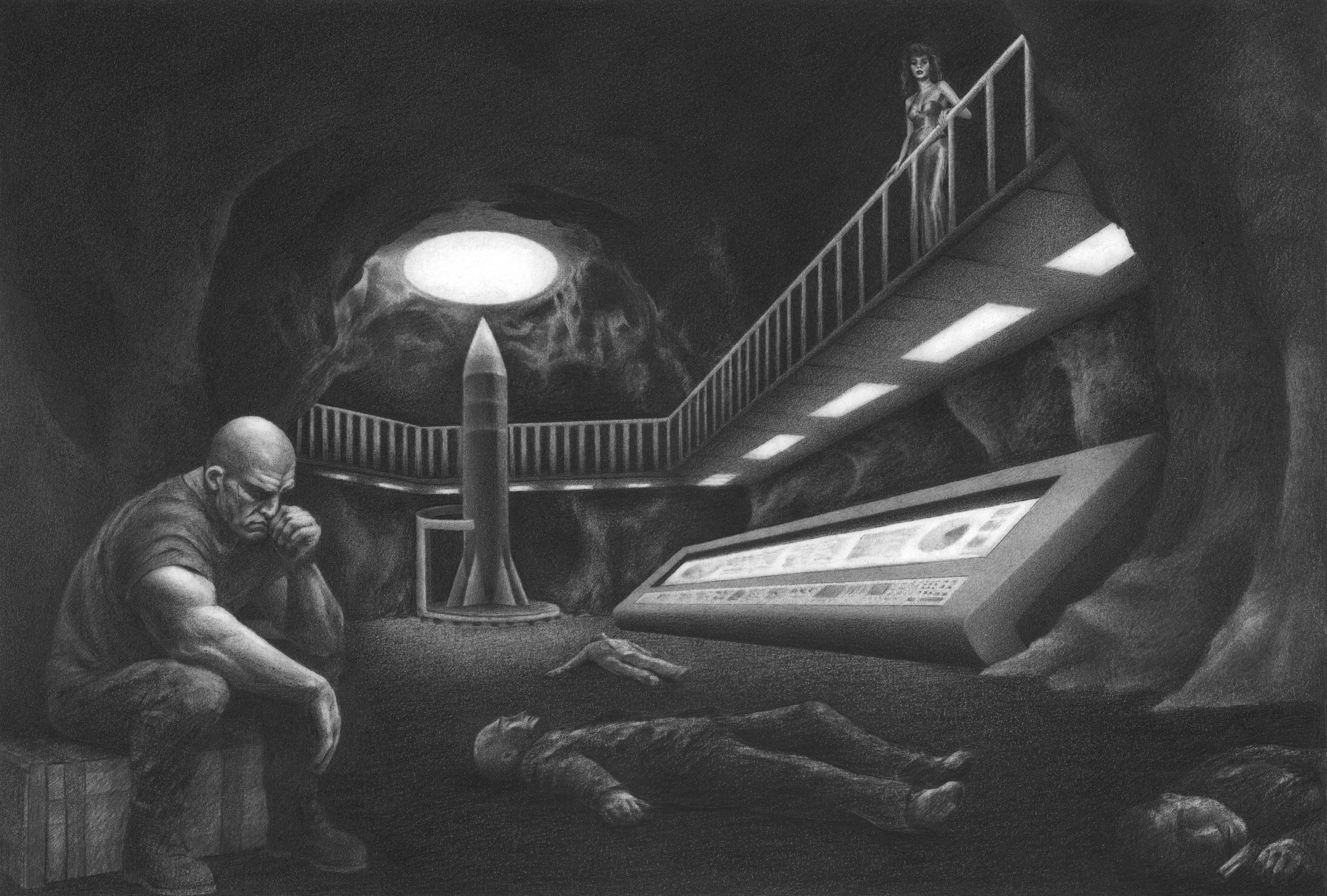
But anyway. That’s being on the job – in missile robberies and hostage situations and that sort of thing. In the lair it’s different. We have already stolen two atomic bombs and are using them to extract a ransom of half the treasury of Britain – unless it’s that we’re pretending the United States and Russia are launching nuclear attacks at each other and then we will profit from the ensuing anarchy after the phony exchange leads them to launch a real one (I did have a briefing, but now I can’t remember what the plan was) – and now we are in our undersea cavern and waiting for the clock to tick down to either launch our bombs or have the ransom deposited in our Swiss bank account, depending on what our plan is. We have our U-boat parked here and the two bombs safely packed away somewhere. Our fort is, of course, impregnable. We have steel everywhere. The architect who made it has been executed and all the workmen given blinders so that they can only work on their corner without knowledge of the base as a whole – and then they too were executed just to be on the safe side. We have abundant caches of automatic weapons. We have a mad scientist with an Eastern European accent – I think it’s Hungarian, although Sod, who has an excellent ear, claims it’s actually Polish – who has assured us that the plan is entirely foolproof. We have been issued cute blue outfits with yellow sashes, which are unorthodox and have provoked some surprise, but when you have been in black turtlenecks and leather jackets as long as we have, a dash of color really goes a long way. And we have time to burn.
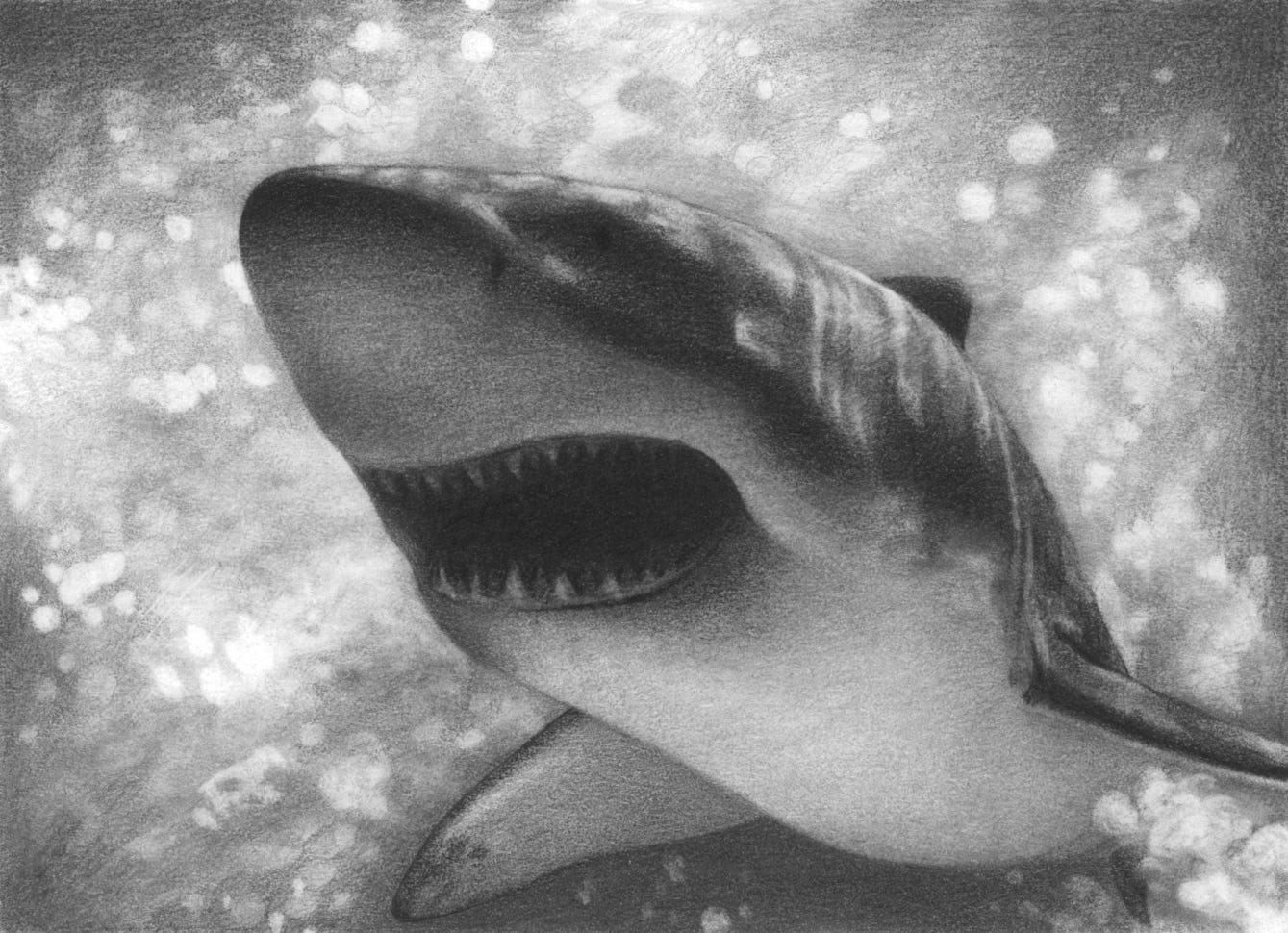
I have, I would say, an excellent crew at the moment, as good as it’s ever been. Sod is with me, practicing his hat trick and the golf ball-crushing trick and keeping up with his martial arts in a way that would put so many of my former colleagues to shame, and our Polish scientist has a shock of hair shooting straight up and a gleam in his eyes that makes it very easy to trust him, and for our resident heavy, we have Jaws, who is about seven feet tall and has a mouth entirely of metal, and while it is very difficult to watch him eat, he is actually delightful company once you get to know him and can be teased, which is a rare quality in a heavy, and we have the goons, who have been training every day under my direction, and the shark is a hammerhead, not unfortunately a Great White due to some budget cuts, but very scary-looking and the screams of the embezzling accountant who was tossed in made us all feel that it could do the job, even on something of a shoestring, and we have Lana, who always makes the place better even if she’s mostly been tucked away in Blofeld’s quarters.
It's cozy, I would say, that’s the word that comes to mind, and coziness has an interesting way of interacting with rumination. If I think about Hans, who had the handcuff tying him to the pretty girl unhooked from him just before he could reach his detonator and who then tumbled off the rooftop screaming in German, it doesn’t quite give me the same cold feeling that it does if I’m in the vault of a multinational and the vigilante is prowling around the air ducts almost exactly in the same way that he did when he got Hans. Now, if I allow my mind to wander there, I can more or less forget about the plummet from the tall building with the detonator finally going off in mid-air, and I can appreciate Hans for what he was – the well-fitted suits, the rumbling accent, the really impressively detailed plan, the ruthless execution.
Sod seems to be in a similar state of mind. He has bought a series of bobblehead dolls that he has lined up on a shelf on the other side of the room and he is decapitating them one-by-one with a throw of his top hat.
“Sod,” I say, “what are you thinking about?”
He hates when I ask him this. He flings the hat using two hands in the way that he’s been practicing so that to my eyes it looks as flat as a frisbee but it doesn’t smoothly decapitate the Joan Crawford bobblehead he’s aiming at, instead the head just tilts to one side and Sod grunts to himself in guttural Korean as he goes to retrieve the hat and then bring it back to try again.
“I’m thinking about my father,” he concedes at last.
Ah.
“I’m thinking that there’s a lot about this that I can’t figure out on my own and it would be nice to just ask him but I’ll never have the opportunity,” he more or less says. Sod has been working on a sort of whispery lisp that makes him very difficult to understand, but he hates it when I ask him to repeat himself so I usually have to just kind of piece together his meaning.
He readies his hat and this time he takes off the rest of Joan’s head with irreproachable precision.
“You knew him,” he says.
Did I? It seems impossible, that I was working with Odd watching him practice his hat trick in a lair very much like this and here I am with his son, but it seems Sod is right.
“What was he like?” he maybe says although it’s really impossible to tell with the lisp.
“He was uh. Well, the golf ball trick was really extraordinary. We used to all gather around to watch him do that, but then at some point it was just a thing he did, the way some other guys might pick at their teeth, or snap a rubber band. He’d be standing there glowering at Bond tossing a golf ball and the next thing you knew it was smithereens in his hand.”
Sod turns his torso and takes off Lana Turner with a neat stroke.
“It doesn’t seem possible,” he very likely says. “I’ve been practicing and practicing.”
I watch him sweep Lana into the dustbin and then line up the next round of bobbleheads.
“But what was he – ” Sod says, “when you were sitting around with him in the lair like this, what was, what did he talk about for instance?”
This is work for me, it’s very different from being in the car or the vault and trying to remember the grisly death of the second-story man. “He was very big,” I say. “He was very powerful.”
“Yes.”
“And I’m pretty sure he never spoke.”
Sod is in his windup and he pauses. He puts the hat down and adjusts his suit vest. He seems crushed. “Never?” he says.
“I don’t think so. I think it was all grunts. It was very intimidating.”
Sod sits for a moment. He strokes at the wisps of hair that are a year or two away from turning into a Fu Manchu moustache. He puts his head between his hands and presses at the temples.
“That must have been something,” he says.
“You definitely knew when he was around,” I agree. “It was a very heavy quiet.”
Sod has, I’ve always felt, been very emotional and as he presses hard with his knobby palms into his temples, I think I can see the glint of a tear in his eyes.
“It must have been amazing,” he says and lets the pause deepen. “I have to kill Bond,” he adds, and he has forgotten to lisp so what he says is crystal-clear.
I wait for him to elaborate, but he seems to have decided to let the silence stretch. He sits with head clasped and then very slowly and, this time, absolutely wordlessly, he gets up and continues his training. As impressive as this is, it gets a little tiresome, so I wander out and stroll around the lair. It’s always a mistake to tell people too much about their fathers, I think, they always end up feeling they have a lot to live up to, and for one thing they always end up thinking that they have to be the one to carry out the revenge when it’s Blofeld who already has the foolproof plan for them to follow.
I stand along the bannister and look down. A few of the maintenance goons are carrying fueling rods, or something or other, to and from the submarine. The blue uniforms with the yellow sashes are really, I think, an excellent idea. The thick plastic suits that the maintenance goons are always wearing might be good for radioactive material and that sort of thing but if a martial arts fight should happen to break out, this kimono-ish aesthetic will give them a lot more flexibility. On the wall, by the external control panel, an impressively stern techie is pressing buttons. The clock above him is counting down ten hours until the launch – unless it’s the deposit in the Swiss bank.
There’s not really a lot to do. Small-arms drill isn’t for another couple of hours. The shark has only recently been fed. This would be a good moment for Lana to stroll around the bannister in something sheer and to poutily take in her domain, but she doesn't. The U-boat has brought mail on its last trip in and she’s probably reading a magazine.
There seems to be nothing for it but to visit the accountant’s office. Boorstin is there at his little fold-out desk tapping into his spreadsheet.
“How you holding up?” I say.
“Alright Banx, alright.”
He really isn’t in very good shape, Boorstin, very skinny and slouchy, with an unconvincing combover and a leer.
“You set back at all not having your number two man?”
Boorstin has a habit of never looking at you when he speaks to you and always speaking out of the side of his mouth. He’s very busy every time I come in, which I find impressive, because nobody else has any idea what it is that the accountants do.
He nods at me to sit next to him on his work bench. His breath smells of the fried onions that the cook has been just pouring into our food.
“To tell you the truth Banx,” he says, “it was me that was embezzling not him – ”
“I thought he looked a little shocked when the chute opened and he was dumped in.”
Boorstin shrugs. “I don’t think it was that. I think he just wanted to argue his case.”
“You’re lucky it all happened so fast.”
Boorstin has an enviable ability to keep typing at his spreadsheet whether or not he’s looking at it, and his eyes, including the lazy one, roam around the ceiling as he types and speaks.
“I don’t think you really understand Banx,” he says. This is his favorite mode of conversation. “Blofeld knows perfectly well that I’m embezzling – and my number two also knew that I was embezzling and that Blofeld knew I was embezzling. Blofeld just wanted to send a message to me to knock it off and that’s the way he likes to do it. There was nothing that my number two could have said to make Blofeld change his mind. I think he just didn’t want to be fed to the shark.”
“Well, why not just speak to you and let you know that he knows and that you should knock it off? Why get your assistant involved at all?”
Boorstin finally stops typing. He looks at me and, with some effort, his lazy eye finally finds mine. Out of habit, he does a scan for cameras but nobody ever bothers with the accountant’s office.
“Banx, I’m really amazed at how long you’ve been in this business and how little you know.” Most accountants I know speak in a hiss, and Boorstin for a while was doing this, but thank god he decided to just speak normally and rely on a slight over-enunciation to achieve his intended effect. “We are under a mountain of crushing debt,” he says, “just staggering, planet-tilting, unimaginable debt – ”
“How?” I say, genuinely shocked. “All we do is steal, murder, extort. After all that, how can we possibly be in the hole?”
Boorstin raises one eyebrow significantly. “Look around you,” he says. “You think rock-hewn bases come cheap? You think cute blue-and-yellow uniforms in matching sets of 200 – ”
“Which are fabulous.”
“You think that they can be picked up at Goodwill? These are costs, Banx, overhead, plus the salaries for your team, plus Lana’s dresses, plus the general lifestyle of it all, the jetskis and the BMWs and the yacht and the Bathosub – ”
“There are savings everywhere,” I point out gently. “I strangled the architect with my own hands and used his fingerprint to tap into his account and wire his salary back to us – ”
When Boorstin is not being preemptively dismissive, he likes to feign exasperation. “Pennies on the dollar,” he says. “I don’t think anybody in your department – or any department like it – can imagine what it takes to run an operation like this one. Nobody can really, except yours truly, and Blofeld knows that and that means that however strict his organization he has to make an exception as far as accounting is concerned – ”
“Apart from your assistant.”
Boorstin has reverted to preemptive dismissal. “He has to send a message one way or another,” he says.
This is the way it always is with Boorstin. None of the other goons like to spend their time with him – and, from a personal appearance point of view, he really could use a lot of work – but I always leave these meetings with a very particular feeling. It’s the peculiar combination of a tingling in my scalp and a stone sinking in my belly. On the one hand, Boorstin never exactly gives good news – there’s none of the sunny optimism that we always have in the map room or with the exfiltration and assassination teams as they set off for their missions – but, on the other hand, there’s the very distinctive sensation of the membrane of my scalp giving way and my mind expanding. And it really is astonishing, come to think of it. All those ransoms, all those architects asphyxiated and their fingerprints shoved onto their own personal devices, all those banks with somebody like Jaws shooting a gun into the air and shouting something cowboyish while our inside man cravenly presses a pistol against the teller’s ribs, and I never once stopped to think about all the red tallying up on the other side of the ledger.
I am, I am well aware, not as indispensable as Boorstin, and I lean in tightly to whisper my next question. “Are we going under?” I say.
I suppose Boorstin must enjoy it that I can somewhat speak the language of accountants – otherwise he would have kicked me out of his office long before now – but, as a habit, preemptive dismissal dies hard with him. He sneers with his top lip.
“Nothing for you to worry your poor head about Banx,” he says. “We’ll carry out this operation and it’ll wipe out most of our sunk costs. We’ll be able to keep the roof over our heads here, maybe even build another lair somewhere else.”
“I thought this operation was about tricking the United States and the Soviet Union into a nuclear exchange.”
Boorstin gets that look where he freezes up. “You really need to be more attentive,” he says. “This operation is about ransoming the two atomic bombs back to Great Britain and covering a few of our expenses – ”
“Ah I see.”
“Maybe next time,” he says generously, feeling, I think, sorry for me that I allowed myself to fade out of attention during the briefing. “We pull this off and then the next time we steal an atomic weapon we can think about really using it.”
I nod. I seem to have run out of questions. With Boorstin, there’s always layer after layer, it’s like if you know the right button to press he can rock your world in multiple dimensions, but he never really volunteers if you don’t know what to ask him. He’s gone back to typing Greek symbols into his spreadsheet.
“If they don’t pay, we do have to launch, right?”
“That’s true,” Boorstin says gently. “There’s always the possibility that we’re obligated to launch.”
II
There’s an alert on the intercom just as I’m leaving Boorstin’s. “Banx Mulvaney to the map room,” it says. “Banx Mulvaney to the map room.” It’s, as usual, a pleasant-sounding but somewhat standoffish woman who says this from the switchboard.
It seems unlikely that this is the moment I am fed to the shark – for one thing, the shark pool is in a completely different part of the compound from the map room; for another, even if there was a camera in the office, and Boorstin was setting me up, which is entirely possible, it would be unlikely for it to be a live feed that Blofeld is watching with everything else that he has going on. But I have to admit that, even after all this time in the henchman business, the shark is on my mind every time I hear my name called out, pleasantly but icily, over the intercom.
As it turns out, there is no need to worry. It’s just a meeting of security personnel. The assassination team is back. The wardrobe change to blue-and-yellow seems not to have reached them, and they are in their usual stark black scuba gear. They have a body with them. They are in their usual sunny mood.
“We wish to share the good news that we have killed Commander Bond,” the squad leader says. He’s a pleasant blond athletic type with a North Country burr. He and Bond usually engage in a bit of repartee first before they try and kill each other. He has an easy popularity with his men, even if the missions he sends them on – planting scorpions in hotel beds or infiltrating a bar staff in order to poison Bond’s drink – always somehow have a way of backfiring. Even though he and I are always in a mortal battle for resources and attention, I have a difficult time loathing him in the way that I often feel I am supposed to.
In any case, black scuba gear really suits him very well. “We came upon him and a girl in a bikini trying to disable the cords to the nuclear device,” he burrs. Blofeld isn’t there, but it doesn’t really matter, Blofeld prefers to sneak in right at the decisive moment of a report.
“And then we really had a mighty harpoon battle,” the squad leader continues. “He threw a harpoon at me but I turned to the side and it caught Frank Hilcox and then I threw my harpoon and it hit him square on but he was saved by some kind of locket he was wearing from the girl, and then the two of them exchanged a look while I swam around and tried to reload.”
He is a good squad leader, but he is a man of action and he is always a little less than precise in his reports.
“And then Tubby Malfoy, being the most treacherous of my squad, went after the girl and he had his knife to her throat and he and Bond talked for a bit – ”
“What exactly did he say?” says a low, steady voice over the intercom.
We get a shock every time this happens and we all look up at the speaker, and then Auberville, the squad leader, continues a little more nervously but without at all picking up the pace in his story.
“He said, ‘Why don’t you try fighting a man for a change?’ and that turned out to be the right psychological button to press with Tubby and he let the girl go and she went writhing up to the surface of the water very much like a mermaid and a couple of us paused to look and then Tubby went after Bond and Bond slashed at his airways and then said, “Try breathing from your chest” as Tubby sank to the sea floor and then The Sikh did his trick of tossing his knife from one hand to the other, which was pretty good under water, but then a passing shark got him and Bond said, “Bon appétit” –
“He’s used that one before,” says the voice over the intercom.
“Yes, well, but then we were fired up and I went in for a knife fight with him and we were at it for a while and at one point I slashed his airways and he grabbed the breathing device of Marc Meddox, who had also been killed and was slowly floating towards the surface, and I don’t really understand how that worked but it seemed to – ”
“Or how you could understand what he was saying underwater,” says the voice of the intercom.
“It was very echo-y,” says Auberville. “But then we went at each other again, and knocked the knives out of each other’s hands, and I caught his and he caught mine, and then I went up and stabbed him through his wetsuit and caught him once in the sternum and once, I would say, in the pharynx, and then he died fair and square and I paused for a minute to think of the right epigraph – ”
“Epitaph,” says the voice over the intercom.
“Excuse me. Epitaph. And I said ‘point taken’ referring to the knife…”
“Not terrible,” says the voice over the intercom.
“And then Freddie Frixson and me, we dragged him to our submersible and brought him here just to let you know that that’s one less problem you have to deal with – ”
“Thank you,” says the voice, falling towards a whisper.
“No sweat,” says Auberville.
“There’s just one small concern.”
“Oh what’s that?”
“That’s not James Bond,” says Blofeld, who somehow, without any of our noticing, despite our abundant training in counter-stealth techniques, has appeared at our shoulders and is now looking through his one good eye at the body on the slab.
“It looks like him,” says Auberville. “It fought like him. Its girl seemed like a James Bond girl.”
With a smooth gesture, Blofeld steps forward and peels the mask off his face, and underneath is a somewhat flabby, somewhat middleaged British-looking man, not terrible-looking but with some unfortunate gaps in his teeth.
“Double 0 Eight,” says Blofeld.
“But I…I…I don’t…” says Auberville. “Like, what’s the point?”
“A classic decoy strategy,” says Blofeld in a patient and preemptive voice that reminds me very much of Boorstin’s. “007 is likely on his way to us right now, if not already hidden in the air vents or caverns of our base, and we have wasted invaluable time fighting this useless Brit, who need I remind you killed four of your men.”
“But how was I supposed to know?” Auberville continues, and there is still a trace of his blond insouciance. He was, I happen to know, a star rugger on his club team before an injury forced him to quit and then he drifted around for a few years until he found his way to Blofeld and worked his way up. He has always been so smiley, so friendly, so common-sensical in a way that is frowned upon for anyone at base but adds a nice touch of variety for the field teams. “We were underwater. There was all kinds of scuba gear on. This mask is really skin-tight, it was a very easy mistake to make – ”
“I appreciate your predicament, Mr. Auberville,” Blofeld says and his voice has reached its laziest, slowest pitch, like a cobra swirling around itself as it prepares to strike. Sod, with his good ear, claims that he can hear hints of Czech in the accent, although to me it just sounds like sinister German. “These are all very interesting academic questions for field operatives. But, unfortunately, as you no doubt know, our organization does not tolerate failure.”
“But I don’t see how it can be failure,” Auberville is saying. “This one is part of the double 0 program, we killed him, we defended the atomic bomb, that has to count for something – ”
“Unfortunately your opinion is not of value in this conversation,” says Blofeld, and maybe I’m imagining things, but I can, I’m pretty sure, hear a hint of Czech.
“Let this be a lesson to you Mr. Auberville,” he says. A button is hit – I think beneath the table at the center of the map room, although, to be honest, these buttons keep moving around, and it’s possible that he has it on a remote. The floor opens up and Freddie Frixson, who’s been Auberville’s loyal number two and is slated to replace him if anything should happen to Auberville and has been leaning against a wall through this exchange and chewing on a stick of gum as is his signature, suddenly falls through the hole and screams in a way that does not at all align with his laidback, sort of drugstore cowboy image. I’d thought that the map room was very far from the shark’s pool, but apparently a plastic ramp has been installed, like something you might see in a playground or an MRI machine, and we can track Freddie’s progress on one of the cameras on the wall of the room. On the camera showing the pool, the hammerhead perks up and swings around. Without seeming to be at all oppositional, I avert my eyes, and Auberville, who is really blushing by now, has his eyes on the floor.
There is, I must admit, always something interesting about watching the reaction of someone who thinks they’re about to be fed to the shark and then discovers the sentence has been shifted to some other, perfectly random, person in the room. It’s like you see the purest, most childlike side of that person. It’s like they’re no longer a grizzled henchman thinking up their one-liners and their diabolical attacks. There’s the rush of pity and, overpowering it, the rush of sheer joy at not being, at that moment, ripped limb from limb by a hammerhead. I can see all the things that Devlin Auberville would like to do with himself, maybe get back into rugby, start proper conditioning again, see if some kind of a club will have him, since even if he hasn’t been training in any orthodox way, these eight years with Blofeld have after all been an impressive cardiovascular workout and have given him a certain ruthlessness that must translate well onto the pitch. I can see all the things that he thought his life might turn out to be – all the different girls he chatted up in pubs back in his lost, footloose days, all the tall tales he told them about what he was going to do with himself – and it all comes back to him now. Yes, he thinks, Freddie Frixson is gone, but some of Freddie’s powers are transferred to him – Freddie’s cool insouciance, Freddie’s really impressive brute strength – and he’ll make good on Freddie, he’ll do Freddie proud. Maybe – he is now reflecting – it is a little late to get back into rugby or to call up any of the girls he was chatting up in the East End pubs who noticed that he was very drunk and had no money. But at the very least he can be a top-flight henchman. Next time – note to self – he’ll look at the spot halfway down the neck where you can see the plastic adhesive of a skin-tight mask slightly stretching away from the skin and he’ll never again fall for that mask trick.
“I trust you will not make the same mistake again,” says Blofeld, very much like an evil psychologist that has wormed its way into the patient’s skull. And Auberville nods furiously and tries, not entirely successfully, to blink back his tears.
“This meeting is adjourned,” says Blofeld. “Dispose of that body.”
***
It’s now time for small arms training. We train on the floor of the base, running around the U-boat’s docking pen. I have 25 guys under my direct command, while Sod has a further five specialists who are meant to sneak up on any intruder at a moment of calm after they’ve blasted through my team. Jared Mellett is in charge of another thirty guys manning the impressive array of exterior anti-aircraft and cunningly hidden machine guns, but for some reason they never seem to make any difference in any fight I’ve ever had.
We do nothing but train and my guys are basically very good at it. Every day we warm up with calisthenics, and I’ve got to say that there’s something about the blue uniforms that gives an impression of elegant fluidity as we do our jumping jacks that’s entirely missing from the more muscle-bound leather jackets and turtlenecks. Then we split up into pairs and run at each other, one of us holding a rifle and using it to flip the other one over it. That’s usually good for working up a significant head of steam. Then we practice bum-rushing a single protagonist. He stands in the middle – this is my favorite role to play, but Sod has asked if he can do this and I am happy to oblige him – and then eight or ten of us standing in a circle rush in one by one.
To be honest, I have always been a bit skeptical about this aspect of our tactics. I’m not sure why we rely so much on martial arts, and whether we might not be better off if the group surrounding the pinned-down protagonist simply formed a ring and held him in place while one or two of us ran off to get a gun, but it’s been done in this way in the henchman business since long before I joined, and one thing about the henchman business is that, even though we are constantly updating our technology, we never interfere too much with tradition. I have also advocated at different times for a true bum-rush – all of us simply counting to three together and then running in – but Blofeld himself has discouraged this. So we practice running in at slightly staggered intervals, which is, I have to admit, more civilized, but also creates the possibility for our antagonist to either mash the heads together of two of our men arriving in quick succession or else to use a flying kick by which he takes one down and then uses his momentum – although we haven’t entirely figured out how this is possible – to sense the presence of the assailant on the other side and get him with either the follow-through of his kick or else the flip side of his punch. Sod’s karate is really in a very good place and he’s able to do a decent imitation of a slightly supernatural protagonist and sends most of my men flying and howling in pain and then does a flurry of one-on-one fisticuffs with Lionel Drawley, who is the most talented of my group, but that finishes with Sod flipping him into the water and one of the U-boat mechanics having to fish him out.
Jaws, who is serving as the liaison to Blofeld on this project, advises executing one of my men after this sort of failure as a warning to the rest, but Jaws is a fairly easy number two man to placate. Sometimes, when I get one of these no-nonsense Aryan lieutenant types, I really have to do it, but Jaws is the sort of overpoweringly intimidating giant who doesn’t actually have to do all that much to keep his place.
“Thank you,” I say when he makes this suggestion. “I’ll keep that under consideration.”
And Jaws smiles his big broad smile with his mash-up of gold, nickel, and titanium teeth that is really nauseating to look at but has a bashful friendliness underneath it, and that’s what I need to know that I am able to carry on my training in my own way.
“Alright,” I say, as Lionel Drawley is sent to the locker room to change into something dry and I reset David Richter’s shoulder, which has popped out of its socket. “Just this once, let’s try doing it more pell-mell. Everybody stands in a circle and, off Richter, count to three and charge.”
We line up. I pace around on the outside of the circle with my hands behind my back. A couple of the U-boat mechanics discreetly pause in carrying their fueling rods to watch. Sod puts his hands up and gives the guttural karate scream that probably isn’t strictly necessary but adds a certain something to our drills. Quietly, so that Blofeld’s cameras can’t pick it up, Richter counts to three and then my guys all charge at once, and it may not be the most elegant but it does kind of seem to work. Sod does this very cool flying kick that he learned in his two years on silent retreat with an old school master in Szechwan Province, and sends one guy on each side flying and in such an angular way that they have a domino effect on the goon right next to them, but there are too many and Sod only has time for one kick and then one quick punch that sends Marshall Quigley unconscious, but then my guys are on top of him and drag Sod to the ground and start pummeling him with their fists and feet and I let this go on just long enough for them to get out some of their aggression and then, still with hands clasped behind my back, say, “Very good men. Much better. Ok. Marksmanship.”
And they help up Sod, who is able to pop his own dislocated shoulder back into place and go trooping off first to the range, where Lionel Drawley will oversee them, and then, for those who are so inclined, to practice a signature move under Sod’s supervision.
The truth is that there are usually a few extra steps in our drills – there is single-combat martial arts, there is knife-throwing, and then just before we break there is the sweep of the perimeter and of the air vents – but as we have been doing the bum-rush and I have been pacing back and forth with brow furrowed, I happen to have noticed that Lana has wandered out of Blofeld’s quarters and is standing on the sort of catwalk space towards the top of our domed base and is leaning forward over the bannister in a way that perfectly showcases her cleavage, somehow even when viewed from below, and is wearing a sheer lamé dress, yellowish-gold, that would blow a hole in the budget of any organization no matter how sophisticated its global extortion activities, and she is staring dreamily and maybe a little melancholically off towards the dome of the base, or maybe towards where the retractable metal door disguised as the face of a cave meets the horizon. She has paid no obvious attention to the drill happening beneath her feet, but it seems impossible, given that she has been staring for some time in its general direction, and given Sod’s ear-splitting scream and the howls of my men as their shoulders are dislocated, that she would not have noticed it at all.
My men troop off to the range, some to the locker room, some to the infirmary. Very slowly, in no rush at all, as if I have all the time in the world and my share of women at my beck and call, I wander up the spiral staircase, hands still clasped behind my back, until I just so happen to be standing next to Lana at the banister.
“Enjoyed our drill?” I say.
“The goon squad?” she says. “Do they always have to be so loud?”
“They’re a lethal fighting force,” I point out. “Isn’t it important that they do whatever they have to do to keep us all safe?”
The entirety of Lana’s expression is somehow contained in her lips, and the entirety of that expression is bored disapproval, although once, when we were holding Bond hostage before he unfortunately slipped out of an insufficiently-tight rope and rappelled out of our base before first destroying our control room, I thought I saw the ghost of a smile for something he said. She does not bother to dignify the obvious, cool logic of this with a response.
“What are you thinking about?” I say since I can’t think of anything else to break the silence.
“I am thinking,” she says, “that I have had it with underwater caves and bases.”
This could, I suppose, be interpreted as another iteration of bored disapproval, but, since Lana can go months only reading magazines and flipping her hair and once a week or so taking a walk to the bannister, I am grateful for the opportunity, which, in its own way, is like talking to Boorstin – the sensation of a tingling in the scalp, of some membrane giving way and the world expanding outwards.
It's a moment of quiet in the base, the clock for the launch ticking down to under six hours, the maintenance goons carrying their fueling rods back and forth, the techies in their slightly unnecessary plastic body suits tapping at knobs on the control panel, most of my guys at the range, a few of them, though, likely just playing cards and putting each other in headlocks. I swivel around so that I am leaning against the bannister with my back and a camera may well imagine that the two of us have just coincidentally ended up at this same spot at the bannister at the same time and are each staring off in our different directions – and will not pick up on the tough-talk that I am delivering out of the side of my mouth, that clamped-down-and-yet-surprisingly-well-enunciated style that we spent so much time working on in basic.
“You don’t have to be here,” I say, and the cameras will find nothing at all amiss. “I can get you away from here, and once you’re gone you’ll never see a single rock-hewn base again, underwater or tucked into a volcano or whatever – ”
The dress shimmers at that, although it’s hard to tell if that’s Lana’s body or if it’s that the dress was so exquisitely designed that every turn of its fabric perfectly replicates a woman’s shudder of pleasure. In any case, the dress is worth every penny.
“Banx,” she says, looking straight ahead and not bothering to talk out of the side of her mouth. “You don’t know anything else.”
There’s no point in arguing that point, but I do have a few things to say. “You know what my take is from this heist? $100,000,” I say. “Plus savings I have stashed away in a bank in the Grand Caymans plus a few things I learned from Boorstin about stretching it out.”
I am spitballing here and she seems to know it. “Look,” I say, over my shoulder, “I can’t give you yachts or Bathosubs, but maybe jet skis, possibly – ” I gulp – “a private helicopter. I have resources, and I have skills – you know that –” The dress shimmers but not in a way that’s discernibly excitement at the thrill of a new life. “And if in any case you are tired of caverns, if you want something different – ”
Lana has resumed staring off at the spot where the horizon would be if the blast door weren’t down. The intercom goes off. “Banx Mulvaney to Number One’s office,” the pleasant woman in comms says. “Banx Mulvaney to Number One’s office.”
Lana gives the slightly sick look with the side of her mouth that isn’t, I would say, a smile but is the closest to it she gets apart from that one time Bond was saucily defiant while being strapped down to a chair and having a laser pointed at him. That ghost of a smile has haunted me ever since then. It’s a real question for me whether Lana is a sadist. Some of the girls you run into in this line of work actually enjoy killing – not to put too fine a point on it, but they get off on it.
The female orgasm is, I have to confess, a bit of a mystery to me, and every so often there are girls who work for Blofeld and some of whom get swapped into my security detail at one point or another who seem to be able to achieve true climax only when they have their thighs around somebody or other’s throat and he tries to shout out their name to call for help but can’t because he has already started to suffocate, and I have spent more time than I might care to admit wondering if Lana is like this. On balance, I hope not, and in the many different ways I have pictured her orgasm what I have come to settle on is a country house somewhere cozy, let’s say in Montclair, New Jersey, with the rain outside as a very strong aphrodisiac, with Patsy Cline on the phonograph, with Lana kind of talking as she goes deeper into it. All that time as arm candy, all that time as a silent accompaniment to brutal, in many ways impressive but also fundamentally unsympathetic syndicate ringleaders, will slowly melt away, she will talk at first about different things she read in magazines and then about her early experiences in the villain business, and as it gets more intense, building inside her, she will become more present, she will have the feeling of the entirety of her life, of all of her stories coming together, and the one word that will sum it up will, it just so happens, be the word Banx. “Banx, Banx,” she will say sort of the way our mad scientists shout it out when they finally hit on the right chemical formula for their toxins – the feeling of all that work, all that frustration, coming together, coming together in a single moment, and then she will pass out from the sheer pleasure of it, and I will check the windows to be sure that the very ambient rain isn’t getting in anywhere, and will check the entire perimeter leaving no air vent or secret cellar neglected and then will pull the sheets over her and tuck her in and lie by her side for a while listening to her quiet breaths before the slumber of my own orgasm puts me to sleep. But, again, I am spitballing here. I don’t really know the content of her orgasm, and strangling some unwary mark or other with her thighs may be as likely as anything else.
In any case, that sick look out of the corner of her mouth is how I am dismissed, and it is, I reflect, the last fully-conscious thought I may ever have. She didn’t bother to cover her mouth as she spoke, and the techies in the video monitoring office, all of whom are somehow adept at lip-reading and also seem to have some way of magnifying the audio, may be able to dive in on the conversation and understand from Lana’s side of the exchange that an offer is being made to her. The question is, if I am fed to the shark, will Lana feel a shudder of remorse about it, maybe even close her eyes at the thought of losing Banx and its being her fault, or is it the electric charge of Xenia Onatopp and Fiona Volpe and Bambi and Thumper and so many others who temporarily took over my security detail and for whom this kind of contribution to someone else’s death is an undeniable erotic charge.

III
If Blofeld is planning to feed me to the shark, he goes about it in a very roundabout way. Of course there’s nothing really to conclude one way or the other about this. Blofeld delights in being roundabout. It is, I would say, one of his two or three favorite ways of carrying out executions of subordinates.
I stand by the spot in the floor that, I know from experience, is a bit hollow underneath. I have my hands clasped behind my back and my posture is perfect. I am, I would say, irreproachable throughout this exchange, although when Blofeld is being particularly roundabout I find myself pressing towards the tile with the big toe of my right foot and feeling the floor ever so slightly bend.
“You averted your eyes during my lesson on discipline this afternoon,” he says. “Now why is that?”
“I beg your pardon Number One,” I say. “Freddie Frixson and I go back a long way. At one point we were partners in a train-heist operation. He was one of the people who originally connected me to this organization. It’s not so easy for me to see him actually be eaten by a shark – ”
“What you are trying to tell me, Mr. Mulvaney,” Blofeld says in his lazy voice, “is that you are going soft. I am not very interested in your long-ago capers with Freddie Frixson, but I am very interested in knowing that the head of my inner-perimeter security lacks the stomach for the job he is hired to do.”
“I wouldn’t say that Number One,” I say, with hands clasped and chin up, but he doesn’t let me state my case.
“And I can’t help but wonder if it is that softness that prevents you from being the one in the center of the circle getting bum-rushed by your squad in small-arms drills.”
“Not at all,” I say. “It’s simply that I’m at a higher level. My utility is better pacing with my hands behind my back and commenting on failures of form of my subordinates.”
“I will be the judge of that,” says Blofeld, and he seems to have activated a voice amplifier somewhere on his desk so that his voice now appears in stereo effect as if on all sides of me. “Next time you will personally lead the drill, not delegate.”
“Very good Number One,” I say.
This has really been about as smooth as it ever is in Blofeld’s office. The truth is that – even with his need to impose terror throughout an organization and that kind of thing – Blofeld and I have always had a pretty good working relationship. There have been times when it’s gotten testy – when he’s electrocuted or poisoned or fed-to-the-shark some underling of mine whom I thought actually was coming along, and there have been times when he’s ordered me to do it and also demanded that I look right into that person’s eye when I pulled the trigger, and that’s maybe thirty or forty percent of the time – but the rest of the time it’s like this, he gives me a talking-to, but underneath it is a professional collegiality. I know that it is not all easy to run an international criminal syndicate – believe me, I’ve seen enough guys mess it up – and I understand that terror and distance and a strict demarcation of the ranks of the organization are necessary, and I believe that Blofeld sees me as a not-entirely-irreplaceable and likely-not-the-most-glamorous cog but an important cog nonetheless.
But, unfortunately, and not for the first time, he is being roundabout, and I am fooled by it. “Of greater concern to me, however, Mr. Mulvaney,” he says, “is the fact that you ended drill early before having done single combat or sweeping the air vents.”
The white cat with the collar, which has been staring at the wall sniffing for a mouse, wanders over to Blofeld’s lap and sits on it, and this is a very bad sign. The cat and Blofeld are really very aligned. Blofeld, in my experience, vastly prefers to carry out the execution of a subordinate with the comfort of stroking the cat on his lap, and the cat – which really likes Blofeld a great deal and vice versa – seems to intuit this and usually wanders over when it’s time for a kill.
“I was satisfied with the readiness of our combat teams, Number One, and preferred to keep them fresh for a fight.”
“And the air vents?”
“I gave strict orders to Sod Job’s specialist team to check the air vents, Number One,” I say.
“Did you? Did you really?” says Blofeld and gives the cat an extra hard stroke on its back and the cat purrs with it. “Or was your decision to cut drill short by any chance connected to the appearance of the lovely Lana Lynx on the upstairs balustrade and your desire to chit-chat with her and possibly to lure her away from my lair?”
Ah. When something like this happens, the membrane of my scalp stretches to about four thoughts at once. There’s Sod and the air vents, but Sod usually takes care of that kind of thing without my even ordering him to. If he’s asked he’ll just have to put in a good word, which means that I’ll have to get to him before Jaws does, or Blofeld himself. And then there’s Lana, who really is going to have to learn to talk out of the side of her mouth whenever I’m trying to lure her away from Blofeld. And then there’s the immediate problem, which is what to say to Blofeld at just this second as he scratches the cat behind its ears and the cat seems to perk up and look at me very much as if it’s expecting me to fall down a hidden chute and scream all the way to the shark tank.
“I understand you need to maintain iron discipline throughout this lair,” I say, “really I do, I would just submit that there’s a certain flexibility that is called for as well, and I have taken that into consideration in my training regimen. If my men are all badly beaten up, and all have dislocated shoulders, and are too much in the grip of routine, they won’t be as agile and imaginative as they have to be when Bond shows up. And, as for Ms. Lynx, I guess you don’t mind my saying that my goons have been cooped up here for months and months, we all get a little restless, our minds wander a bit, it doesn’t really amount to much – and having someone who looks like Ms. Lynx around – ”
“Yes,” purrs Blofeld.
“I think that somewhere inside yourself you must know that part of the point of having Ms. Lynx here, pacing around the balustrade and hidden in your quarter, is that she will drive all your subordinates mad with longing.”
Blofeld purses his lips. “And they are driven mad with longing?” he says.
“Oh yes,” I say.
Blofeld seems to consider that. “You are a very interesting case, Mr. Mulvaney,” he says in his deliberate way. “On the one hand, you are as ruthless and as reliable a henchman as I have ever had.”
“Thank you sir.”
“On the other hand, there is a certain sloppiness about you, your small mind seems to wander towards all sorts of places where it’s not supposed to venture.”
“Yes sir. I’m sorry sir.”
“You have the very unfortunate habit of thinking for yourself. That is not a luxury that can be afforded in this business of ours.”
“Yes sir.”
“But, since your thoughts amuse me – your puny, simple-minded plans for improving my organization no less than your belief that a woman like Lana Lynx will ever be happy in your pastoral fantasy for her – I shall spare you this time, solely out of my own amusement and my forgiving nature.”
He doesn’t seem particularly amused, but Blofeld’s sense of humor, I’ve found, is always a little off-kilter.
“Yes sir thank you sir.”
“Do not, however, think that, as you Americans say, ‘you are out of the woods just yet,’” Blofeld says with his usual over-thick imitation of an American accent. “If Bond penetrates into the inner ring of this fortress, I shall hold you personally responsible.”
“In the unlikely event that he does, I will kill him myself,” I say.
Blofeld turns to something on his desk, which is the usual sign for dismissal – although it can be difficult to tell since sometimes he does that when he’s taking a significant pause before getting to the real point of the discussion. But I nod and let myself out and have the usual sinking feeling that I so often do when leaving Blofeld’s of having overpromised. Sod has already vowed to kill James Bond in revenge for his father’s death, and Sod is not going to take it all kindly when he hears that I have made a professional guarantee to Blofeld that I will be the one to kill Bond.
***
In any case, the immediate concern is to rectify the problem of the perimeter. Blofeld, annoyingly, is never entirely wrong, and I did let Lana’s lamé dress get slightly the better of my professional discipline. But, hurrying back to the goons’ quarters, I’m intercepted by Boorstin, who sticks his head out of the office next to Blofeld’s.
“Banx, what are you still doing alive?” he says. “I was sure you’d be shark food by now.”
“Whatever would make you say that?” I say.
He closes the door and steps into the hallway. Unlike Lana, Boorstin is careful always to cover his mouth when he speaks out in the public parts of the base. “I don’t understand how you can chat up Blofeld’s moll and think you can survive.”
“How did you know about that?”
“Everybody knows,” Boorstin says. “Everybody notices the way you look at her.”
“Doesn’t everybody look at her like that?”
“Everybody hides it better.” Boorstin shakes his head. “I really don’t understand, Banx, how you’ve survived as long as you have making the kinds of mistakes that you do.”
“Blofeld said I was as ruthless a henchman as he’s ever had.”
Boorstin shakes his head. He really looks very sad. “With the kind of sloppiness your goons have, plus Lana, I was really sure you would have been a goner by now. If I’d known you’d still be alive, I never would have told you that thing about our overhead.”
Boorstin is a very smart and very cunning accountant, but I never have particular trouble reading his expressions. His expression right now is trying to figure out if there’s any way he can reach over and drop me into the dock below, but since Boorstin weighs about half what I do and has probably never held a firearm in his life he tries to think if there’s anyone in my outfit he can persuade to discreetly knife me when I’m in the shower or locker room.
“Relax Boorstin,” I say. “That’s not how I do things. Your secret is safe with me.”
“You can never be sure,” he says miserably, and, since he has already been talking to me for too long, ducks back into his office.
***
In any case, we all have bigger problems. As I’m heading back to the goons’ quarters, taking in the clock, the U-boat, the brightly-colored uniforms, the surprising sort of Futurist elegance of the blast shield, there’s an alarm all over the base.
“Intruder, intruder,” says Connie from comms.
Oh for chrissake. What I need to do is to book it over to the goons’ side, but not so fast that it looks like I’m panicking, and then to talk to Sod and get our story straight about the perimeter sweep before anything else escalates.
The intruder could be just about anyone – we’re trying to sow mayhem on many different fronts, and all sorts of different powers, and any variety of fake-Bonds, may be trying to break in and thwart our plan – but, somehow, I know, and Sod knows, who it is.
My men are racing all over the place as the alarm goes off, and to their credit they really look formidable, with the black submachine guns nicely setting off the blue-and-yellow karate-ready outfits. Sod is in the all-black uniform of the specialists. He has already pulled on his balaclava and he is staring at his fist in his leather glove mentally preparing himself to squeeze Bond’s head like a golf ball.
“Sod,” I say, “we’ve got to chat.”
Sod seems to be in a sort of oriental hyper-concentrated mode. There’s no candle lit in our room but I wouldn’t at all have been surprised if he had been staring into its flickering flame.
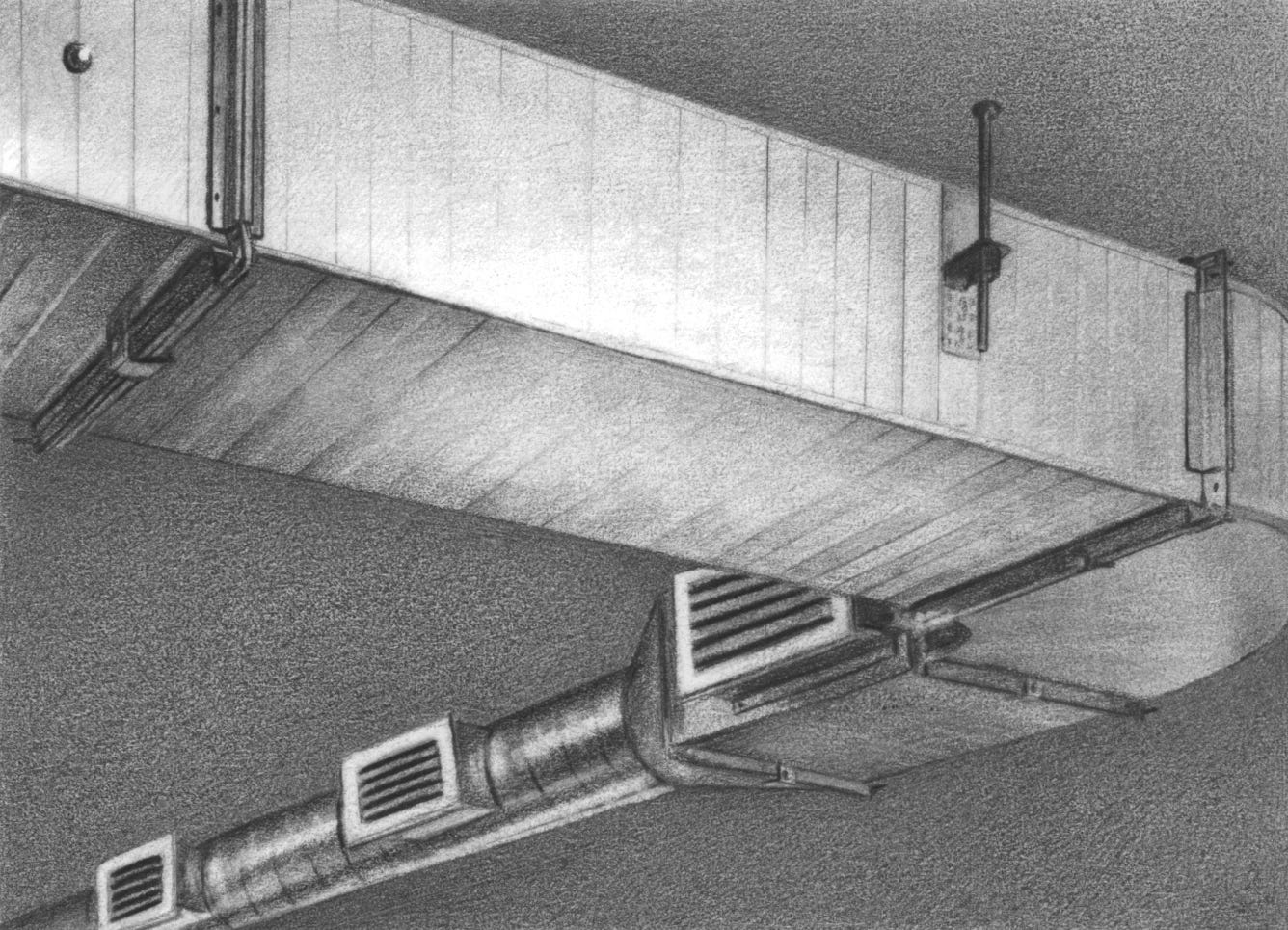
“Sod,” I hiss, “if anybody asks if you’ve checked the air vents, could you do me a huge favor and say that your men did it at the end of drill.”
Sod turns to me and in the cool heat of avenging his father’s death he seems not to be registering who I am.
“Sod,” I say. “You’ve got that, right? You can cover me on this?”
But Sod is entirely in his own world. He is pulling on the edge of his glove to make his fingertips fully flush against the leather and it makes, I have to admit, a very satisfying sound, and now he gets his submachine gun leaning against the wall.
“Oh,” I say. “This is because of what I told you about your father never speaking?”
Sod doesn’t acknowledge that.
“You know, you don’t have to pay too much attention to these things. It was impressive, but it made him kind of hard to work with. Good communications – good teamwork – is essential to base security, and also for covering one another if anybody happens to have made a small lapse somewhere in their perimeter sweeps.”
Sod is really very far gone. He’s moving towards the door in a deliberate, bear-like way that conveys great determination – and the non-speaking thing, I have to concede, doesn’t hurt. But just as he’s on his way out, Sod looks at me out of the corner of his eye, and with just the slightest nod, the most discreet downwards and then upward tilt of his eye – he must have spent so long working on this at his silent retreat with his old school master – Sod lets me know that he’s got me. My secret is safe with him. Then he’s out the door, but that’s all I need. And now I arm myself for the fight.
IV
It’s not particularly part of my persona to be fast, so I feel no particular need to rush my battle preparations, even as my men go tumbling over railings and careening all over the base to reach their posts. My persona is more to spend a little while staring into the mirror, pressing down on the cloth of my uniform and pulling at the hem, and then when I reach the right internal state to pull on the bolt of my gun while still staring at myself in the mirror and then clenching my jaw hard enough that my cheeks pinch together place the gun in its holster.
That is what I do on this occasion, and then I slowly make the rounds of my men at their different stations, maybe kicking at the leg of one or another if their legs are a bit outside the protection of their sandbag.
That’s I think a good way to do it. There are a lot of squad leaders who stay in one of the control rooms and bark orders through two-way radios and then only appear when everybody’s dead and it’s time for single combat, and I respect that, but I think there is something to be said for making the rounds, giving a little joke, a little round of encouragement to each of my men. At a couple of stations, though, the men are sprawled over, one from a knife-wound straight to the neck, another from a discreet bullet hole straight into the heart. Kevin Fincher, my sergeant, has gotten to the body with the bullet hole and is inspecting it.
“Who did this?” I say.
“Impossible to know,” he says, “but it must have been a professional with a silencer – we didn’t hear anything from our nest. Look at how accurate that shot is. No blood, no anything. My money’s on Bond.”
“Bond,” I say. “How did he get in?”
We look around. The whole place is bristling with fortifications. As usual, Jared Mellett’s exterior defenses have been completely quiet — no help at all from him. Fincher shrugs. “Must have been the air vents,” he says.
Oh no.
Jaws is on the radio and wants a status report. “Two down,” I say. “Highly lethal, highly professional assassin.”
“Bond?” he says, although it’s really difficult to tell through his mashed-up teeth.
“Maybe.”
“How did he get in?” he says although, unfortunately, clearly this time.
“We’re working on it,” I tell him.
“Catch him and bring him to me,” Jaws says.
“Certainly,” I say.
So now I have to think like Bond for a little while.
Bond is, unfortunately, a master of disguise. I can’t count the number of times he’s broken into one of our lairs and disguised himself as a technician or a soldier or even, once, an astronaut and somehow emerged undetected – even though, having spent months working together, we really all should have recognized one another. The presence of skin-tight masks is particularly annoying, and means, in theory, that he could be anywhere, and it’s food for thought, as I inch along walls and spring out into doorways, whether MI6 has made masks of anyone I know and whom they might have selected. Maybe Sod? That would be an interesting choice – Sod blends in with the other virtually undetectable ninjas in his squad, but he has a memorable face and backstory. Yes, I’ll have to keep an eye on Sod. And there’s another thought that makes my knees tremble and my gun heavy in my hand and keeps me temporarily from thinking about my perimeter scan. It’s too much, it’s too dizzying, I decide it’s probably not real, but the force of the thought, combined with my proximity to Blofeld’s quarters, makes me forget for the moment about Bond and decide to check on Lana through the ship’s cabin-like peephole into her room.
The room is the usual combination of spartan utility and industrial chic. It’s dull and prison-like, and seems like an odd place for anybody to choose no matter how addicted to the gangsters’ life they are. On the other hand the bedding is chiffon and Lana has changed into a gossamer nightgown and is lying on the bed forming an elegant geometric pattern with her knees bent and legs tucked, with her reddish hair spilling over her shoulders, with her head propped on her hand, which raises her on a neat diagonal from the bedspread and pushes her bosom both up and out.
By attentively observing this for a while, I notice something else – that she is talking to someone – and am able to crane my head just enough around the porthole to see the hairy fingers of a distinctly Scottish-looking hand, very different from Blofeld’s hand from which all the hair has been irradiated off in a nuclear accident, clutching a martini glass with a clear liquid in it and bringing it to an unseen face and mouth.
“Got Bond,” I report to Jaws.
“Bawin im awive,” he says, or something similar.
I come through the door just as he is saying something about the danger our organization represents to the planet. He is not wearing a mask of Sod or of anybody else. He is, I have to admit, even better-looking than the mask 008 was wearing, with a remarkably clean face, which always somehow reminds me of freshly-starched shirts. The shirt, by the way, is a Connolly and Finamore and the suit a Turnbull and Asser tuxedo with a bow tie.
There’s a lot of this that I’ve never really understood – why the tuxedo on secret agent missions, especially if he knows he has to crawl through the air vents, why the bow tie which I can’t help but see as stodgy – but I only have limited time and certainly not enough to get through all the questions that are on my mind.
“It’s unfortunate that you so disapprove of SMERSH’s plans,” I say. “But at least you get to see them up close.”
Bond has for some reason put his pistol down. He raises his hands in the air in a way that doesn’t at all suggest fear. He gives me a funny look that I can’t quite place.
“Mind if I dress for the occasion?” he says.
“Very, very slowly,” I tell him.
He stands and threads his arms one after the other into the tuxedo jacket. He nods regretfully towards his drink and towards Lana.
“To be continued,” he says.
There is a great deal that I find myself wondering, not least of course why I don’t shoot him right now and later on pretend an inability to have understood Jaws. He had no compunction about killing my two men; Auberville had no compunction about killing 008. What is it, I find myself wondering, and think about asking Bond, that’s so different about killing men as well-dressed and elegant as he is? Jack O’Hare, the guard he knifed, wasn’t at all a bad-looking kid, had, all around, kind of an interesting story – ran away from home at 16, was trying to save up to buy a girl working at one of Blofeld’s dancing clubs and exchanged guard and hitman work for her freedom. He had taken a lot of ribbing because most of the guys in my squad had spent a night with her at one point or another, but Jack who had a kind of hayseed humor had taken the ribbing in stride and there had been something very sweet – even for those who knew better – in hearing the letters she had sent him describing the life she was hoping to make together and the gifts that she would appreciate in the meantime.
He had a nice story, and very clean country features, but the truth is that almost as soon as I saw his carotid artery sliced I forgot all about Jack O'Hare, and even though he was one of my men and I should be hell-bent on revenge since I am, all things considered, an attentive and hands-on squad leader, I somehow don’t have the impulse to shoot Bond in the back in exchange for Jack O’Hare, or for any of the roughly 110 or 120 of my men he has killed during different break-ins while we were trying to steal the world’s diamond supply to turn them into laser satellites or to shoot off at a missile at China from a sunken ship in order to then arrange a new broadcast deal covering the conflict or the one another time when we stole two nuclear bombs and either tried to launch them and pin it on the Americans or else to ransom them back.
This would be as good a time as any to ask him that, with my pistol jammed into his ribs, but, as with every other time I’ve held him at gunpoint, Bond seems strangely to control the conversation. I wonder if it’s that — another question to file away for the next time I take him prisoner — charisma is simply a matter of assertion, of filling in the pauses and letting one’s desires steer the interaction.
“I wonder if old Blofeld has missed me,” he says. “It’s been some time since I’ve seen him.”
“I don’t think he has,” I say. “He’s been busy.”
Which is accurate enough, but somehow I seem to have missed the moment to ask Bond about the art of charisma, or why I have no particularly strong desire to kill him, or any of the other questions I’ve stored up since our last run-in. We walk in uncomfortable silence for a bit. The base seems suddenly to be really teeming with life as we approach our count-down, techs running back and forth, wheeled bumper car-type things moving our senior officers around. Lana seems to have been quietly slinking along behind us.
I type in the passcode for the outer layer of Blofeld’s office. “Just one thing,” I say. “If you are asked how you got in, would you mind saying it was a disguise or something?”
Jaws opens the inner layer and bares his array of metal teeth at Bond. Bond is inscrutable, but a certain understanding seems to have passed over his features. After all, he has unreasonable bosses too.
“Mr. Bond,” says Blofeld, with his hands clasped behind his back and facing a blank spot on the wall. “To what do we owe the unexpected visit?”
“Oh just checking up on old friends.”
“And making new ones I see.”
Two guards materialize and grab Lana, one on each arm.
“He can be very charming my dear,” Blofeld says, “but don’t for one second think he is any less ruthless than I am.”
“I didn’t listen to a word he said. I was just stalling him,” Lana says sputteringly.
“I’m pretty sure she was just stalling him,” I say.
“Let the girl go, Blofeld,” Bond says. “Let’s keep this among the men, shall we?”
“What an excellent idea,” Blofeld says. “Drink? Vodka? How do you take it these days?”
Bond is given a seat. I stand back, not even thanked for having brought him in. Bond makes an appreciative noise as he takes his first sip.
“With half a measure of Kina Lillet. You know me well.”
“You missed your calling as a bar back,” Blofeld says. “And now you have wandered into something that has nothing to do with you.”
“On the contrary Blofeld, the fate of the world has everything to do with me.”
“Who said anything about the world? This is a small matter of hostage-taking and ransom. A mercenary like yourself should understand that.”
“I am paid by the queen, not through extortion.”
“We are the Special Executive for Counter-Intelligence, Terrorism, Revenge, and Extortion,” Blofeld says in his lazy voice. “Extortion is our business.”
“Must be an easier way to make a living,” Bond says, but I am tuning out slightly. In a way that I don’t think anybody notices, I am pressing with individual fingers on my pants leg as if I were practicing scales on the piano.
Blofeld wanders over to the mantlepiece. His cat is there and yowls to be petted. That seems to have given him time enough to pause and to wander back to his chair to deliver The Speech. And there’s a great deal of interest here from all of us in the room. We have all heard The Speech many times before, covering a wide range of topics, and it seem inevitable that Blofeld must be out by now – sometimes The Speech has been about the integrity of crime as a discipline, sometimes about the corruption of governments and the need for anarchy, once, surprisingly, it turned out that Blofeld was Bond’s own adopted half-brother. There has, I admit, been a certain inconsistency in The Speech – sometimes he seems to want to destroy the world, sometimes he’s a frustrated idealist who wishes to save it from itself – but what is thrilling to all of us, and I can sense even Jaws standing up a little straighter in his rumpled suit, is that Blofeld always manages to find something different, and somehow or other The Speech is always fresh.
“What do you know about making a living?” Blofeld says and he peers hard at Bond with the red of his missing eye. “The queen says, do this, do that, the queen says thank you very much, have a pension and go make yourself scarce somewhere in the countryside. What do you know about people who earn money with their own hard work, their own ingenuity?” he shrieks. Jaws and I glance at each other. He raises his eyebrow slightly. This is a very different direction.
“We are the builders,” Blofeld continues. “We are the ones who take risks, and sacrifice our lives, and in return what do we get? Works of astonishing beauty and terror the likes of which a policeman like you cannot even begin to imagine.”
“Works of utter madness,” says Bond drily sipping at the martini. I suppose I’m meant to be impressed by Bond’s sangfroid, by his rough common sense, but, every time, I can’t help but feel that he’s not really engaging with the substance of what Blofeld is saying, that he’s just replying with the kind of thing that his grandmother might have told him once upon a time. Blofeld, too, is disappointed, and it’s the moments like this where, whatever my misgivings about the shark, I can’t help but really like Blofeld and be grateful for all the time I’ve spent with him.
“Of course you can’t understand,” he says. “You can only destroy. Take him away.” Two of my goons grab Bond and carry him each by one arm. “Bring him to the very top of the cave mouth and toss him off,” Blofeld says. “Let him see what it means to have really created something.”
I do appreciate this idea – I like the idea of making Bond’s final moments instructive – but, unfortunately, it’s impractical. An alarm goes off all through the complex. “Intruder,” says Connie.
"I hope you don’t mind if I brought some friends,” says Bond.
And now, at long last, Jared Mellett’s perimeter defenders open up and there’s a round of small-arms fire on the outside of the complex, and even from here we can hear the sound that our guys always seem to make when they’re falling off roofs or into pits.
“Tie him down,” says Blofeld. “I’m not finished with him.”
We all march off together, with two goons and Lana left behind with Bond. Sure enough, the perimeter has been breached and a firefight has broken out inside the lair. The fighters on the other side are, strangely enough, dressed as ninjas, and they are being led, as far as I can tell, by a breathtakingly beautiful girl in a tight-fitting bikini, who must be the one that got away from Auberville and is now picking off our techs at the external control panel.
This isn’t, however, the end of the world. It’s unclear really why we have an external control panel at all, since everything can be run from the bulletproof-plated inner control room, which is, presumably, where Blofeld is headed. In any case, as the ranking goon, I take over the firefight in the inner ring, which, unfortunately, is going very badly, although it’s hard for me to put my finger on what we’re doing so wrong. We’re all well trained. We’re all taking cover behind sandbags and pillars but, one after another, my guys go toppling over the sandbags and down into the lower level where, fortunately, most of them fall into the water rather than the concrete.
I’m too busy shooting kind of randomly with my pistol to really take in where we’re going wrong, but out of the corner of my eye I catch a few details. Too many guys seem to be popping out from their sandbags as they shoot – the same problem that we’ve had in every single firefight under my command no matter how many times we’ve trained exactly for this.
Still, that doesn’t entirely explain why things are going quite as badly as they are. Yes, our discipline could be better, but the ninjas keep running around from one spot to another while just sort of hazily covering one another. This is the thing that I never really understand in our fights – and it’s good that I take a break from shooting to observe what’s going on. It just seems that no matter how well-positioned we are, or how many hours we spend in the range, or how good our marksmanship scores are, that, when it comes down to it, we just keep missing and, frankly, missing some very easy shots, and meanwhile the ninjas and the girl in the bikini, who looks like she’s never really studied marksmanship or maybe even held a gun in her life the way she’s holding it fetchingly-but-not-very-effectively loose and sideways, just keep hitting, and my men keep tumbling out from behind their sandbags, the cute blue-and-yellow uniforms splashing into the water on either side of the sub.
All, however, is not lost. There’s a reserve that I’ve forgotten about that now comes racing out of their barracks with submachine guns bristling. They shoot one of the ninjas who falls into the arms of the bikinied girl and then, strangely enough, they all seem to need to reload while she and the ninja chat for a moment. It’s possible, though, that something in them balks at the idea of putting automatic fire through a girl who is so fetching with a pistol, which is understandable.
We seem to have them pinned down, but now there’s one more unpleasant surprise. Kevin Fincher, who really is a terrific sergeant and has taken effective command while I’ve been listening to The Speech, advances carefully forward, checking his surroundings, taking prisoner two of the ninjas as well as the bikini girl, who, not that I like to think this way, may be even prettier than Lana and with a more wholesome, less temptress-y look. Treacherously, he shoots the two ninjas and is ready to bring the bikini girl to Blofeld when, in spite of his having of course checked himself on all sides and having two guys covering him, he gets shot in the back of the head by Bond and even though the two goons with him are highly-trained professionals and have plenty of time to react they seem oddly slow as they swing their submachine guns around and Bond is able to shoot one as he rolls on the floor and then kicks the submachine out of the hands of the other one and knocks him out with the butt of it and then grabs the hand of the girl and runs off.
I’ve really had it by now, and I go marching back to Blofeld’s office where the two guards are dead in a blue-and-yellow heap on the floor and Lana is pouting, particularly kittenishly, on the couch.
Blofeld gets there at the same time as I do. “You let him escape,” he says.
Lana doesn’t deign to reply. She is in her petulant mood which is one of her two or three more attractive states. She glowers at him from behind her long lashes.
“Tie her to the docking port,” Blofeld says. “The tide will take care of her.”
First, we go to Lana’s room, and, with my eyes discreetly averted, Lana changes into her brown smock that is her best look for being tied to the rocks. Roger Barker and I accompany her and Lana is very docile as we take a piece of thick rope and give it a good taut line hitch around her wrists.
“Banx,” she says, and it goes to the very heart of my being. There’s no reason why Roger Barker would know anything about the way I feel about Lana but he stands off to the side as if we might be about to have a moment. And I look down at her, at her red hair, her green eyes. Of all the girls I’ve tied to rocks by docking stations, she is, I think, the very prettiest. And the more I think about it, the more there is every reason to imagine that she and I really could have done very well together, in our house with the money from this heist socked away. She has even less in common with Blofeld than she does with James Bond – Blofeld, let’s not forget, had his genitals irradiated away when he was tossed into a toxic pit; and Bond is notoriously bad with women, even with ones he’s known a lot longer than Lana Lynx.
Blofeld’s tortures may not be the most pragmatic but they’re effective. He’s right – the tide is really coming in. It will be only a few minutes. I stand over Lana as if I’m just double-checking the knot. Roger pretends to not observe me.
“You and Bond never would have had anything together,” I say. “He’s not that kind. And the guards you let him murder – those were people you knew a long time, those were people who liked you a lot, by the way.”
Roger coughs. There’s maybe some other guard coming around the corner. Lana seems not to be willing to reply to me. She’s staring out bravely, if a little petulantly, at the approaching tide.
“I don’t know,” I say. “This really could have been – I don’t know, I think we really missed out on something here. And you have only to blame yourself.”
So that’s it. Roger and I leave and we go to count our missing personnel and gather up the bodies and regroup for the next round of the firefight.
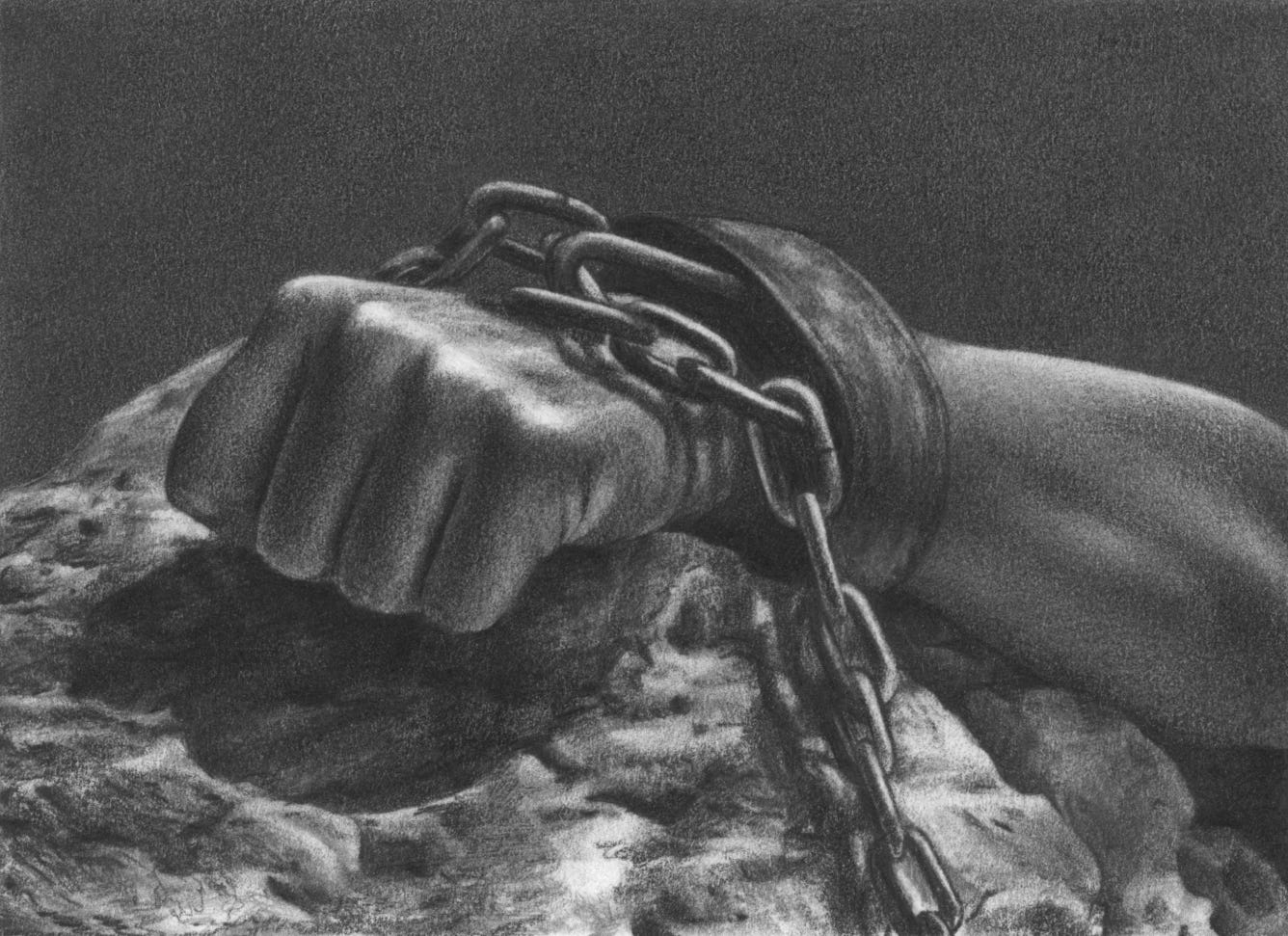
V
Did I always know that that’s how it would end up between me and Lana? Her on this strange rocky jetty by the loading dock for our speedboats and some of our supplementary deliveries, twisting her wrists ineffectually to get out of my taut line hitch, writhing her body from side to side in a way that doesn’t do much either but does accentuate the brown rock-tying smock, just screaming, screaming, as the tide, and maybe a bit of seaweed, come bearing down on her.
Yes, if I’m being honest, I guess it was always in the cards. It’s been a real mystery to me why it hasn’t worked out any better – why, any time I wander over to Lana on the bannister with my overtures, she seems to always just keep staring at the blast shield at the mouth of the cave. I’ve had different theories about this. One is the theory of the jug ears. My face, I would say – and over the years I’ve consulted many different tough-talking hoodlums from the lowest dregs of humanity, none of whom would have any reason to lie to me, and they pretty much concur in this – is not at all bad. It’s maybe a little rectangular, but there’s a hard villainous sheen to it, plus my head shaved in MMA-derived henchman standard, plus a couple of scars from knife fights that should by all rights drive women crazy — certainly, these work wonders for men who are on the other side of the business. What comes through in my sheen, in the dark pits of my eyes, is initiation, is a man who has fully achieved all possible separation from his parents, who has stepped well beyond the bounds of conventional morality, who has killed and earned the begrudging respect of those he has killed, who has had the peculiar mystical transference of seeing the light go out in someone’s eyes and carried out something like the priestly offices even as he focuses on choking that other person to death, and sensing their soul hover in them, and sensing something of their soul wander into him. It’s a spooky, special sort of thing, has to be experienced to be believed, and, from every movie I’ve ever seen, it's clear that women respond to that – that they can sense it in someone else and know that, for a genuine protector, they will need someone who has had that experience, done that dance with the devil. And, in terms of pure raw experience, there have been many shanty towns, many roguish cantinas, many sketchy strips, many debauched but quite satisfying women who have been happy to receive my largesse on the occasions when Bond doesn’t foil one or another of our heists.
Take all that together and something doesn’t quite add up – which brings us to the theory of the jug ears. That the sheen of my features, that the careful daily work I do to routinize, don’t quite eradicate the effect of the unusually small ears that somehow manage to stick almost horizontally away from the rest of my head. And then there is not only that but the time that, in single combat, a smuggler trying to swindle the boss bit off a chunk of the upper lobe. It somehow doesn’t matter that I subdued him, that I applied electric shocks to every part of his body, that he had to stare into my eyes as the mystical transference occurred of his skeazy soul shifting, in part, to me – I can’t explain that to anybody; all anybody ever wants to talk about it is the missing chunk.
If the theory of the jug ears is correct, then that really does put a wrench in all of my plans. It doesn’t matter what my take will be of the ransom from the two nukes, or how many guys I kill with my bare hands, with – in some schools of thought – their powers transferred to me. There will just be something essential about me, something as core and inalterable as the shape of my ears, that will forever disqualify me from Lana and from everybody like Lana. And if that is the case then it probably is better, all around, for me to just leave Lana on the rocks waiting for the tide. There will be the guilt and remorse – that is inescapable, and is a real consideration – but, on the whole, a clean break is better: nothing I ever do will overcome the problem of the jug ears and I really can’t spend my life just running uphill and never getting anywhere.
On the other hand, it’s possible that the jug ears aren’t really the issue and the problem is more about playing second fiddle to somebody like Blofeld – being the head of inner perimeter security is not nothing, there are 25 guys at a time who follow my orders unquestioningly, whom I have almost complete power of life and death over, whom I just have to give one word over the walkie-talkie and they will immediately start charging pell-mell in any direction I tell them to. But Lana knows – you can get never get these kinds of things past a woman – that Blofeld needs to just say one word and I have to spring into action exactly the way my men do, and no matter how good I am with a submachine or the electrodes or even my bare hands it’s that one word, the leash of the walkie-talkie, that’s a turn off. This theory is, however, more hopeful than the theory of the jug ears. Blofeld is not only pasty and overweight and has a bloodstain where one eye should be, but has had his genitals entirely irradiated off leaving only a smooth bald sort of tundra landscape stretching from leg to chest, and if Lana has been perfectly content with him, reading magazines in his quarters for months on end, then in theory if I’m the one at the very end of the chain of the walkie talkies, the one planning out the missile heists, the one stealing the diamonds and sending them into orbit, then Lana will come around, jug ears or not.
If that’s the case, then I really am making the mistake of my life just organizing my men into piles and repositioning our sandbags and, at this very moment, I should be heroically undoing my own taut line hitch and leading Lana onto one of the speedboats moored by that jetty.
But there’s one more theory, and this one turns out, at the moment, to be decisive. That theory is that it’s Bond. It doesn’t matter how much ransom we take in and whether I’m able to pay for plastic surgery to redo the jug ears; it doesn’t matter if I make it into the villains’ school at Grand Cayman and graduate at the very top of my class. At the end of the day, there will always be Bond. There will be his unusually smooth face with the clean features, there will be the Scottish burr and the flow of double entendres, there will be not only the death-defying stunts, the easy mastery of truly extraordinary amounts of violence, but the fact that he is on the side of the good guys, that he is – strange as it seems, the way he kills so many of my friends, the way he talks to and sometimes hits his women – actually something like an angel, carrying out the more delicate tasks of the angels. Take all that together – take Lana chit-chatting for a few minutes with Bond in her cabin and forgetting all about the, likely, millions of dollars that Blofeld has by this time spent on her; take Lana discreetly passing Bond some sort of broken glass or other allowing him to saw through the rope tying him to his chair in Blofeld’s office and then to kill the two guards, Davis Drake and Vitaly Marjic, with some sort of efficiently-executed jiu-jitsu move while Lana watched, after which Lana shared a quick kiss with him and then didn’t mind at all when he went darting off again, when he went to find his mermaid-like blond currently under fire. Take all that and there’s no point really. The only thing to do is to kill Bond and then, probably, to try and forget Lana in one or another of the roguish cantinas.
It will still be a few moments before the tide comes in. I could wander back to the jetty – after all, my murdered men aren’t going anywhere – and put these questions to Lana, get an answer for once and for all. Some clarity would be deeply appreciated, and I think would make the desolate time in the cantinas go that much faster, would allow me to say to myself that, however much the house in Montclair might have seemed just imminently, imminently in reach, that it always was an illusion, that the thing to do would be to find someone with maybe not quite the same striking figure, someone not as dazzlingly, treacherously red-headed, but someone who didn’t mind the jug ears. Yes, that would be the thing to do, and one word from Lana – just that note of clarity and closure – would do it, but as I finish stacking Jack O’Hare and one of my grunts comes along with a forklift to take the bodies to the crematorium, and I am actually starting to turn and head back to the jetty, a new round of automatic gunfire breaks out, and this time from the cordoned-off, bullet-proof, impenetrable inner control room itself.
This is, to be honest, something of a relief. Security for the inner control room is the direct responsibility of Jaws and of Sod’s specialists. All I can do is race in futilely with my men and do a quick scan, but by the time we are there the damage is already done. The bodies of the techies are strewn everywhere, their computer screens smashed up, several of them in symbolically resonant positions, their heads planted on their keyboards, that sort of thing. The air vent to the ceiling is hanging open from where Bond would have emerged with a single scissors kick before somehow overwhelming the heavily-armed, highly-trained guards standing around and preparing for nothing else except exactly this eventuality. The codes for the missile launch have been overridden and the missile countdown is now frozen on one of the screens, the screen itself blinking on and off like in the early desktop era when computers would just crash all the time.
There is more bad news. Kevin Fincher elbows me. Down below, in the main dome of our lair, Blofeld is closing the hatch of his Bathosub and doing something with his hand that looks very much like he’s hitting a button on a remote control and then the Bathosub is taking off. As soon as it does so, slaloming its way around our U-boat, an alarm goes off in the building, reactivating the enormous buzzer in the outside control room and counting down from five minutes.
“I fucking knew it,” says Kevin Fincher. “I knew that at some point he’d blow us all up.”
But it’s not my way to disparage Blofeld – he’s always been a fair boss to me, and I understand the need to blow up the entire lair if the main control room has been compromised. And it’s this kind of stability, this respect for the integrity of what we’re doing, that now saves both my life and Kevin’s. Kevin, who can get a bit emotional, goes muttering off out of the control room and nearly falls straight down a chute in the floor from where Blofeld has tried to drop Bond but Jaws, it seems, has somehow been flipped instead into the shark tank and I can see him thrashing around in there. Which is too bad. Jaws is one of the better liaisons to a boss I’ve ever had, and, as intimidating as he can be, all seven and a half feet of him and with his teeth their mash-up of different kinds of metal, he never minds being the butt of everybody else’s joke, just laughs along in the canteen when everybody else does their Jaws impressions.
Oh well. There’s no time to mourn. I grab the back of Kevin’s shirt, and he has just enough dexterity and I have just enough strength that we avoid tumbling into the chute together, and Kevin, like a dancer, steps on the very outside edge of the chute and I follow him and we make our way around and manage not to glance down at Jaws, who is bellowing from the water.
Now we really have to hurry. The U-boat is making its claxon noises like it’s getting ready to submerge and the clock is counting down and Connie, who is patient and unruffled to the last, is urging evacuation.
Down on the base floor of the dome, right where we had small-arms drill, Bond is standing alone. My guys, rushing to evacuate, pause and surround him. Strangely, everybody seems to have lost their weapon in all the chaos, but they look intimidating enough, in their neat uniforms, with their hard stares.
We charge pell-mell. Jan Dudja, who came to us as one of the top karate experts in all of Poland, somehow forgets his training and goes straight at Bond with his hands low. Bond gets him with a a big wheelhouse of a kick to the head that not only takes out Jan but sends him smashing into Arnold Reit who spreadeagles onto the floor and also disrupts Sasha Mikolić who is in the process of treacherously pulling out a knife. Bond is able to recover fast enough from his kick both to dodge a bullet from Fincher and then also to get behind Mikolić and to plunge his knife into his own chest, which is a real breakdown in form for Sasha. This seems to break the morale of several of our other fighters, and the Sanchez brothers, who do everything together, do this together as well and just run straight at Bond, who manages to clothesline Julio and then to knee Danilo right in the abdomen in such a way that he is useless for the rest of the fight. And he recovers in time from that to land a kick on Vova Niksić, who at least is armed but for some reason pulls his gun out only when he is in hand-to-hand range, and Bond sends the gun flying and then takes out his own Walther, which I had sort of forgotten about and executes Vova from point-blank range.
I am pacing around on the outside of the circle with my hands behind my back and I am just getting more and more discomfited. It’s not like we haven’t trained for this – we have trained every day, for hours at a time, for exactly this situation. We have recruited far and wide, for thugs, cutthroats, people utterly lacking in conventional morality. And then, every time, it seems, when we get to this moment, everybody’s combat skills just fall completely apart, and these strong men, dangerous men, men who have dedicated their entire adult lives to one highly-specialized combat skill find themselves getting picked up and tossed in the water or having their guns kicked out of their hands or their knives turned around against them. It’s really just unbelievably maddening.
And now things go from bad to worse. Sod’s specialists come rappelling down from the upstairs balcony level. They are dressed in sheer black that is maybe a little unimaginative but, I have to admit, is a touch more intimidating than the blue-and-yellow of my guys. Sod’s goons are trained to a degree that puts even mine to shame, but for some reason they don’t hold a line and use their firearms to surround Bond. Instead, they charge pell-mell as well, and Bond, who has the Walther out, gets Chin Ma-Ring, the judo specialist, with a clean shot right to the center of the head, and then Luka Morezh, who is one of the most creative torturers I have ever worked with, with a shot to the ribs, which sends him careening, maybe a little over-dramatically, into the water, and then he pivots the gun upwards to shoot this one goon who never takes his balaclava off just as he’s starting to descend on his rope line to Bond, and then shoots behind his back to hit Julio Sanchez, who has recovered from the clothesline enough to charge at Bond, holding a rope to strangle him with, which isn’t something we’ve ever practiced, and I can’t even imagine what that will do to Danilo, who is still just uselessly holding his abdomen and stretching his arm out piteously towards his slain brother. And then Roger Barker is shot dead mid-charge while holding some sort of axe and then Bond pivots and with seeing-eye precision hits Kevin Fincher, who, for some reason, has tried to grab Lana, currently cowering in a corner, and to drag her off again.
I interrupt my pacing long enough to glance up at this – Lana in her earth-colored smock, which sets her off very nicely against the jetty and the speedboat pier, somehow free again – and Bond and her sharing a look, Bond with the kind of easy gentlemanliness like someone who has just offered a cab to a lady even though he’s hailed it first and Lana, as much as her whole persona is built around pouting, is built around being-impossible-to-please, with an honest-to-god smile on her face.
This is really getting to be too much, and I take out my own pistol – a Beretta Px4 Storm, in case you’re interested, manufactured in Brescia with a cutting-edge polymer construction and featuring my own customized modifications to the slide catch and magazine release button – and have Bond dead in my sights. Sometimes, when facing guys breaking into lairs, you come across someone who seems to have a pistol with never-ending release, and you count their shots and modify your tactics accordingly and then they just keep shooting and it just drives you up the fucking tree, but in this case Bond’s gun seems at least to have fallen silent, and there’s nothing at all to save him, except that Sod taps on my shoulder and lightly pushes my shooting arm down, and with a look over his balaclava says that this is his moment to seek revenge for the death of his father, electrocuted on a fence in the depths of Fort Knox, and it’s hard to argue with that, so Sod steps forward, and, come to think of it, the Walther may actually have one more bullet in the chamber, but Bond seems to respect the look of decades-long-brewing revenge in Sod Job’s eyes as well as the sombre way that Sod advances to meet him.
By now, the timer for the explosion is under a minute-and-a-half, and the administrative staff are running for their lives from the upper floors, but those of us in the shock teams who aren’t crawling around on the floor clutching our abdomens can’t help but be fascinated by Bond and Sod. Sod really is unbelievably strong. All that time trying to crush a golf ball isn’t for nothing. And Bond tries to swing with one hand to punch him, but Sod somehow grabs that hand mid-air, holds his fist in his own, and begins to crush the metacarpal and phalange bones in his hand exactly like he were crushing a golf ball, and Bond cries out, which is reassuring, and I happen to glance at Lana at this moment to see if she has registered that her champion can scream like a little girl, scream just the way anybody else screams when in sufficient pain, but she seems only to show concern, and then Bond somehow manages to pivot his legs around and hit Sod with a body shot that sends him staggering and loosens his grip, but Sod’s incessant hours of training haven’t gone for nothing, unlike the rest of my so-called team, and he comes back at Bond and grabs his throat and is choking him and I’m sure would say something clever and decisive if he hadn’t decided to be completely silent in homage to his father, and the veins are popping in Bond’s neck and it looks like his head is about to pop like a grapefruit at any moment, except that that mermaid-looking girl has been hiding undetected throughout the firefight and now she steps forward with some kind of a harpoon and sends it through Sod’s back and with the point sticking out the front and he gives some kind of a sick look to Bond before he topples slowly forward, and now we’re really getting under the wire here. Smoke of some sort is emerging from the control room. The U-boat is making its claxon sound like it really is going to submerge this time, and a crew member in a grey German-like uniform comes to the top of it to close the hatch, and Bond has leapt onto the sub and now sends him off into the water with a flying kick, and is shouting at the bikini girl to jump onto the sub, which is starting to sink the below the water, and she does, and then scampers up to the tower and Bond pulls her in, and it’s hard to know what the plan is from here – is he really going to knock the entire crew of the sub unconscious and then drive the sub?; when in the world would Bond have done the training to drive a sub? – but I have the sinking feeling that he’ll manage, and I look over to Lana to see if she’s at all bothered by the solicitude that Bond has shown for this bikini girl with the harpoon and didn’t even give a backwards glance to her, but Lana seems to have reverted to her usual look of remote disdain.
There’s really no more time now. Steam is blowing outside from various control panels, and Lana and I clearly have our differences, but I reach out to her from my spot at the edge of the water. Yes, tying her to the rocks wasn’t the most romantic thing in the world, but it’s compensated for in many other ways – how she let the two guards die in the control room just to free Bond, how she exchanged that look with Bond and right over the body of Kevin Fincher, my loyal, long-time sergeant. There’s a certain school of relationships that holds that wrong or right don’t matter, even compatibility doesn’t really matter, what matters is the sheer volume of what you’ve been through together – and Lana and I have, actually, already, been through a lot.
“Take my hand,” I say. We’re down to seconds now. Lana is still cowering in the corner. We can set aside all the romantic questions. She doesn’t have to forgive me for the rock-tying incident, doesn’t even have to understand it – a fit of anger for what had happened in the control room, that maybe would have passed long before the tide even came in – but I have, as I think I’ve mentioned to her, advanced scuba certification. I’m literally the only thing keeping her from a fiery death from the base explosion, in addition to whatever toxic chemicals Blofeld keeps around, or else a watery death, when everything sinks piquantly into the sea, and still, still, Lana cowers. Still, she clings to her alcove of rock-wall.
“Lana,” I say, but it’s too late. The clock ticks down to zero. The base is blown sky-high. Everything caves in. I end up – I don’t even know where I am – bouncing across the deck, thrown into the water. The bodies of my friends all around me, some thrashing, some just sinking down below me. This would be a good time to sink entirely into reflexive, fight-or-flight mode – I’m sure that’s what Bond is doing, drop-kicking his way to the bridge by now and taking control of the submarine – but this seems to be one of these accidents that goes in slow-motion. I’m not really ready to think yet about Lana, Lana refusing my outstretched hand, and what passes my vision instead is the base – the months I’ve spent at the base, the plans for what I’d do with my take for the ransom of the atomic bombs, the endless hours in which we didn’t really do much of anything, drilled a bit although in retrospect not enough, lived in terror of Blofeld although weren’t as panicked as you might think once we got used to it. Mostly just shot the shit – the time when Luka Morezh, sinking below me now, grabbed a bit of every kind of food he could find in the canteen and stuck them into his teeth to pretend to be Jaws and Jaws laughed so hard that Chin Ma-Ring had to do the Heimlich on him and that made Jaws laugh harder still, laughing and choking and laughing and choking while Chin Ma-Ring tried to get his arms around him; or the time when Jack O’Hare, who had been dead-quiet the entire time he’d been at the base, opened up to me when I was doing a spot-inspection of his sentry duty, and just suddenly started talking about this girl of surpassing beauty he had seen dancing against a pole in Blofeld’s club and how it had felt like everything else he had gone through, everything at home, everything on the road in his time as a runaway, had all been worth it, had all come together just to have a glimpse of a beauty like that, and I hadn’t really listened since I had to get on with my inspection and I had once spent a night with her for $120 plus a promise to get her in on our next heist and felt bad about mentioning it to Jack, but it all sort of comes back now as I float underwater and my lungs begin to fill up and the bodies of my friends bash into me as I try to claw my way up to the surface, and everything anybody has ever said is true, about the little things in life, and about how you don’t appreciate stuff until it’s gone, and about how it’s all precious, precious, precious, the hours on the base when we couldn’t think about anything except that mind-numbing tedium and how badly we didn’t want to be fed to the shark, but in retrospect how it was all teeming, how much we laughed in that cackling, never-ending way that only henchmen can laugh, how we were surrounded by people who were just like us, who got us, who saw us exactly as we were, as brutal and as loathsome as we were, and never thought any the less of us for it. It’s all ended badly, very badly – no money upfront on the heist and, now, no money at all, Lana gone, the base gone, all that training obviously for nothing, a watery death unless I can somehow reach the surface at which point I’ll probably burn up, and it’s disgust I feel certainly, a great deal of disgust plus some self-loathing that I don’t really have time to get into right now, but I would be lying if I said that I didn’t appreciate it, appreciate the time I got with Sod and Jaws and The Sikh and Luka Morezh and Kevin Fincher and all the rest of them, and, maybe, on balance, it seems like slender compensation, but at the moment I don’t have much of a choice except to take what I can get. And I smile a little, in that creepy, slightly psychotic villainous way, and then just as I’m breaking the surface, something smashes into my head and it all goes dark, dark, dark, dark.
PART TWO
VI
When I wake up, I am broke. I am coughing up water, I am pivoting to my side heaving water out of my lungs, my beautiful blue uniform with the yellow sash soaked to the point of unrecognizability – the sun is beating down hard on me, there are gulls cawing in the air communicating their gull thoughts, and all of these things are a failsafe sign that the base is destroyed, our carefully-laid plans evaporated, and I am flat-broke, and back to square one all over again.
There is a body next to me in the sand, black-suited, waterlogged, with the look of being similarly broke. I go over, flip him over, find Sod sputtering in and out of consciousness. He has some sort of harpoon tip sticking out of his thorax and he’s making the ‘leave me’ moaning sound. But I took CPR back in one of my first lair jobs and give him a canonical sequence of fifteen chest compressions to two rescue breaths and he sputters back to life, heaving to one side, coughing up water, and, alarmingly, blood. The harpoon tip is its own concern – my preference is to leave it in until we can find a doctor – but Sod solves the problem neatly by ripping it out of himself and then, for good measure, grinding the tip to dust with his bare hands.
“You ok Sod?” I say, but Sod seems to be keeping to his annoying vow of silence. He pivots away and narrows his eyes to contemplate revenge.
The beach has seemed desolate, but, every few waves now, something else washes ashore from our base – there’s one of the rows of our foosball table, there’s the body of Julio Sanchez, completely waterlogged and beyond even my CPR capabilities. Maybe more relevantly, over the dunes, there are two guys in sunglasses with submachine guns pointed at us. I have no idea how long they’ve been there, or why they didn’t help us when we were drowning, but they have the patient look of thugs who’ve been pointing their guns at a target for a long time and have been playing some complex game with themselves about whether or not they want to pull the trigger.
“What are you doing on our island?” says the first thug, the leader of the two of them.
This seems so obvious that I can’t think of the witty reply that’s supposed to fit this situation. I gesture mutely towards the water. “We were drowning. We washed ashore here.”
The second thug, chewing on a toothpick, has the look of an insouciant younger brother brought into the henchman business out of both inertia and a sociopathic urge to kill. The game I imagine he is playing with himself is that he’ll let me live if the first thing I say starts with a consonant; shoot me if it’s a vowel – or some variant of that.
“Do you know whose island this is?” says the first more serious thug. They both have lilting Jamaican accents, which are always a treat for me in henchman work.
“We have no way of knowing,” I say, careful to avoid vowels.
“Alright,” says the first thug, in the usual way that seems to be relenting but is actually a trap. “If I say the name Dr. Jacoby, what do you think of?”
“Nothing at all,” I say truthfully.
“What about for him?” he says, swiveling his eyes past the butt of his gun to Sod.
“He’s decided to be utterly silent until he achieves revenge for his father,” I say.
That seems to impress the two thugs. “Come with us,” says the first one in his lovely accent, too lilting to be truly intimidating. They press their pistols into our backs and we walk uncomfortably like this for a long time, uphill on a gravel trail that I keep tripping on and keep having to reach out to catch my balance.
As usual, pointing a gun at people gets tiring after a while, and something about it – like car rides, I’ve always thought – stimulates the impulse to speak, to share confidences.
“We thought you’d drown for sure,” says the first thug, “there’s a bad riptide off the coast, gets just about everybody. My associate here, Jama, he had twenty bucks down on it getting the two of you.”
“Hmmm,” mutters Jama, which seems both to express his disappointment and be a greeting.
“Your friend here is so strong, crazy strong, he swam through the riptide and carried you,” the first thug says.
“He’s a good friend,” I say.
“And he was wounded?”
“James Bond’s mermaid girlfriend stabbed him with some sort of harpoon.”
“Crazy,” the first thug says, and, behind my back, the two of them shake their heads and raise their eyebrows at each other. “Dr. Jacoby’s going to like the sound of him.”
It seems impolite at this moment to ask why they didn’t try to save us, and, really, there’s no reason why they would have. Saving strangers isn’t in the code.
“It’s good to meet you,” he says. “This is Jama. I’m Milagros.”
There seems to be no clean way for us to shake hands from around our backs so we skip that. “I’m Banx. Banx Mulvaney. This is Sod Job.”
We both take a second to see if any of our names impress the others, but all of us draw a blank.
“Well, where you boys come from?” says Milagros, who by now couldn’t be friendlier. “Jama and me was trying to work it out. Jama thought maybe a speedboat chase.”
There seems no point in lying so I don’t bother. “We worked for Blofeld,” I say. “We had an airtight plan to either ransom two atomic bombs back to their governments or else start a nuclear war with them.”
There’s a silence and Milagros’ pistol taps thoughtfully against my back. “If I was you,” Milagros says, and he’s whispering but his whisper isn’t exactly sinister – more, I would say, gossipy. “I might come up with some other story for when you meet Dr. Jacoby. The doctor has – how should I say it?”
“He has a ting about Blofeld,” says Jama.
That would seem to be a good end to this exchange, but we have a ways to go and Milagros gets thoughtful again.
“Although, I don’t know, maybe bring it up. You have to go by how you feel,” says Milagros in the emphatic way that I take to be closely linked to his philosophy of life.
It’s very strange, now that I think about it, that there aren’t range rovers or ATVs of some sort waiting just beyond the dunes. It’s really been a long time walking, with the pistols into our ribs, with the sun beating down, with Sod and I so recently having almost drowned and still without any water. But there’s no sign of any vehicle or building in sight.
“So what’s it like?” Milagros finally says.
“What’s what like?”
“Working for Blofeld.”
I have to think about that one. “It’s great,” I tell him. “It’s an amazing operation. Everything top-notch – the base, the weapons, the uniforms. The plans are always daredevil and world-shattering. There’s nothing like it.”
The pistol against my ribs seems to sag a bit.
“Is it true he feeds people to the sharks?”
“Yes,” I say. “It’s true.”
“Is it true nobody knows what he looks like, that everybody calls each other by number and he’s only ever called Number One?”
“No,” I say. “I think they tried that once, but it didn’t work, the turnover was too high, everybody got confused, and meetings were impossible. No, if he wants something, he just meets us.”
“You’ve met Blofeld?” Jama says, and there’s a pause in the pressure on my back as Milagros waves his pistol at him.
“Sure,” I say. “I was the Head of Inner Perimeter Security. I used to talk to him almost every day.”
There’s a long silence behind me. “Just one more ting,” says Milagros. “If Dr. Jacoby asks, can you not let them know that we asked you these questions.”
“No problem at all,” I say, and I tick my head towards Sod. “And you don’t have to worry about him either.”
We are at last coming to some sort of building. It reminds me of the visitor’s center of a campground, long and low, maybe stretching for stories underground or maybe not. It has a very granite, earth-tone feel to it, and the roof is covered in packets of astroturf to help it fade into surroundings. There’s a helipad off to the side.
“Dr Jacoby,” Milagros calls out in his lovely accent once we’re in front of the compound. “Prisoners.”
There’s a stirring inside. A group of sentries, with camouflage foliage on their helmets, come out and point their submachine guns at us.
Milagros chats with them for a bit in patois, and then the line of sentries breaks dutifully apart, and a figure descends from the top of the front staircase. He’s, I would say, on the small side, wears his gray hair a bit long, giving him a kind of jaunty middleaged bachelor look. He has thick glasses – not sunglasses exactly but maybe transition lenses so that his eyes are effectively clouded. I’ve noticed, by the way, that sunglasses are popular with the sentries. He’s in a Nehru jacket, which I’ve always thought is a great look, and he’s holding a cigarillo that he seems not to be smoking so much as keeping by his side and letting the smoke trail out.
“State yourself,” he says.
“We found these two on the beach,” says Milagros. “This one – ” meaning Sod – “is about as strong of a bruiser as I’ve ever met, he kept his friend from drowning. Then, when they came ashore, they tried to fight their way past us, but Jama and I subdued them – ”
I decide to let this pass.
“And brought them to you.”
“But where did they come from?”
Dr. Jacoby has a very nice voice. It’s mellifluous and has a kind of serpentine movement to it. The disadvantage is that it takes him a long time to get to the end of a sentence. I should mention also that he has a very complicated facial hair pattern, a moustache that’s long but shaved thin and that loops around and connects to a slightly-scraggly beard. The color, I would say, is salt-and-pepper.
“We didn’t ask sah,” says Milagros. “We saved the interrogation for you.”
“Very good,” purrs Jacoby. “They’re strong you say? Well, we’ll put that to the test.”
Jacoby makes a crisp sideways move with his head – the kind of thing that really has to be practiced to be done right – and the sentries step sharply to grab Sod and me and bring us into the interior of the building.
There’s a basement with low ceilings and I am led down the steps and a sentry grabs my head to keep me from bashing into it, and then am brought to a metal chair, with a handful of knife strokes etched into it, and tied up with a clove hitch.
There’s a partition in the basement. On the other side of it is a wrestling pit-type setup, with a chain link fence around it, and Sod is standing in the middle in a pair of slightly-undersized shorts.
There’s a presence behind me and a now-familiar voice purrs, “We shall see how strong your friend really is. And if he is not as strong as my associates claim, then we shall test your own strength and powers of resistance.”
His style seems to be familiar rather than forbidding and in his casual, domineering way he kneads his fingers around my neck massaging the upper dorsal muscles.
Now, a door is opened on the other side of the petition and a large, growling, red-eyed baboon unleashed. Its two handlers let go of its collar and dart back behind the door.
“That is no ordinary monkey,” Jacoby says. “That is a cross-breed chacma baboon of my own devising, trained to feed on human flesh. Should your colleague survive it, the two of you may be of some use to me. If not, then I confess it will gratify my own baser instincts to be present as you watch your closest friend torn limb from limb.”
The situation isn’t ideal, but I am not, I must admit, particularly worried about Sod. Back when we worked for mad Dr. Czajkowski, trying to introduce pestilential strains into monkey populations to infect the world – the very first job where Sod and I crossed paths – the rhesus monkeys frequently broke free of their cells and it was one of Sod’s jobs to corral them. Usually, they were already infected with all kinds of genetic mutations – admittedly, they weren’t as large as this baboon, which has extremely sharp teeth and bloodshot eyes, and I don’t know much about Jacoby’s hybridization skills – but at the end of the day a fighting monkey is just a fighting monkey. It circles around Sod for a bit, leaps onto different ledges and bares its teeth, and then when it finally thinks it has an angle it squats above Sod and leaps towards his shoulder, but, really, the monkey could have been a little more subtle in its approach. Sod grabs it by its neck mid-air and then uses his other hand to squeeze towards its brains. It turns out to be not quite as hard as a golf ball, and the baboon gives this bewildered look, this look that to be honest will haunt my dreams for quite a while at Dr. Jacoby’s, a look that says more or less that it was only following orders, only doing what it been trained to do and what it believed ensured its livelihood, and that, yes, it was trying to rip out Sod’s jugular, but it felt fundamentally that it and Sod were on the same side, playing the same game together even if they happened to be assigned to opposite teams, and Sod is really taking things way too far and way too personally.
It's only a moment, and I may be projecting, and it all gets a little lost when the monkey’s brains go scattering all over the cage, and over Sod’s bare chest, and the orderlies who have crept back in to the ring exchange this very discomfited look, and I feel a tattoo of sadistic pleasure from Dr. Jacoby’s hands on the back of my neck.
“Marvelous,” he says. “Your friend has certainly proved his worth to this organization. Now let us discuss your justifications for my keeping you alive.”
He has swung around to the front, two orderlies with exquisite coordination bring a velvet Chesterfield armchair with unusually plush armrests to face me and Dr. Jacoby sits in it, cigarillo dangling to the side. The orderlies now move to either side of me, one with jumper cables, one with pliers.
“Are you able to do what your friend does – and squeeze out the brains of my enemies with his bare hands?” says Dr. Jacoby.
“That is not my skill set,” I say with dignity.
“What is?” he purrs.
“I am more supervisory and managerial. I have been a head of inner perimeter security, controlling teams of anywhere between twenty and thirty. That involves training, personnel management, as well as fight supervision.”
Dr. Jacoby narrows his eyes and his left lip curls upwards.
“Are you familiar, Mr. Mulvaney,” he says, “with the phrase, ‘too many chiefs and not enough Indians’?”
“I am,” I tell him.
“I have plenty of people who think they can manage and supervise, and not enough people able to blindly follow my orders.”
He nods towards the orderly on my right, whom I now notice is Milagros, re-dressed in a somehow unusually-white lab coat that stretches all the way to his feet.
Milagros has the jumper cables and he gives me a quick zap right to the nuts.
“That’s for having the audacity to tell me what to do with my own organization.”
“I didn’t say a thing,” I tell him, “although to be honest I could make a few suggest – ”
The end of this is cut off with Milagros leaning back in, applying a dose of electricity right to me, although this time he misses the ball sack and hits my inner thigh. I scream, both to play along and also because it does nevertheless hurt a bit.
“How dare you,” Jacoby says. “You wash up on the beach from god only knows where, and you immediately start giving me your qualifications, you immediately start critiquing – ”
“I really didn’t,” I say. “I’m just telling you what I can offer – ”
The rest of this is a little hazy, since Milagros applies the jumper cables again, thankfully again to my inner thigh, and Jama on the other side is ceremoniously placing the pliers around the nail of my pinky finger.
“You start talking to me about managerial skills, supervisory skills,” Dr. Jacoby is maybe saying. “You would be lucky if you’re allowed to clean the toilets here – or to be fed to the baboon.”
He makes the slightly circular head-shakey movement to Milagros that means to call it off. I slump forward in my chair. On the other side, Jama tightens his pliers.
“Anyway, where did you get these alleged skills of yours?” he continues. “Who in their right mind would allow a square-headed mug like you to supervise anyone besides the latrine detail?”
Milagros, to my right, gives a brisk headshake. As I bend forward and groan and the spittle pools out of the right side of my mouth and towards the ground, I raise my eyebrows at him to mean that I have to say something. Without actually moving, he shrugs his shoulders and widens his eyes to mean it’s my funeral.
“I won’t tell you,” I say.
“I regret the cliché,” says Dr. Jacoby, “but we have ways of making you talk.”
He turns to Jama, who has been futzing with the pliers, and now Jama yanks away. In my time I have seen some amazing plier men – if I had to rank them, I would probably start with Anatoly Sherenko, who refined his technique in Russian prisons, and could pull a fingernail off in a single yank, it had to be seen to be believed, but it was so smooth that the bosses didn’t really like it, their claim was that it defeated the whole purpose of the exercise – and Jama is very, very far from their league, just tugging away like he’s doing some home repairs and I’m a rusty nail, but, even so, it must be said, that it’s very effective, no matter what it’s lacking in technique.
“Who were you working for?” Dr. Jacoby is saying. “And are you still working for them? Are you a spy sent into my island? Is it Franz Gruber from Spider Island?”
Honestly speaking, his interrogation technique is a mess. He’s not leaving gaps between my screams for me to give my answers, his questions are unfocused and all over the place.
“I don’t understand. Which of those do you want – ?”
“Next fingernail,” says Jacoby.
“I’m still working on the first, boss man,” says Jama.
“It should be off by now.”
“These aren’t very good pliers,” says Jama. “They kind of mash up the nail instead of it coming off.”
“Milagros,” says Jacoby. “You can do what your colleague can’t. Now, who are you working for?” he says to me. He has pulled the Chesterfield forward and has switched to a low, confidential tone.
“I can’t tell you,” I sputter.
Milagros takes a moment to recharge the jumper cables and then he stands over me. This time he really does attach them to my nuts, and, as he’s doing so, with his back to Jacoby, we have a moment to exchange looks. I drool and raise my eyes wide. Milagros gives me a quick firm shake of his head but nothing else, no clue as to what might appeal to Jacoby, what might get this to end.
Milagros stands back. Jacoby puts the cigarillo to his lips. Milagros sends a jolt of pure electricity straight to my sperm count, straight to the entire life I had planned out with Lana Lynx, straight to my conception of myself as a man, and somewhere in the midst of this trauma, the trauma shooting all around my torso and hitting my cranium, the only words that come out, other than pure terror and agony, are “Blofeld, Blofeld, I used to run security for Blofeld.”
Jacoby, presumably, makes the same head-circley gesture to Milagros. When I open my eyes, he is standing, deflated, by his generator. Jacoby looks very thoughtful.
“Leave us,” he says. “And give him a glass of water.”
My hands are shaking too much to sip. I just lean forward in my chair, shaking and drooling. What I hate the most, hate more than anything, is breaking from ineptly-applied torture.
“What is he like?” Jacoby says, back to his syrupy tone.
My teeth are chattering into each other, but I manage to put together the following. “He’s a mastermind, a criminal mastermind. Security is like nothing a two-bit thug like you could dream of. The heists are daring and imaginative, the uniforms are bold and creative, and anybody who fails is fed to the shark – no questions asked.”
Jacoby leans back in his Chesterfield. It seems that an ashtray has been neglected and he ashes onto the floor.
“And you think we are not quite to that level?” he says.
“You are not a smidgen of that level,” I tell him, and all my fury, the lost child or two with Lana, the sheer humiliation of sitting here stark-naked facing a man in a Nehru jacket and Chesterfield, comes pouring out. I am ashamed to say I cry a little.
“What – ?” He puffs and ashes and puffs again. “What would you suggest we do differently?” he says.
“It’s a long list.”
“We’ve got time.”
“First of all, appoint me your Head of Security. Your men are sloppy – in arms, in training, in carriage, in uniforms, in everything. I can whip them into shape. Second, appoint my friend Sod Job head of a small team of crack ninja-type specialists. They can do infiltrations, sneak maneuvers, rappelling, whatever you like. He will give special training to three or four of your men. Have that and you’ll have a criminal enterprise that can be feared far and wide. Third, the building. Your lair needs to stretch far underground. It needs to have wings that can be accessed only by your elite circle. It needs to be so hidden that a passerby – some police constable – can walk right over it and not suspect a thing – ”
“That’s an awful lot of money you’re talking about,” says Dr. Jacoby.
“Architects can always be kidnapped, divided into teams so that none of them know the entirety of the project, and then executed at the end just to be safe. Building teams can always be tricked, or impressed into work, and then executed as well. This prairie style with an unused helipad impresses no one.”
“How do you know it’s unused?”
“Where’s the helicopter?”
“Maybe it’s out. Maybe we’re expecting visitors.”
“It hasn’t been cleaned in ages. Any professional can see that. Fourth, you need a shark – ”
Dr. Jacoby scratches his cheek with one finger. “It felt derivative to me. Everybody has a shark.”
“Everybody has a shark because it’s effective. You can’t get by on baboons. Have a shark and your discipline will go through the roof – guaranteed. Piranhas can do it too, but I prefer the shark.”
“Why is that?”
“Piranhas say creepy and sinister. A shark says this is a brass tacks villain that means business. Also, piranhas are pretty rare and hard to come by.”
Dr. Jacoby looks me squarely in the face. There is a lot to work on as well with his appearance – the moustache is dyed but not the beard, which is a dead giveaway – but we’re not really close enough to delve into that.
“Everything you’re saying involves a lot of money,” he says, really stretching out the word.
“What are your plans for money?”
“It’s a bit of an issue,” he says. “Between friends, it mostly is that there’s a banker in Bermuda we have collateral over and we just basically point a pistol at his ribs until he wires money over, but that’s going to be discovered eventually – ”
“Agreed,” I say.
“But I wanted to do something really big.” He leans back. He drapes one arm all the way over the high back of the chair. “I was thinking, why not kidnap a major celebrity, hold her hostage, really get everybody concerned and ask for some outsized ransom. I don’t think anybody’s ever actually done that.”
I have to think for a moment. “Patty Hearst.”
“Nobody knew who she was until she was actually kidnapped. I was thinking of somebody not at all obvious, but somebody who would really tug at everybody’s heartstrings. Patti LuPone. Kurt Douglas. Maybe Shirley Temple.”
“That’s interesting,” I have to admit, “but I don’t think it’s the right way. For a really great heist – a Blofeld heist,” I emphasize, “what you want to do is start with something that points one way and then have it lead to something completely different. So you steal an enormous quantity of diamonds, which gets everybody thinking about diamonds and the diamond supply and an economic shock and then you actually use the diamonds to arm a laser satellite to destroy nuclear weapons installations creating a sudden lacuna in the nuclear weapons race that you then fill with nuclear weapons you’ve acquired in a separate heist.”
“It’s brilliant,” Dr. Jacoby says. “It just seems like a lot of money upfront.”
“Which you don’t have.”
Dr. Jacoby looks at me through narrowed eyes. “We are deeply, deeply in the red,” he says.
“Appoint me Head of Security,” I say, “and I can turn this ship around.”
VII
My first order of business is to speak to Milagros. He turns out to be very big into bird-watching and we stand in a grove in the jungle, while Milagros chews khaat and keeps an eye out for birds that I can’t spot at all.
“You know, I lost a whole bunch of jizz and got one of my fingernails all mashed up because of what you told me,” I say. “He doesn’t have a problem with Blofeld. He’s interested in Blofeld – just like everybody else.”
Milagros pauses because he thinks he sees some kind of red warbler. We have to listen for its call, but it turns out to just be an ordinary sparrow.
“Dis goes deeper than you can imagine,” he says, out of the side of his mouth.
“What does? How does it?”
“I can’t tell,” Milagros says. “I would but if you get tortured again, then I know you’ll give up my secret, since now I know you are someone who cannot withstand torture.”
This makes me probably madder than it should. “No one can withstand torture,” I say. “Have you ever been tortured Milagros? Everybody breaks.”
Milagros puts his finger in the air. He has, he is sure, spotted a rare finch. “I t’ought you would hold on longer than you did, dat’s all,” he says. “If you did, I would’ve let you in to someting really big. But now – ”
“But now I am your boss, Milagros, now I outrank you, now I can do whatever I like with you – all thanks to what I told Jacoby about Blofeld.”
“Yes boss,” he says. “You do whatever you like.”
***
The next few months are spent with bank robberies. It’s me, Sod, Jama, Milagros, and a getaway driver named Hans Fuchs, and we hit about one a week in an island chain stretching from Great Exuma and Crooked Aklins all the way to Bonaire and Roques. All of this is far from ideal. Bank robbery is, as you of course know, small-time gangster stuff – very different from the work of a highly-trained, highly-experienced international henchman. It’s also not wonderful that every time we do it we have to rent a car, and we do so using a not-very-sophisticated false passport that’s been issued to me under the name of David Jennings. So I stand there at the rental counter, with my big square head and jug ears and try to look as much as possible like a commercial traveler from Malta and not a highly-lethal, highly-disciplined Head of Security, and the information from the passport goes off to god knows where in cyberspace, but Interpol – if it even exists; there’s a certain amount of debate on this within the henchman community – has its own issues and seems not to have put the string of bank robberies together, and after an excruciating delay the passport is handed back and David Jennings does his best impersonation of a commercial traveler’s smile and he drives over to some diner around the corner and all the boys load in.
No, it’s not ideal. Usually from my spot in the passenger seat, I’m the one in the, like, command center of the car, able to narrate backwards while fending off any snide comments from Hans Fuchs. I tell the war stories. I tell them what it was like in Blofeld’s lair when Devlin Auberville showed up with not one but two atomic bombs, how his hit squad laid them like a baby in their secluded spot on the sea floor, the strut that Auberville had when we came in to base, when he announced, “Well, gentlemen, there is a new power in the world,” and how we went wild – in our restrained, no-nonsense way we went wild, the way we lined up in our canteen that afternoon, how we moved like soldiers one after one another to receive our helping of mashed potatoes and watery coffee, no complaints today, no arguing with the kitchen staff, because SMERSH was now, all by itself, as powerful as, say, France or Germany – more powerful even because we were crazy and not afraid to strike.
“Bullshit,” coughs Hans Fuchs from the front seat, probably in a display of patriotism.
“Sod was there, Sod can tell you,” I say, but Sod is keeping to his silence right up until the moment he avenges his father’s murder. He is also giving me the kind of odd look that invites further questioning.
“We really did have the bombs,” I say. “Freddie Frixson had his face surgically altered to match a French NATO pilot and then he killed the pilot and Freddie took his ID and stole the plane with the bombs on it and flew it to our base.”
Hans Fuchs coughs his disbelief.
“Well, you get a job working for Blofeld one day and then you tell me what kind of thing he would do,” I say.
It’s getting to be closing time for the bank and Hans eases the car out of park and my guys all start reaching for their balaclavas. It’s amazing how it all fades together. Is it possible I was somehow wrong about it? I never actually saw the bombs myself, was the trick that they were some sort of elaborate decoy? But, no, it doesn’t seem possible. I remember Auberville’s strut – that floating look, that look you can’t fake, like no laws apply anymore, no morality applies anymore, you’re at the very top of the world and you can do whatever the hell it is you want. And all lunch long with Aubverille chatting about this new member of his crew, Derval, telling us about the French pilot he’d recruited and then Jaws noticed something about the way he was speaking and said through his mashed up teeth, “If I didn’t know better, I would say that was Freddie Frixson in an abominable French accent.” And then Freddie opened his mouth wide and, sure enough, there was the gap between his front teeth and there was Freddie’s deep long laugh, the most villainous and sustained of all of our laughs, and we all piled around to look at Freddie and to argue about whether Freddie should get surgery to change himself back or if he was better-looking – or marginally less ugly as Derval. This was all, of course, long before Freddie was fed to the shark to send a message to Auberville.
No, you can’t make this stuff up, you can’t take away these memories, and I do my very, very best to stay present as we rob the bank in Roques, not to get swept away in the action and the adrenaline of it, to really just remember everybody who’s there with me, to remember that one day or other I might be telling the story of the bank robbery to, who knows, some crew trying to stick up a hardware store, and they in turn will never believe our professionalism, our camaraderie. Milagros takes care of the hostages. There’s something so avuncular in his style, and with that lilting accent, that nobody ever particularly panics. He shoots one bullet into the ceiling but he doesn’t particularly need it. Just talks everybody through it – to lie down, to one at a time put their wallets next to them. And Jama, who’s really coming along, goes through, collects the wallets, maybe supplies a sadistic kick to the ribs or something if Milagros isn’t fully controlling them. And then Sod bashes his way into the vault, usually just kicks through whatever security door they have or sometimes grapefruit-squeezes the head of one of the managers until they open up, and the guys in the vault are never any trouble. In theory, I’m supposed to handle security, but usually I just pace around, hands behind my back, watching Milagros chit-chat with the hostages, maybe offering a friendly cigarette or word of advice to the tied-up security guard, and then giving Sod a hand once it’s time to carry the bags of money out of the vault.
Yes, bank robbery is like ballet more than anything else. Everybody’s a specialist, everybody has their own job that they do exquisitely well, but the real art to it is the way that we all watch each other’s back, come to each other’s aid. The way that, here on Roques for instance, we get a vigilante, ex-cop, with a trauma of a wife who was killed in a bank robbery, and he does a judo flip on Jama coming to get his wallet and that means that Milagros has to race over to shoot him just as he’s turning Jama’s own gun on him and then he goes to remonstrate with the cop and gets his life story and confession as he dies and I take over Milagros’ patter with the group of hostages.
“Listen,” I say, “we’re really not murderers – not primarily. You have your jobs. And I’m sure that if you ask yourself if you really like your job or not, I can only imagine what you would say. If you ask yourself if you understand the point of your job, what it all adds up to, I can only imagine you would say something like that’s beyond your pay grade. Well, for us, it’s really not that different. We have a project, a big project coming up, and we’ve got to get revenue for that project. That’s all it is – and I’m sure that just because we’re clearing out this bank, that doesn’t mean you’re going to lose anything from your own accounts, it’s just coming out of a reserve.”
And, meanwhile, the ex-cop is dying in Milagros’ arms and says, “I just couldn’t stand by and let what happened to my Jessica happen to anyone else.” And Milagros holds him and looks into his eyes and says, “Yess, yess, yess I understand, yess I would have done the same,” and there are many worse ways to go, I think, than with an accent like that and strong dark eyes like Milagros’ staring into yours, and his wisp of a smile as he lets you know he’s got you.
And what’s most impressive about this is the way that Jama, having recovered his gun, now circles around to take up my position and gives a short lecture to the shaking guard about how we’re just part of the same corrupt system as he is and then he’s there to help Sod start moving the bags of money out. The grieving ex-cop has expired by now and Milagros, having pushed his eyes closed, can handle the hostages on his own and the rest of us now form a daisy chain passing bags to the door and then Milagros finishes up with a parable on the vanity of money and the ephemerality of life and, this being the most dangerous part, the four of us walk with utmost dignity, bags at our sides, guns tucked away, looking for the ambush of cops that never actually happens, and then the bags are in the trunk and the four of us tumble into our seats and Hans Fuchs drives in the most Germanic way possible, following all traffic laws, while the four of us, gloves and balaclavas off, sit placidly in our seats and, for the benefit of any passing cops, enact the role of five men crammed together in a car simply to take a pleasure excursion around Roques and to enjoy each other’s company.
It's beautiful, really – everybody should get to experience it at least once. There’s no room for squabbling, no room for stray thoughts of any kind really. It’s just money and the tight choreography it takes to get that money. It’s only when you’re driving back, men with the same beatific, innocent smiles pasted on their faces, that the thoughts start to collect – in this case, for me, it’s comparing my own speech with Milagros’ way with the hostages. Milagros never bothers to justify what we’re doing, which I think is probably better. He usually tells a few jokes, sometimes a story. If he’s out of ideas, he’ll narrate for the hostages what’s happening – how Sod is breaking into the vault, how the tellers never fight back, how it will probably only be a few more minutes. Every one of the hostages on the floor has always wondered what it would be like to rob a bank and, if they can get over their fear and their embarrassment if they happen to have pissed themselves, they often will ask Milagros a question or two – about the likelihood of the tellers to fight, about whether five is really enough to take a bank, that sort of thing, and it can often get very collegial and instructive the way Milagros runs a hostage-group.
I don’t really have that touch, I have to admit. For one thing, my accent is a kind of Queens honk that inspires confidence in nobody. For another, I just don’t have these beautiful stories of my childhood in the islands, of learning to distinguish every kind of birdsong from one another, of my mother who taught me the ways of the animals, and made me realize that there was no real law or morality on this earth – that that was all made up by the fat cats who introduce hierarchies and restrictions, who try to separate us out from one another, and put up these big great gates and safes to separate us from our own money.
And Milagros is really wonderful also when it comes to taking last rites. He never pushes it, never gives them some psycho speech. Just sort of breaths into their wavelength, lets the whole truth of their life come together and then culminate in one last word, one sigh, one distant memory. “Yess, yess,” he’ll say, and that’s just about it – Milagros, who has such a gift for speech. I’ve always been fascinated by this moment, and we all talk about it less than we probably should. What is it that comes over a person when they’re down to their last twenty or thirty choked breaths, their last minute or two? Is it God or is it not God? Is it the injustice of being gunned down in a credit union when you are just trying to deposit your monthly paycheck? Is it bewilderment, shooting pain, the microscopic attunement to each of your organs failing one by one? Or is it something different, is it a sense of gratitude that you were here at all, that your path led you to meet your wife who got gunned down in the bank robbery, which gave you the opportunity to grieve for her? What an amazing thing it is to grieve – or to listen to bird songs or to haul bags of money out of bank vaults or to lie down on tiled floors while masked men stand over you. So many things you get to do in this life that the rocks never get to do, and it occurs to me that as you’re gasping out your last breath in the arms of somebody like Milagros that it may all come to you with a sort of indistinguishability – that, yes, this was life, and I got to be part of it, of every part of it.
Somehow I have the feeling that you can only really express this to somebody like Milagros. With priests and rabbis and those sorts of people, you must feel very constrained, you must feel that you have to say what you’re supposed to say – because the rabbi might whisper the last words to everybody else at your funeral service, that sort of thing. But with Milagros, there’s no compunction at all. Milagros isn’t going to tell anyone you know, so if it all comes together in a strange, ecumenical, all-encompassing euphoria, you can tell Milagros; but if, on the other hand, it shatters again, and it’s just pain, pain, pain, just dropping off one meager check at the credit union after another, and that’s in the good times when you and your wife don’t get shot up by the bank robbers, if it seems like a bad mistake, a bad joke, if it would have been better to have skipped it all together, well, your secret is safe with Milagros.
I get very interested by these things but I have to admit that, just as I am not the best hostage-entertainer, I am not the best father confessor. I have a tendency to share some of these reflections, especially in the moment, especially when there’s a bank robbery or something going on all around me and the adrenaline is kicking in, and then I tend to talk over people, and they can’t get a word in edgewise except to moan or gargle or agree with me if I am still pointing the gun at them, and I almost never get an actual answer to all the burning questions.
We take our haul to our rocky cove, leave the rental car – never a problem, somebody always calls it in, and it’s a mark against David Jennings with that rental car company, but Interpol, as far as we can tell, never gets notified, assuming it exists – hop into our speedboat, and set off.
I am careful, on this ride, to sit next to Milagros. We are in our usual post-heist euphoria. It really is one of the best feelings in the world – it’s very hard to say anything negative about it, the wind in our hair and the bags of money in the hull of our boat, and this balletic choreography between us still holding, unless this is the moment we turn on each other, which sometimes happens, and having the feeling of just a job well done, of nobody in the world understanding you at that moment quite the way you understand each other, and then the magnetic sense of the stacks of freshly-printed money, which is felt I would say mostly in the tip of your cock but also with a certain tingling in your hands, and for the purposes of this sensation it doesn’t matter at all that all of the money is within a few minutes going to be turned over to Dr. Jacoby’s war chest.
“How was your conversation?”
Milagros, with his weathered, melancholic face, is staring at a tern far from land. “Which conversation is that, sah?” he says.
“With the vigilante.”
“Oh,” he says, “you know, we talk about dis and dat. He was a little incoherent, on account I tink of losing di oxygen to di brain.”
His accent seems to have thickened and became more opaque in the time since I was promoted over him.
“He was talking about losing his wife, wasn’t he?”
“Yas, most unfortunate,” Milagros says. “His wife was also shot in a bank robbery. Dat was mostly what was on his mind.”
“Terrible,” I agree. Milagros seems to want to end the conversation there, but we have another 300 miles to go back to the lair. “Did you have some sense,” I say, “of whether it all came together for him or not at the end, or if it kind of fractured? I mean, when you were holding him and listening to him, did you get the feeling that God came to him or not?”
“Dat is an interesting question,” Milagros says, but he doesn’t answer it right away, probably because he’s thinking about the way he ran Jacoby’s security and isn’t liking, among other things, how I’ve introduced these very high black turtlenecks to go over our bulletproof vests. “I tink,” he says, “on di whole, he was not tinking about God or oneness, he was more tinking about di pain of di bullet and how much he missed his wife. He said to me dat it really made him very sad that it was me holding him and not her.”
“That must have made you sad,” I say.
“It did,” Milagros concedes.
“You really are a master at that,” I tell him. “I know everybody would prefer their wife or their — well, anybody really, except their bank robber — but in a bad situation, I think you do about as well as you can. You don’t talk over them, you don’t give them your own theories of life and death, you seem to be very understanding that they would prefer their wife and not you.”
“It is all in a day’s work,” says Milagros, doing his best impersonation of a loyal subordinate.
“Well, I’m impressed,” I say. “I just wanted you to know.”
“Tank you sah,” he says. “I’m glad it adds to da team.”
And now I wander towards the prow of the boat. Hans is there. Usually, boats are steered from the stern, but this one has the wheel at the prow. He is standing up over it, he seems to be tacking so that he can get the most surf, the most wind right on his face, and he is laughing his villains’ laugh – laughing not for anybody’s benefit, just laughing to himself, and it’s the deepest, loveliest, most joyous villains’ laugh I’ve heard since Freddie Frixson got fed to the shark, and I join with him. It’s not much, just a crappy little bank robbery in a credit union in the Antilles, it’s not space lasers, it’s not nuclear bombs, it’s not even the kidnapping of Shirley Temple, it’s one dead retiree and maybe $20 or $30,000 in bills of some strange currency, but that’s not really the point here. The point is us, the five of us who happen to be together on this particular day, and the wind in our hair and the surf from the water, and the fact that we got away with it, we got away with it, and it’s the getting away with it, I think, that, together with the perfect freedom, is the thing that really touches the secret spot in the lungs that produces the villains’ laugh. And there, on the prow of our illogical speedboat, I join in with Hans, and I laugh, laugh, laugh, don’t laugh like Hans can laugh, certainly not like Freddie Frixson especially when he was plastic surgerized into being the French pilot, but laugh in my own particular way, which is maybe a little throaty or a little choked but is mine and harmonizes surprisingly well with Hans’, and Hans and I laugh and we have a joy that I wish you could have just once as we crest over the waves in our speedboat back to our lair with our take.
VIII
Jacoby himself is waiting for us at the dock. He’s standing in his jacket with his hands behind his back – a posture that, to be honest, I’m not sure I ever saw him strike when I first arrived.
“Well well well,” he says. “The conquerors return.” He helps us off the boat himself and the guys from finance grab ahold of the bags of money.
“No difficulties?” he says.
“None,” I say.
“We’re really rolling,” Dr. Jacoby says. “I can’t thank you enough.”
He puts his arm on the deltoid muscles of my back and steers me towards the parking lot. He looks very different than before. He has switched from the long Nehru jacket to a more form-fitting and box-like Mao suit, which is better all around for a man as not-tall as Dr. Jacoby. It takes me a moment to notice what’s different. For one thing, he has completed the coloring of his moustache and beard so they are now harmonized as a rich brown, and he has also plucked out the loose scraggly hairs, which used to drive me crazy anytime we talked strategy; and, for another, there is just something ineffably different, a bounce in his step, a confidence that he never had in the days of the baboon hybrids and the loose electrical wires.
“Let me give you a ride in my car,” he says. “You’ll see that a great deal has been spruced up since you were here.”
He narrates as he walks – about the architects who, per my suggestion, were kidnapped from Nassau and are now, in strict isolation from one another, designing the deep, bomb-proof lair; about the laborers who were promised passage to America and instead are tunneling deep under the earth in accordance with one or another of the architects’ plans.
“Would you like anything from the café?” he says, pointing to the beachfront cantina that, in defiance of all procedures of villainous island compounds, we have allowed to continue operating, mostly because of lingering dissatisfaction with the quality of the cooking in our cafeteria. “My treat.”
“I’m fine,” I say.
Dr. Jacoby opens the passenger door of the Rolls Royce himself and moves around to the other side. There is a fierce Persian cat on the floor that yowls as I step on it and hisses at me as I continue to prod it out of my way.
“What do you think?” Dr. Jacoby is saying as he settles in to the driver’s seat. “Is it better to have a driver, conduct all conversations from the back, or better to drive myself, show off the way I take a tight corner, have the leverage of speaking to you over my shoulder with your life in my hands, as it were. I really trust your judgment on these matters.”
The cat, with its studded diamond necklace, has its teeth around the fabric of my tapered pants. I manage to drive it off with the flat of my Timberland boots.
“And I would like to introduce you to the newest member of our happy band, the beauteous Lana Lynx,” Dr. Jacoby says.
I had been aware of a presence in the backseat but had been too preoccupied by the Persian to look. Lana is spread out across both the middle and driver’s side seats. There is a copy of People Magazine that she is rolling up and placing in the mesh container behind the driver’s seat. She is in a brown chiffon dress vaguely reminiscent of the smock that set her off to such advantage against the rocks on the strange back-door jetty the time when I tied her down and waited for the tide to drown her. At Blofeld’s, her dresses tended to be gossamer and somewhat buttoned-up, in keeping with the austere and professional style of the lair. This dress, though, is cut on the upper arm side of her shoulders and has a ruffled pattern that covers most of her chest but with the fabric kicking in well below the top of her bosom. She has kept her red hair, although it’s maybe a touch more auburn. After all that time in the underground cave, the sun of Dr. Jacoby’s island has, I have to say, been good for her.
“Are you acquainted with one another?”
Lana gives me a paralyzed, dead-eyed look, which I can easily interpret.
“No, I don’t believe I’ve had the pleasure,” I say.
“Well, you would remember if you had met Lana Lynx,” Dr. Jacoby says. “Yes, I’m sure you would remember.”
We go bouncing along in the Rolls, which really isn’t very well suited for the dirt roads of the island. “And I suppose you’ve met my other new friend as well – Jocanda,” he says, gesturing lightly to the cat. “You were absolutely right,” he tells me. “The whole place needed a face-lift. Baboons in dungeons…”
He shivers, repulsed with himself. Even if this new turn of Jacoby’s is worrying in all sorts of directions, I am at least grateful for his driving. Driving with super-villains is always dicey – lots of harrowing turns; it’s not that unusual to suddenly find yourself on one set of wheels only – but Dr. Jacoby is good enough to keep to a moderate speed and even to signal his turns, no matter that his is the only car on the island.
“It’s a great idea,” I say. “I’m not sure it’s the most original idea for a pet…”
Dr. Jacoby seems to take an unusually long time at an intersection before he hits the turn indicator and lurches forward again.
“You think I should get a dog?” he says. “Have you ever heard of a super-villain with a dog? Or maybe an iguana? A pet boa like some sort of Miami drugdealer?”
I am silent.
“We supervillains are a rare breed,” Dr. Jacoby says. “We are ferocious – we are predators, no question about that. But we are not ordinary thugs. That distinction is absolutely essential. Nothing base, nothing unhygienic. That leaves us with very few viable options – really, that leaves us with only one option, the cat, and within the family of cats, there is only cat that is regal enough, that projects command enough, and that would be the Persian. I suppose some sort of leopard or ocelot would be an option as well.”
“Very difficult to domesticate,” I say.
“My thoughts precisely,” says Dr. Jacoby. He jams the car to a stop at the entrance to the compound. It really is very busy, all sorts of hole-boring and construction going on all over the place. “I didn’t give you a ride in my own car, and introduce you to my Lana, in order to chit-chat about pets,” he says. “I wanted to let you in on a new scheme, and, as I value your advice, to see what you think of it.”
The keys have been left in the ignition. One of my inner perimeter guards comes out to valet it. Lana takes the rolled-up People Magazine and, without even a hint of a look-back, troops off to Jacoby’s quarters in her chiffon dress with the entire upper chest and upper back exposed.
“One more thing I want to show you, assuming you can avoid any sort of snide comment,” says Jacoby.
I willingly allow myself to be led forward. The guards at the entrance salute us and we salute them back. “Here’s my thought,” he says. “We disrupt the microchip market with a single strike at Silicon Valley – a strike that will ruin the entirety of their operations and open the way to a new manufacturer. You would say that there’s a great deal of money in microchips, wouldn’t you?”
“Yes of course,” I say. “But what sort of strike?”
The lobby of the building had been a sort of multi-purpose area for training exercises when I arrived, and a construction site when I went to Roques to case the bank. But now there is an enormous aquarium stretching almost the entire length of it, with passersby having to squeeze around it to get to wherever they’re headed.
“An earthquake – that sort of strike,” says Dr. Jacoby. “An earthquake to run across the entirety of the San Andreas fault, destroy the Bay Area, and Silicon Valley with it, and to leave the microchip market to a new model of my devising.”
He pauses. The aquarium is thoughtful and well-manicured, full of all sorts of sea plants and sea creatures. A shortfin mako shark is swimming near the surface.
“What do you think of my plan – and my home improvement?” says Dr. Jacoby.
“It’s a brilliant plan,” I say.
“Thank you.”
“It sounds very complicated. How do we trigger an earthquake?”
“With an electromagnetic pulse that my scientists are currently hard at work on.”
“And if we should succeed? How would we exploit the market glut?”
“With an electromagnetic-resistant microchip that my scientists are currently devising as well. Try to pay attention, Mr. Mulvaney. Well?” he says.
We stand, hands clasped behind our backs, staring at the mako shark as it hits one end of the aquarium and turns around to swim towards the other side. Its snout is very long, and if it’s not quite as arresting or intimidating as a hammerhead, it, I suppose, gets the job done.
“It’s very expensive,” I confess after it becomes clear that Dr. Jacoby is not going to fill the silence. “I’m doing everything I can – but a few bank robberies, plus the wire from Bermuda, is not going to cover all of that, plus the home upkeep.”
Dr. Jacoby pinches the corners of his lips. He seems to be a gesture short after having given up smoking.
“I did think of that, Mr. Mulvaney,” he says. “And while you were out playing Wild John Dillinger, I recruited personnel that will more than take care of the financial problem.”
He claps his hands twice, very elegantly I must say, and from either the far side of the aquarium or some hidden door emerges Boorstin wearing a Nehru jacket and spectacles. His gray hair is combed neatly to surround his bald patch. He doesn’t walk with his hands behind his back but with his hands tightly tucked at his sides as befits a loyal functionary.
“Allow me to introduce you to the financial wizard Boorstin,” says Dr. Jacoby. “He has worked with the greatest criminal masterminds in this world and if he is able to make money appear out of thin air for them, I have no doubt that he will do the same for me, and no need for any robberies on third-tier banks in Caribbean Islands that no one has ever heard of. I am sure,” continues Dr. Jacoby, “that you, with all your bellyaching, can appreciate that.”
Boorstin stands straight and in a very formal way extends his hand to me. “How do you do?” he says.
I shake his hand.
“Well, I’ll leave you to it,” says Dr. Jacoby, hands behind back and pivoting now to squeeze around the shark tank and head to his quarters. “Boorstin, I would like you to explain to my worthy lieutenant our new plan of operations and how we will go about financing the strike against the San Andreas fault line.”
***
“Boorstin,” I say, when we are safely in his office. “I had given you up for dead.”
“Old accountants never die….” he says, and waits a minute for me to supply a punch line, which I don’t have. Something about the villain business that I can never quite used to, and was never spelled out for me in the beginning, is this constant need for snappy repartee. “They just get written off,” he concludes sadly.
“But how did you escape? I thought the whole island was blown to smithereens.”
“Bathosub,” he says. “The accountants have their own Bathosub. I always insist on it. I took off the second I saw those ninjas rappelling into our base.”
As always, there is the slightly uneasy feeling in talking to Boorstin of his waiting for you to catch up to him, like the sort of thug who waits always on the far side of a building corner and either jumps at you as soon as you turn it or leads you on the next corner a little further on.
“And Lana?” I say. “How did Lana get away?”
Boorstin considers this with his usual look when someone has gone down completely the wrong trail. “I have no idea,” he says. “Maybe Bond came back for her, maybe she just washed ashore like pretty driftwood. In any case, I took the Bathosub to Scorpions’ Den – the island on the other side of Blofeld’s from this one – and by the time I had the previous accounting firm chlorine gassed and had myself installed and churning out derivatives, Lana had somehow showed up and was a moll of Drajko Kinasevic, the head man. She wasn’t – ” he pauses with his usual delicacy in these matters – “I’m sorry, she wasn’t the only moll.”
“I understand,” I say. “So what happened?”
“It was a good setup, all humming along, we had an, I would say, very cutting-edge plan to slice through the Korean demilitarized zone with a sun-enhancing satellite, thus eliminating the 38th parallel minefields and provoking an immediate shooting war between North and South Korea, with World War III likely imminent, but – ”
“Bond?”
“Some junior protégé of Bond’s,” says Boorstin. “I’m sure Bond was busy.”
“How did you – ?”
“Bathosub, as usual, just as the ninjas were rappelling in.”
I shake my head. Boorstin’s ability to be a step ahead is really uncanny.
“And now you’re the financial wizard, and guru, to Dr. Jacoby,” I marvel.
Boorstin looks over both my shoulders. “There are no cameras here, right?”
“Right,” I say. “You can tell me your plan with confidence.”
“There is no plan,” Boorstin says. “Dr. Jacoby is a clown. He’s deep in the red on base upkeep alone, and this San Andreas plan is never going to work.”
“Why not?”
“It’s the stupidest thing I’ve heard in my life – and I’ve heard more than a few things.”
“I don’t know,” I say, being judicious, seeing things from all sides, as Boorstin always does. “He’s a real doctor. I wouldn’t – ”
“He’s a psychiatrist,” says Boorstin. “But fortunately he has an evil twin brother who has a chain of islands up near Cat Cays. He can really do some things – he’s in the middle of damming Bolivia’s entire water supply and selling it back to them.”
“Brilliant,” I say.
“As soon he’s done with that, or gets tired of floating this place, he’ll drop in, betray his brother, kill all his brother’s loyalists – ”
“And you want to work for him?”
“That depends. But at the very least move the assets from this place to a different shell company, declare bankruptcy on what’s left, take ahold of the debt with a different shell company and try to sell that off to a gullible collector. Then sell off everything that isn’t nailed down on this island, see if Dr. Jacoby took out any kind of reasonable insurance policy and, if he did, then burn the place sky-high.”
I whistle at Boorstin’s foresight. “That’s the plan you have?”
“I mean, we’re leveraged enough that if this cockamamie scheme with the fault line and the electromagnetic pulses works out, there’ll be enough credit to float it. And if it comes crashing down, as it always does, there’ll still be plenty to make in the firesale.” The flaw with him as a rhetorician is that he seems always to be kind of talking to himself, his thought trails away, and then it’s a kind of effort to remember that there’s somebody else in the room. “It always works out in the supervillain business,” he says.
I think the other flaw of Boorstin’s way of talking is that he gets so caught up in his own schemes that he sometimes has to remind himself what anyone else might do with them. “You’ll keep it to yourself?” he says. “Tell no one?”
I make the ‘lips are sealed’ gesture.
“And I assume that when Jacoby’s twin brother shows up, you’ll join me in supporting him and taking over this island?”
I nod automatically. Robotic obedience is the coin of the realm in the henchman business.
“But – ”
“Yes?” says Boorstin.
“This other brother, this – ”
“Julius. Julius Jacoby,” says Boorstin.
“He’s the real deal. He’s someone you’d want to work for?”
Boorstin spreads his arms wide and opens his jaw slightly, as he sometimes does when he’s astonished at how dumb he thinks I am. “He’s dammed up the entire Bolivian water supply, Banx,” he says. “He’s got it, he’s really got it.”
“You don’t think he’ll just turn on you once he’s in and feed you to the shark?”
“The accountants never get fed to the shark, Banx,” he says. “Only once in a while by other accountants.”
“But – ” This is a bad habit, and Boorstin raises his eyebrows to let me know that this is a bad habit. Heads of Inner Security and even Heads of Security have been executed for hesitations slighter than this one. “The Dr. Jacoby we have – ”
“Eric. Eric Jacoby,” says Boorstin.
“I think he’s been alright. He has ideas, he’s done a lot, it wasn’t great when I came here, I know that, but since then, since then I think we’ve turned the ship around – ”
“He zapped your balls with jumper cables, Banx,” Boorstin says.
“He was testing my mettle. And I proved it, I proved my mettle.”
Boorstin sighs. I assume he’s about to say some blood-curdling thing to me, but there’s no need. I’ve already made the ‘lips sealed’ gesture and that’s iron law in our world. It’s impossible that any of us would ever tattle.
“How do you think the world works, Banx?” he says patiently. And I perk up the way I always do when I hear an abstract question.
“The way the world works is that it’s very difficult to get things done – always. And the way anything ever gets done is through organization – a tight, compressed organization that’s more or less an extension of a single individual. And that individual can only do whatever he is he wants to achieve if those around him are willing to be obedient to him. The moment they have a better idea, the moment they think they can do it better themselves, it’s over – that organization is over. So it all turns inevitably, inexorably on the leader – the money, the facilities, the weapons, all these things are basically fictions, they can be manufactured by the whims of whoever is in charge – but what cannot be altered is the fundamental character of the person in charge, their ability to either inspire obedience or not. Now there are those who think that it’s possible to build things the way they think they should be, and I have nothing against that – it’s maybe even admirable – but it doesn’t work, and I am for building things the way that they work. Now, between the two rivals we have here, in the dilemma we have here, Dr. Jacoby is always going to prevail – ”
“Which one?”
“Julius. The evil twin. It’s as clear as night follows day or water flows from uphill down. It’s possible to protest against this – there are those who spend their lives protesting against it – but I think there is something deeply – ” He searches for the word. “Deeply unethical in that. The first movement of God in the world is force, is gravity, we can all see that, we all know that, and it strikes me that to oppose that, from however noble an intention, is to oppose the movement of God in the world.”
I am, as always, struck a bit dumb when the conversation turns to God. “Is that The Speech?” I say at last. “It’s really good.”
“Accountants don’t usually give The Speech,” Boorstin says gently.
“There’s a lot in there. It’ll take me a while to think about.”
“It’s the truth,” Boorstin says in his quiet way. “Most people don’t tell you the truth – and you can waste a lot of time like that, but me, I tell the truth.”
I raise my eyebrows. I start to leave. We have small-arms training. I’ll spend the entire time thinking about a response to Boorstin.
“And Banx,” Boorstin says. “If you tell anybody what I told you, I’ll chlorine-gas your entire barracks.”

IX
I show up for small arms training in the yard outside, but there’s only Sod, a couple of his specialists, and one or two other guys. Everybody has been dragooned into construction oversight or into fulfilling various orders on the mainland. So that leaves me with a couple of hours to myself. I wander not quite into Dr. Jacoby’s quarters but into the peach tree grove adjacent to them, and Lana is there with her feet up on a porch and a magazine on her lap. She has a strawberry mojito, undrunk, to one side.
“I’m sorry about the rock-tying,” I say.
“You were only following orders,” says Lana.
She is in a summer dress, red and white, with a cherry pattern, made from tulle fabric. Her hair, distinctly more auburn now, has been cut so that it falls in a sort of circular hooked shape onto her shoulders, the ends of her hair just grazing the skin.
“I was very close to turning back, to explaining why I felt compelled to do that, when the ninjas started rappelling in.”
“I was probably already saved by then. You have nothing to feel bad about,” she says.
She unfolds the magazine. It seems, from the cover, that Kevin Costner is getting married. It’s difficult to tell at a glance, but I have the feeling that this was several weddings ago.
“Look,” I say. “For people who’ve known each other as long as we have, who’ve been through as much as we have, there are always going to be ups and downs. Tying you to the rocks by the strange jetty was not my finest moment – I know that – and there is every chance I would have come back and saved you long before high tide, but you have to understand that, in any normal situation, in any situation where you hadn’t just help kill two of my men, two men I’d recruited, trained, two men I felt an ineffable camaraderie with, and done it all for that – ” Now it’s my moment to search for a word. “For that hirsute mercenary, in any situation that was any different than that, I would put you first, you have to know that about me by now, you have to know that the one thing that matters to me more than anything else is that no harm comes to you.”
“Except for tying me to the pier and letting me drown,” Lana says. She licks the index finger of her right hand and dog-ears a page of the magazine before she flips to the next one. Ah, so she is holding this against me.
“I would never make that mistake again.”
“We shall see,” she says.
There’s a long pause now. The page she’s on is a whole spread of photos from the wedding. It seems to be in Northern California, in some kind of arboretum. The bride is sniffing at a bundle of grapes off a tree, Costner holding her by the fingertips of one hand and looking on. In another photo, the two of them are racing downhill, hand in hand, the bride shrieking and holding the hem of her dress. The two of them divorced about a month afterwards, I remember that. It’s astonishing the things that can happen to love.
I clear my throat. “There’s a plot,” I say. “Dr. Jacoby is about to be killed.”
“By who? By you?” says Lana, dog-earing a page of Costner holding the bride in his arms and pretending to toss her off to one side as if in an option play.
“By his evil twin brother Julius Jacoby,” I say. “It’s going to be an unbelievably treacherous period – the loyalists may all be killed, the entire island torched for the insurance money, and I want to ask you to just stay close to me. In the end, it always works out in the supervillain business, but you have to stick with someone who knows what they’re doing.”
It’s a sinking feeling betraying a confidence. We are on the far side of the wall from Dr. Jacoby’s quarters. There is every chance that Dr. Jacoby has his ear pressed against the wall as we speak. And there is pillow talk, there are the long candlelit dinners that they have together, the two of them on the far ends of Dr. Jacoby’s enormous mahogany table, course after course brought out for them and what could they possibly talk about – what could possibly fill the silence except for this tidbit that I shared in full violation of the lips sealed gesture.
Lana folds up the magazine and sips at her mojito. She puckers her lips and makes a small, satisfied sound at it. “You’re sure about this Banx?” she says.
“As water flows from uphill down.”
She is out of props for the moment – no magazine, the drink replaced on its table. Something melts in her features, and I think it’s not just that I can go months on end without seeing a woman, I think it’s that there is something very unique about Lana’s features, the way her haughty default can give way, in a moment, to something soft and even tender that is – for my money anyway – the single most beautiful thing in the world. It wouldn’t work nearly as well for someone who was tender all the time. As with so much else in life, it’s the contrast that’s everything.
“Thank you Banx,” Lana says sombrely, keeping the same expression. “You’re a good friend.”
We have been talking a long time – really a dangerously-long time when you factor in the pauses, the time she spends flipping through the magazine – and now, with alarmingly soft movements, as if he might have been nearby the entire time, Milagros appears.
“Sah, the boss wants to speak to you,” he says.
Milagros has his bird-watching binoculars on, but he insists on walking together all the way back to Jacoby’s office on the second floor with its view of the shark and of all of the various construction projects.
He is standing by the window with his back turned to me. “Milagros, leave us,” he says. Which is pretty good given that he’s no way of seeing who’s here.
“We are about to have a very important visitor,” he says, still facing away. “I want to be sure that everything is tip-top.”
“Yes of course,” I say. “Within reason.”
“What does that mean?”
“Most of my men have been sent on requisitions. It’s been difficult to conduct trainings – ”
“Immaterial,” says Dr. Jacoby. “Those men are at such a high pitch of excellence that training at this stage runs the risk of overkill. In any case, we have unimaginable challenges in bringing this base up to snuff.”
“I understand sir,” I say.
“What we can’t have is any unpleasant surprises during this visit. No Bond, no Bond protégés, no vigilantes, no avenging special agents of any kind.”
“I will sweep the air vents.”
“Very good.”
He really has come a long way since I met him. He’s not the tallest or the most physically intimidating, but that’s really not an issue – I’ve never actually had a very large number one. It’s an interesting reflection why that is – there seems to be something unsubtle about it, or maybe the very large guys, like The Sikh with his dagger-tossing trick or Jaws, sadly lost to the hammerhead, just feel no particular need to order other men around. A certain diminutiveness, a certain whiff of middle school bullying, seems to be part and parcel of the really effective Number One, but that observation, by itself, I reflect, does not entirely disprove Boorstin’s thesis. Even with the switch to the Mao jacket, even with the brown dye in the beard and the neat trimming, there is something in Jacoby, pacing around his office, his hands behind his back, that doesn’t inspire the very fullest confidence – something in, what is it?, the way he clears his throat before he speaks, the way he kind of paws at the floor with the end of his toe?, that keeps me from mentioning to him the plot that’s imminent against him, although it’s possible that that reticence on my part really is just the result of the sacrosanctity of the lips sealed gesture, of the confidences among subordinates that are, in this line of work, the one thing more precious, more ironclad, than blind obedience to whoever runs the show.
“The architects seem to be slow-walking the project,” he says. “Do you think we should feed one to the shark to impress the others?”
“I don’t think they’re slow-walking on purpose,” I reply. “I think it’s more that it’s hard to coordinate when they’re each given only a quarter of the compound.”
“That’s necessary for security reasons.”
I clear my throat and speak trepidatiously. “I think that’s something you can relax on, since we’ll kill them all anyway,” I say.
Dr. Jacoby swings his head back and forth. “But wouldn’t the suspicion of that cause them to slow-walk their work even further?” he says. It’s a fair point and we share a silence for a bit. Architects are always a tricky business.
“I think the time has come,” he says at last, “to feed someone to the shark. I was wondering, based on your experience with Blofeld, what the procedures were for that?”
“I’m not sure there were procedures,” I admit. “The inconsistency is part of the point.”
He taps his toes against the floor and turns again to face the construction site, which, now that I’m seeing it more through Dr. Jacoby’s eyes, does seem a bit of a mess, holes dug in completely different directions, large rocks on pulleys sometimes swinging through the air for no discernible purpose that I can make out.
“When my visitor comes, I would like to greet him with a demonstration,” he says.
“The electromagnetic pulse,” I offer.
“Certainly. The scientists in my lab will have much to impress with. But I also thought that a feeding to the shark would not go amiss. Do you have any men, from your detail, who you would say have been particularly slackard, whom you would not miss all that much?”
I consider that. “I wouldn’t say so,” I say. “Everybody is working their asses off for you. I’m not sure any of them particularly need extra motivation.”
“That may be, that may be,” Dr. Jacoby says. It’s easy to see how he would have been a first-rate psychiatrist. There’s something really very winning about him in these moments when he paces and reflects. “But if that’s the case, Banx,” he says, “and I’m not going to feed anybody to it, then why in the world did I spend all that money for a shark and an aquarium?”
That is a good point, and, as I sometimes do in these situations, I pretend that I’m Boorstin and I think how he would answer, and Boorstin, in my very vivid imagining of him, agrees that it’s a good point. And if I can’t exactly refute Dr. Jacoby’s logic, I have the difficult follow-up question of thinking about which of my men are the most expendable, which isn’t something I like to think about at all since, it’s absolutely true as I said to Jacoby, they all have been working very hard, and I generally like them as a group, and they have done an immense amount to turn around Jacoby’s operation from where I found it. But, as so often happens in this business, I am saved from a difficult tete-à-tete with a more physical crisis, and just over us there is the whirring sound of helicopter blades and Dr. Jacoby rushes to the window and stands there and watches, without moving at all, as the helicopter touches down on the freshly-swept pad, and a pair of flunkies with briefcases and sunglasses rush out and then, gingerly letting himself down, is a man in a black Canali suit who looks very, very much like Dr. Jacoby except, somehow, just ever so slightly taller.
X
This Dr. Jacoby can be distinguished from my employer in several different ways. There is his height, which seems to be more a spiritual than physical matter – a certain way of throwing his shoulders back, of his head levitating up above his frame, although it’s also possible that it’s related to pumps, which has fooled me with several of my bosses before. Then there’s the suit, brisk and businesslike, and with a sheen that sets itself off from my Jacoby’s Mao jacket. Then there’s the coloring, just slightly richer and darker on his slightly more complicated goatee and moustache combination.
Then there’s the – what is it? – the je ne sais quoi that is so hard to put a finger on. I turn to Sod – the guards have all gathered by now into reviewing positions – and try to discuss it, but Sod is continuing to stare off into the distance and thinking only of his father’s murder. It’s the eyes, I suppose, a sort of sheen to the eyes that reminds me of fresh paint rolled onto a wall – the sense that nothing matters except the acquisition, that life is boiled down to its rawest, as well as its truest, element. This is accompanied by a hint of sadism that plays around the corners of the mouth and the eyes, but that is, I would say, more of an accompaniment, a dollop of wit, rather than the main course, which is the underlying interest in acquisition. My Dr. Jacoby, standing side by side with his brother, chest thrust proudly back as they review the guards, has none of that.
And then there is, I suppose, the way the men scurry around this new Jacoby. It’s – I would say to Sod, if Sod were listening – a chicken and egg problem, the question of whether it’s the animal magnetism that drives the men to scurrying or whether the scurrying, through some ironclad organizational structure, lends the headman the appearance of animal magnetism. Unless of course what it’s really about is some shark that he has in his aquarium up in Cat Cays.
The gleaming Bell 525 Relentless, having deposited Dr. Jacoby, now hops over to a parking spot on the same pad and the supply helicopter comes down bearing an unusual number of items for such a short stay. Henchmen wearing one-piece balaclavas covering their nose and mouth and tight-fitting goatskin leather gloves that accentuate their long fingers are hauling the various crates of automatic weapons, grenades, and booby traps off the helicopter, while the two largest, most leather-clad of the henchmen carry between them an enormous box that is wrapped up in ribbons but can only be a human-sized birthday cake.
“You remembered,” says my Dr. Jacoby in that mix of dry wit and playful self-deprecation that I have grown so used to over the past months.
“The only birthday in the world that I remember,” says the other Jacoby, whose voice sounds like the satisfied purr of an ocelot.
“Here,” says Dr. Jacoby. “Let me give you the house tour.” They step towards a side entrance, my Jacoby lightly placing his hand on his brother’s elbow as he leads him round. As Head of Security, I fall in behind them, strolling with my hands behind my back, while my counterpart, with his balaclava all the way up to his eyes, carries a light Heckler & Koch submachine gun.
The renovation effort – as I know – has had its challenges, but everybody has cleaned up marvelously right around the time that the new Jacoby’s helicopter was touching down. In the deepest layer of the fortress, the baboons have long ago been euthanized. That floor is now full of state-of-the-art underground prisons to hold Bond, or any other secret agent in, should they attack. At my suggestion, there is a mesh metallic surface on the ceiling, modeled after what’s used to keep skateboarders out of city parks, to ensure that Bond does not hide there and wait for some unwary guard to be convinced that he has disappeared and then wander into the cell to check. Julius Jacoby murmurs his approval at the new invention and is even more struck when we reach the lab and he sees the scientists, all of whom are strikingly vitamin-D deficient and scraggly-looking and do not even bother to look up at the guests but continue staring into scopes and pouring liquid out of pipettes. We wander briefly through Dr. Jacoby’s quarters – enough to note the distressed furniture with its vaguely colonial flavor and to glimpse Lana, sprawled out on the bed in a chiffon slip, through the Japanese-style doorway curtain. We reach the lobby just as a disciplinary proceeding is underway.
My subaltern, Ivan Drax, is chewing out one of the lined-up guards. He turns to salute my Dr. Jacoby.
“Sir,” he says, “this guard is slovenly – his uniform jacket is stained, the hem is half-tucked in, he is chewing a toothpick while under review.”
The guard in question turns to look pleadingly towards Dr. Jacoby. It is Jama. Ivan Drax is right. Every part of his uniform is askew. He is chewing his usual toothpick. His eyes are almost totally glazed over from his kaat.
“You have reprimanded the guard?” says Dr. Jacoby.
“I have,” says Ivan Drax. Their repartee has a pleasing back-and-forth quality, almost as if they had practiced it just before Julius Jacoby’s touch-down. “This is not the first time with this particular guard.”
Dr. Jacoby, hands behind his back and fingertips lightly touching, turns impishly towards his brother. “You may have noticed the new arrival to our island,” he says, with only the slightest pivot of the side of his head towards the mako shark. “Perhaps it would not be unwise to inject a little fear into my ranks, to let the subordinates know that slovenliness of any kind is not tolerated.”
“I would not feed anyone to the shark for a uniform infraction,” says Julius through his mesh metal mask of a face.
“Well, that’s where we differ, brother of mine,” says Dr. Jacoby with his trademark self-deprecating humor. “Unlike in Cat Cays, the slightest slovenliness here is not tolerated.”
With a flick of the index and middle fingers of his left hand, Dr. Jacoby gestures towards Ivan and the scrum of nearby guards. “Feed him to the shark,” he says.
The guards grab Jama two to a side and haul him towards the tank. Jama has that slightly pinched look that I am familiar with from our bank robberies where he has to work out whether what is happening around him is the product of the khaat or not and has to adjust his reflexes accordingly.
I have found myself standing next to Milagros. He is wearing a snazzy flat-brimmed hunter’s cap and camouflage outfit that is a departure from the uniforms of the rest of the henchman but befits the unique seniority he has within Jacoby’s organization. The experience that he and I have in his zapping my balls with jumper cables now stands us in good stead. Without moving any other muscle of his body, Milagros dilates his eyes to mean that Jama has his faults but is a long-time associate and protégé and very good, little brother-ish company when he hits the right dosage of his khaat. Feeding him to the shark for an infraction like this would be unjust and unproductive, and this might be the right moment to charge together at Dr. Jacoby and institute the Great Uprising of all the henchmen.
I squeeze the distendable, muscular balls towards the back of my jaw that I don’t know the name for and pinch the ends of my mouth to mean that this is of course unjust but I’ve had lots of bosses and Dr. Jacoby is no worse than many others.
Milagros flickers the upper part of his eyebrows very quickly up and down to indicate that I am being a coward and a house cat and allegiance to my bank robbery gang should supersede automatic obeisance to the Big Boss.
Somewhat dramatically, he points to his wristwatch, gesturing in Ivan Drax’s direction, and leaves for the kitchen and dining quarters where there is, of course, a great deal of work to be done.
Drax nods absent-mindedly at his departure since he is dealing with a great deal of discomfiture at the moment. It seems that none of the four architects have thought to provide a chute into the shark tank and it is unclear where the tall step ladder has last been used. Julius Jacoby has his arms crossed over his Canali suit and is tapping on one arm what I believe to be the Marines’ bugle call. Eric Jacoby palms his fist into his free hand behind his back and juts his neck and lips forward. Jama, blinking, seems to be gradually concluding that this is not in fact the khaat and is looking for eye contact with the mako shark which is absentmindedly swimming back and forth and has the usual shark’s look of considering some very simple but nonetheless indubitable bit of pre-historic wisdom.
Even once the stepladder is procured, a new problem presents itself of how to bring Jama to the top of the ladder and then to push him in the tank if he is unwilling to do so or if he resists. The solution which Ivan Drax – I am proud to say – uncovers is to secure a second ladder from the construction crew, to line the two ladders up close together, to have two very strong men on each ladder holding Jama between them and then, when they get to the top rung, to heave him more or less like a sack of potatoes into the tank.
This works – my men demonstrating extraordinary strength and agility as they do so – and Jama, finally fully convinced that this is not the khaat, lets out a blood-curdling scream. But the next moments are anti-climactic. We watch as Jama, not a very good swimmer, doggie paddles on the surface of the water, while the mako after a passing glance at the splash in the pool returns to swimming back-and-forth through the algae and the tropical fishes and meditating on that ancient shark wisdom.
“You have to bleed them first,” says Julius Jacoby, his arms crossed.
Eric nods at that. He raises his eyebrows towards Ivan Drax, but, unfortunately, the step ladders have all been put away and his men are milling around on the ground of the lobby with no way to shoot Jama that wouldn’t put a bullet in the tank and unleash the mako on all of us.
“It’s the thought that counts,” says Julius when something or other seems to be called for to break the silence. For the first time, there is a hint of something like tenderness through the mesh sheen of his features. He touches Eric lightly above the elbow on his left arm. “Come on,” he says. “Let’s eat.”
Julius, followed by his balaclaved henchmen, step in formation to the dining areas. The rest of us stay in our tight lines. Jama seems to lose his strength and drops for a moment below the surface of the water before bobbing up again.
“Maybe piranhas would have been better,” Ivan Drax offers.
“I was advised against it,” says Dr. Jacoby, with a quick pivot of his eyes in my direction. “Take care of him,” he says and begins to shift on the balls of his feet towards the dining quarters.
“You mean kill him?” says Ivan.
“Yes yes kill him,” says Dr. Jacoby.
Ivan nods towards Hans Fuchs to bring the stepladder back.
“Or, I don’t know, let him go,” says Dr. Jacoby mid-step. “Just get him out of my sight.”
***
I fall into formation, hands behind my back, as we cross into the dining area. There is a heavy silence in Dr. Jacoby’s gait. Evil twin brothers, I find, always bring this out in people.
Julius Jacoby is seated at the head of a long table, his henchmen in their chairs, each with their drinks and appetizers. I pull back Dr. Jacoby’s chair at his end of the table and ease it under him as he sits down. I sit to the side of him.
“A toast,” Julius Jacoby says, and we all instantly stand up again.
“There is a great tendency to underestimate family in our business,” he says. “Not just family but friendship, camaraderie. There are those who believe our business is built on money, materiél, lucre.”
He clicks his tongue and shakes his head. He really is a remarkably fluent speaker even if he somewhat milks the pauses.
“The money comes and goes, it can be created or disappear, every double-breasted Canali suit, every pop of top-shelf 80 proof Grey Goose vodka – ” he looks down at his drink to milk another pause – “is ephemeral, expendable, it is in the end a kind of reminder of how ephemeral and expendable this life is. The more precious it is, the more attached we are to it, the more we miss it when it is gone – smashed, shot with bullet holes, whatever it is – and the more that life is teaching us a high-priced lesson.”
One more long pause and I am beginning to get tired of the shtick. “What is not expendable or ephemeral, however, is respect, is when we look into the deeds and the soul of another man and we see his worth, we see his value to us, it is that hard-won respect that is the true currency of the world, it is what I wish to celebrate and what I wish to drink to, on this, my shared birthday with my brother.”
“Hear hear,” we chorus as one and drink.
“And as we meditate on this respect, so iron-crusted, so blood-soaked, so deeply-earned, we take a moment once a year to savor the sweetness of it as well, to appreciate just how much those who have earned our respect mean to us. Vyacheslav,” he says, and the most physically robust of all the balaclaved henchman stands with a kitchen knife, cuts the ribbon to the enormous cardboard box that has been sitting to one side all through this. The cardboard falls away, revealing the largest cake I have ever seen, with a decoration of two men in suits wrestling one another.
Vyachelsav steps forward to cut the cake. “The only problem, dear brother,” says Julius Jacoby softly and almost regretfully, “is that you have not earned my respect.”
Vyacheslav moves forward to cut the cake, but it turns out that there is no need. The cake vibrates from inside, and out pops Milagros, still in his hunting hat but now carrying a Vityaz-SN 9mm submachine gun. He is covered in the white frosting of the birthday cake. He and I lock eyes for a moment and the look of his slightly raised eyebrows is that I had every opportunity to join him, particularly if I had kept quiet about the Blofeld connection in my original interrogation, but have now missed my chance.
He turns away from me and focuses instead on the row of turtlenecked henchmen, most under Ivan Drax’s command, who are standing respectfully against the back wall of the dining room, and they go down like ninepins at an arcade. Meanwhile, Vyacheslav steps back from the cake and flings his knife in a tight highly-practiced spiral that it comes out of just in time to catch Ivan Drax in the throat.
The reprieve of their shooting at the back wall gives me just enough time to grab Dr. Jacoby and we dive together under the table, myself lying on top of his torso and cradling his head in my forearm like I imagine someone might do a baby.
“On my mark we run for it,” I say.
“Finished, finished,” says Dr. Jacoby, “I always knew it would end this way.”
The dining room is vibrant with the staccato sound of the 9mm bullets hitting home, of the screams of my men, who, as is standard henchman protocol, don’t cry out so much as grunt and then crumple, with the mellifluous sound of Dr. Julius Jacoby’s voice as he continues his psycho speech, now discussing some apparently unresolved issues from his and his brother’s mutual childhood. It is such a massacre, such an uneven fight, that, I notice, a few of the balaclaved henchmen aren’t even participating but are continuing to pick at their starter salads with the fabric of their masks pulled down below their mouths.
“On my mark,” I say. “Mark.”
I pull Dr. Jacoby up by the back fabric of his shirt and dash towards the French doors at the entrance closest to us.
Dr. Jacoby is a bit heavy to lift, a middle-aged man already panting after a few sprinted steps, and then there is a lightness in my grip, and I look back and Jacoby has spun away from me, swiveling to the floor like a top as he is pumped full of bullets. I glance back long enough to see Milagros raise his eyebrows to mean, told you so. I don’t have enough time to communicate that Jama hasn’t even really been fed to the shark and is probably drying out by the side of the tank as we speak. Instead, I dash through the doors, take a sharp left into the kitchen where the main course, Beef Wellington, is still being prepared. Kitchens serve effectively as a jungle-gym type system in which I am able to spring up a series of pipes and cupboards to the air vent, which I am able to open thanks to the Phillips-head screwdriver that I fortunately always carry with me and then crawl through the airways, which, thanks to the foresight I’ve displayed in my perimeter defense drills, I know like the back of my hand.
The ventilation system leads all the way to the offices in the back part of the compound and, once again using the Phillips, I drop feet-first into Boorstin’s office where Boorstin is calculating compound interest on a piece of graph paper.
“Boorstin,” I say. “Thank god. Jacoby’s dead. His brother’s goons are spraying down every square inch of this place with automatic fire.”
Boorstin opens up his day-old copy of The Wall Street Journal to check something against his calculations.
“Come with me. I know the ventilation system. I’ll get us out of here and down to the water.”
He seems dissatisfied with The Journal and presses his slide rule into the palm of his hand in that satisfying way where it leaves a crease.
“Banx,” he says. “You really never learn, do you? I told you everything that would happen exactly the way it would happen, and there you were, weren’t you, cowering under the dining room table trying to shield your boss with your own body.”
I find it difficult to argue with that assessment.
“We already discussed the theology of this. Julius Jacoby represents force, the way things are. The only possible holiness – as in any religion – is to accept it.”
As much as I look forward to theological questions, I am still winded from my near-escape and movement through the ventilation system, and need a moment to think of a reply.
“But if that’s the case, and let’s say Blofeld and SMERSH represent the acme of force in the world, then how is that they have lost so many times, how is that Bond – who is supposed to stand for decency – always manages to triumph over them.”
Boorstin closes his eyes and massages his temple with the tip of the slide rule. “Banx,” he says, “I’ve been meaning to tell you this for a while. That wasn’t SMERSH you were working for. That was SPECTRE.”
“SPECTRE?”
“SPECT-RE,” he says and carefully watches the placement of my tongue in my mouth.
“SPECTRE.”
He shakes his head helplessly. “Banx, what am I going to do with you if you don’t even know who the hell you’re working for but blindly serve them all the same?”
“But they were SMERSH,” I say, very indignant. “If they weren’t SMERSH, then why was everybody Russian?”
“Think about it Banx,” he says. “Why in the world would SMERSH – which is Soviet – try to provoke a war between the Soviets and the West that would destroy the Soviet Union? SPECTRE is more all-encompassing than that.” He shrugs. He puts the slide rule down and turns his attention to pulling on the end of his nose. “And, as you know, there are always a lot of Russians in the henchmen business anywhere you go.”
I’m getting a bit foggy. It’s just unbelievable how much I don’t know. And there’s the sound of what seem to be jackboots jogging in the hallway.
“I wanted to go back to what we were talking about before,” I say. “The ultimate triumph of good.”
Boorstin shakes his head very slowly. “Haven’t you ever heard anybody give The Speech?” he says. “There is no good. It’s just human nature – which is to say venality – all the way down. Bond simply represents one tactical side of the struggle – the monopolization of force by governments – while we represent – ” he glances at The Journal to see if anything in the editorial page, now open on his desk, will tie in with what he is saying – “we represent the slightly more adventurous side of the same forces. But please do not make the mistake of thinking that there is any real difference. I have seen too many henchmen riddled with bullets as they try to protect their bosses to have much respect for loyalty or integrity, and – ” Here, for the first time, Boorstin takes a pause that breaks the flow of his speech. He taps the paper with the knuckles of his head. He then reaches his thumb towards the upper edge of his nostril. “And I would prefer it if you didn’t end up the same way.”
“Get with the flow of things, you mean?” I say.
“Yes, but in general try to do so in advance, before you have to race through the ventilation system to save your skin.”
That is very convincing. The jackboots are stepping a bit more slowly and deliberately as if they are going door to door.
“But there are differences, aren’t there?” I say. “There are the bosses who feed their men to the sharks and there are those who don’t, and actually it doesn’t seem to make all that much difference in efficiency whether they do it or not – it seems to me that the most effective operations are done just through everybody pulling their weight and wanting to be there. That has to count for something, no? The fact that if you just don’t feed your men to the shark – and then have to waste all that time finding a replacement, who never turns out to be as good as the first one – and don’t murder your twin brother for no reason, then it seems like everybody stays alive and the law of force is still nonetheless respected. It’s a win-win, no?”
“Banx,” says Boorstin.
“Yes?”
“I’d suggest hitting the air vents.”
Glancing back, the doorknob has been turned, and actually has stayed turned for a while. Whoever is outside seems to be engaged in a bit of villainous chit-chat with someone else, it involves chuckling and the imitation of the rat-tat-tat of a submachine gun.
“You’re really not going to come with me?”
“I already told you my thinking,” Boorstin says. “I think he’ll whip this place into shape. I see a lot of money here.”
“And if he psychotically murders everyone?”
“My Bathosub is docked in a secret location known only to me.”
I leap to the ceiling, with my very strong upper arms grab on to the divots between two tiles and, with my well-practiced combination of strength and agility, use the momentum of my jump to swing my legs up over my head, and I both reach the vents and am able to lodge the cover into place just before the jackbooted thug walks in and asks Boorstin if he has any hot tips.
Boorstin says that, in fact, he does, and makes the case for why U.S. Steel is always a good buy. It’s very interesting actually – Boorstin has this remarkable ability to tie international politics and mathematics together in a way that any henchman can follow – but I figure I’ll have to hear it some other time and make my way gingerly along the vent and towards the chute that leads to the secret dirt pathway heading straight to the water.
XI
I’m halfway there when a familiar itch comes over me. The itch usually manifests, as it does here, in an image of white lace curtains floating in front of my line of vision and, in the middle of them, amidst the interplay of afternoon sun and high-thread count sheets and the general tangle of sheets on a bed, a woman of staggering beauty in a chiffon slip and with bright red hair that turns almost to flame in the sun.
“Dammit,” I say.
I retrace my steps back up the secret dirt path, into the chute – using my unusual body strength to do so – and then through the air vents to drop into Dr. Jacoby’s quarters. In a bed looking extraordinarily like my mental image of it, Lana is dog-earring Us Weekly.
“Jacoby is dead,” I say. “All his loyalists are being executed. You are in danger but I can save you.”
One of Lana’s most extraordinary qualities is her utter unflappability. She can retain the same disapproving pout, flip through the same magazines, no matter how many people are popping into her room, no matter how many palace coups are going on around her.
“Banx,” she says. “Don’t you think you should have knocked?”
“Lana, I’m sorry,” I say. “It’s just that the hallways are full of goons shooting down everything that moves.”
She wobbles the lower part of her head like maybe that’s somewhat acceptable. The pictures she’s dog-earring have to do with Natalie Portman trying out a new look.
“There’s a new Dr. Jacoby,” I say, “and he is pure evil. He has a mesh metal mask of a face and his eyes are like freshly-rolled paint, if you know what I mean.”
Lana flips to an interview with Portman’s cosmetologist, who is discussing a particular skin tone product.
“He killed his brother, killed Ivan Drax, killed Ivan Drax’s whole squad, and Gallego’s, they shot at me while I was just settling down to my starter salad.”
There’s a before and after photo of Portman’s face as a child star and then in the Star Wars movie and it’s hard to see, but, yes, you can make out a certain additional glow to her skin – it’s the kind of thing that I never would have noticed but then Lana started pointing it out to me.
“Lana,” I say. There have been many rough drafts of this speech, but this is the one that comes out. “I know you need a lot, I know you need helicopters and yachts and diamonds and bracelets and a card that allows you to put whatever you want on it, I know you need that and you deserve that – more than anyone else in the world, it’s you who deserves that – and I know that I can’t give you all of those things, maybe, on the outside, a helicopter, certainly a house, but I just want you to know that all of those things, they come with a cost. The people who get them, they tend to have mesh metal masks of faces and a hard gleam in their eyes and they shoot their twin brothers down in cold blood and sooner or later they’ll do it to you, not just do it, but order someone else to do it, which, on balance, is worse, and they’ll do it for any reason or no reason at all, just because they’ve met someone else on a shopping expedition to the mainland or because that skin cream isn’t working as well as it used to, or just, just because it’s their nature. There’s a parable, ok, and the parable goes like – there’s a scorpion and a frog standing at the edge of a river – ”
Lana is still dog-earring pages but absent-mindedly, her fingertips hitting the corners of random pages while she gazes towards the lace curtains and the view of the jungle.
“What I can give isn’t that,” I say. “It’s a home – Montclair, I think, is ideal, but I’m certainly open to other suggestions, and then all the money I’ve been socking away, saving up for years, and a set of skills that can get more anytime really, whether it’s banks or a hostage situation or whatever you want, but the main thing is that I will never get tired of you no matter how many of your creams fade out, I will never go on a shipping trip to the mainland and find some Slavic babe with expensive tastes and a sadistic streak, and I will never tie you down to the rocks and wait for the tide to drown you – well, you know, not deliberately, not if I have any alternative at all, or think I won’t be fed to the shark if I refuse.”
The entire Us Weekly is rolled up and put on the bedside table, joining the neat cylinders of the other magazines.
“I am a good person, Lana,” I say, “I have heart and I have integrity. That counts for a lot – it has to – and I am also a stone-cold grade-A killer, and you will need that if you want proper protection.” That seems to be the end of The Speech as it unspools in my head, but something about the way it comes out doesn’t leave a fully-satisfying pause at the end and The Speech rattles forward again. “And I love you,” I say. “I can’t imagine anyone else I want to be with, anything else I want to live for. This profession – it’s dog-eat-dog, it’s sooner or later get fed to the shark or machine-gunned while eating a Caesar salad, and I need it to be for something higher, I do, for something more. This is what I need. I need it to be you.”
The architect with the square glasses, the one I thought was really the most talented of the group and who I ended up executing myself just as he was proposing a new renovation, made an interesting decision of putting Jacoby’s room right up against the view of the jungle as opposed to the other side with the open grounds of the compound and the sloping path leading towards the sea. And Lana stares for a while at the foliage, very dense even this close to the compound. Something seems to be moving in the undergrowth; I’m not exactly sure but I think it may be a macaque.
“Ok,” she says at last. “I’ll go with you.”
Her hands fold together and her eyes drop demurely.
“Wonderful,” I say. “Here’s what you need to do. Pack a very small handbag, no more than about yay big – ” I spread my hands out to show her. “Maybe the Chanel. Fill it out only with the things you absolutely need. As soon as you’ve done that, I’ll give you a lift up into the air vent and then we’ll take the chute and then the secret path down to the coast and I’ll figure it out from there.”
If there has been a moment of a different kind of Lana, head down, moist eyes glancing pensively towards hands, she seems to have recovered herself. “That’s not really how I do things, Banx,” she says. “I’m not an air vent crawler, and I don’t have to be. These goons aren’t going to shoot me – I don’t care how bloodthirsty they are. I’ll wait for things to settle down and then I’ll say I’m taking a stroll and I’ll meet you there. It’s how women manage their escapes.”
“Alright,” I say. “Fine by me.”
“Where will you be?”
“Coco’s cantina. When you come down, just walk out onto the long pier and I’ll meet you there.”
“Alright,” she says. “See you soon.”
This would seem to be the moment to kiss, but there really is a lot going on, and I seem to already be in motion towards the air vent.
“Banx,” she says as I’m vaulting upwards. “You will close that behind you, won’t you? I won’t know how to explain it if anyone sees the grate hanging open.”
“I always carry a Phillips,” I say.
***
The next few hours are very perturbatious. Coco is his usual friendly, garrulous self. I hide within some crates in the kitchen. Coco gives me a play-by-play of what’s happening outside – some of Julius Jacoby’s goons have wandered down, thinking to close or shoot-up the place in keeping with villainy best practices, but they’ve stayed for Coco’s papaya juice and then for his bacon and egg sandwich and they’re pretty sure they can convince the boss to leave the cantina open. When there’s a real break in the action he hands me a papaya juice through a gap in the crate and chit-chats with me.
“Where you going next?” he says in his lovely, rolling accent.
“I was thinking Montclair. It’s close to the city but it has nature as well. You can shoot guns, shoot arrows, do whatever you want there. I think Lana will like it a lot too.”
I can’t see Coco but I’m pretty sure he’s making the face scrunching gesture. “I’ve never really gotten it with Montclair,” he says. “To me it’s just Jersey but with all these Brooklyn refugees.”
“I can see that,” I say, “but Jersey isn’t just Jersey, that’s a common misconception. The thing about Jersey is it’s all kinds of different communities, different micro-worlds.”
“Well, what will you do there?” says Coco after a pause in which he thinks he’s heard a noise and pokes his head into the seating area to check it out.
“There’s a lot of henchman work in Jersey, all kinds of stuff.”
“I never really heard about it,” says Coco with, presumably, the same scrunched-face gesture.
“Well, there’s Mafia for one thing.”
“Don’t you have to be made or some shit for that?” he says. “I thought you need Italian blood all the way back to Sicily.”
“That’s just some outfits. There are a lot of crews that don’t ask for that, it’s more just you do a trial heist or something and you’re in.”
Coco shakes his head and probably sniffs the air. He’s always very well-informed but some of his information is a bit out of date. “Listen,” he says, and with that accent I would take in every syllable of whatever’s on his mind, “I tink I can help you out. I’ve got some contacts different places. I know you’re a good henchman, loyal, a good inner perimeter man – ”
“I was Head of Security for the whole base,” I say.
“As soon as we hit the mainland I can put in a word for you. A couple tings I heard of recently. I know there’s an archeologist digging up crystal skulls or some shit. I tink he need a guard for his detail.”
I give that some thought. Archeology isn’t really my thing, and guard duty doesn’t sound like much.
“It’s just light work, jungle dig, take a break from all this lair shit, all the politics that come with that.”
He has a point about the politics. And it could be nice. A jungle, open skies, sun on my back, maybe some buried treasure to look forward to. But then there’s Lana. There’s only a small chance that Lana could be talked into Montclair; none, I think, for some Andean treasure hunt. Maybe, maybe if she were in a litter being carried along, but I’d have to be the head of my own crew for that.
I tell Coco the concern. “Well,” he says, “it’s just a thought. The women,” he agrees, “they do tie you down.”
Now it’s Vyacheslav himself coming to try out the bacon and egg sandwich and Coco goes out to serve him and to stand hands folded by the bar while two of the henchmen point their submachine guns at him.
At the end of it Vyacheslav pronounces himself satisfied and asks for a papaya juice to wash it down. Coco, I think, was never in any real danger, but it takes awhile, and it’s well after dark when Vyacheslav finally leaves, first helping himself to a bit of Coco’s cash register.
I find this kind of waiting very difficult. There’s the peeing problem, which is finally resolved sort of how you might imagine, and then there’s just the matter of running out of fresh thoughts. The thoughts I have seem to run on a loop like a very short trolley line. There’s the lace curtains in the middle of the afternoon and there’s the signing in Montclair – my locker in Key West cleared out, every one of my crumbled, bloody bills handed over to the realtor – and then there’s this other thought, like the yard at the end of a trolley line, this thought that Lana did seem less than fully emotive when she agreed to run off with me, that women in my experience are chock-a-block with different excuses, and in the way that she might have some phony phone number memorized for a guy she meets on a shopping expedition she may also have the ace-in-the-hole card to play of telling a long-time colleague that she’ll run off with them and then sending them off somewhere to wait for her.
It's not a nice thought and not, I think, a very likely scenario, but, running out of other fodder, my brain does keep returning to it whenever the details of the house-signing start to get hazy.
It must be 11pm or so, Coco doing his clean-up. When he passes by, he says, “Sah, you have a visitor.”
“Where?”
“On the long pier.”
I crawl out, toss the bottles with my urine in them, take a moment after stepping through the patio lights for my eyes to adjust to the dark. There is a human-like shape on the end of the pier. And it is wearing a long yellow dress and has a small, and what looks to be Chanel-shaped bag on its arm, and has auburn hair that even in this diminished light looks as if it could easily catch on fire.
“You came,” I say when I’m standing next to her.
“Of course I came,” she says.
It’s a lovely night, the way that they can make them only in the Caribbean. It’s very easy to forget about Jacoby under the table, the birthday cake, the Caesar salads, the whole thing. Sometimes – and this business, actually, is a very good reminder of that – life can be vanishingly simple. You survive the massacre. You live another day. It helps you to appreciate the nights like this.
As if on a string, I glide in towards Lana. My lips are on a downward trajectory hovering just over hers.
“There will be plenty of time for that,” she says. “What’s the plan?”
“Coco will give us a ride,” I say. “You ready?”
She holds up the bag, which isn’t zipped all the way. There are a couple of dresses tossed in it, some undergarments that almost make my heart stop to see, two or three of the cylindrical magazines.
“Let’s go,” she says.
We walk back, not hand-in-hand, but side-by-side, to the base of the jetty. “Coco,” I say, but from behind the cantina bar step a trio of men. There’s Milagros in his hunting hat, and his camouflaged jacket with the top two buttons fashionably down. There’s Hans Fuchs, he of the wonderful laugh, looking, I would say, particularly Germanic with his lips clenched and his jowls – this was the word I was looking for earlier – tightened. Both are holding Vityaz SN 9mm submachine guns. And standing slightly behind them, in the same Canali suit, blood-spattered in places and a bit wrinkled but no less fashionable, is Julius Jacoby himself.
“Where are you off to, Mr. Mulvaney?” he says in his velvety voice with his lovely elocution.
“I enjoyed the starter course but didn’t think I could stay for the full meal,” I tell him.
“You can’t miss out on the cake,” he says. “And, even in Bronxville or wherever it is you’re from, it’s considered very rude, I should think, to run off with the lady of the banquet.”
“She’s under my protection,” I say. “I’ll never get tired of her, no matter how ugly she gets, never tie her to the rocks no matter how mad I am with her. She understands that – that’s why she chose to come down here.”
“That’s a matter of interpretation,” says Jacoby. “There are those who would say she came down here more to rid herself of a tiresome pest who keeps dropping in on her when she’s just trying to read her magazines.”
Lana has, by this time, stepped smoothly away from my side and is now standing with the trio of men. Without glancing in her direction, Jacoby places his arm snugly around her shoulder.
“We agree to disagree,” I say. “Lana may be materially driven, but there is love in the cockles of her heart. She knows who really loves her and who treats her as disposable.”
“We don’t agree to disagree,” says Jacoby. “Kill him.”
There’s a very particular way that Germans look when they’re holding machine guns. I don’t know how to describe it – it’s different from the way anybody else looks holding a machine gun. It’s a combination, I would say, of craftsmanship and sadism, Hans glancing over the gleaming weapon checking for any flaws in it and taking a real owner’s pride in the way it smoothly sprays out its bullets without any need to reload. That seems to be the last thought I have – preferable, I would say, actually, to thinking about Lana going to all the trouble to come down to the docks just to betray me – but then Hans’ face switches expressions to something else, something that is, I would say, more universal – the perplexed, somewhat vacant look of somebody who has, without expecting it, just had their brains shot straight out of their skull. I’ve seen that look somewhat recently, I think, and that reminds me of the original Dr. Jacoby’s baboon and its surprise and confusion as it tried to sink its teeth into Sod Job only to have its skull crushed – and that reminds me in turn of Sod, who is at this moment dressed in ninja black and advancing with deliberate steps towards our group.
He has been deadly accurate with Hans Fuchs, but misses on Milagros, who spin-moves out of the way, and now Milagros half-cowers, half-races to a spot behind the bar and sprays machine gun fire in Sod’s direction but only succeeds in shooting up a set of Coco’s newly-imported deck chairs. Dr. Jacoby and Lana seem to have disappeared.
I have my pistol out, Sod and I are taking cover each behind a separate pillar at the different corners of the bar. Sod makes the flick of his eyebrows that means he’ll stick his gun out just far enough to draw Milagros’ fire and then it’ll be on me to dive over the bar and catch Milagros, and that’s what we do – exactly as we practiced this one time when we were doing small-arms training at SMERSH, or SPECTRE or whatever. Milagros is pumping out fire but only succeeds in hitting Sod’s Heckler & Koch, likely breaking it, while I dive onto the bar long enough to hit Milagros with two bullets in his upper torso, disabling his shooting arm and sending his heart into the start of cardiac arrest, and then, using my same momentum, I spin off, landing on my feet and, like a soccer player both receiving the ball and passing it off again with a single touch, I unload two more shots into the gut, which isn’t the most glamorous place to shoot someone but is effective, particularly since Milagros has both hands up covering his face.
As interested as I have always been in the death speech, it’s more fascinating still to hear the last words of a master, someone who knows the ways of the birds and of the entirety of nature, someone who has heard so many confessions much like this one, whether at banks or lair shoot-outs or what have you. This would be the time to ask a great many things, about whether at a moment like this it all comes together or fragments, whether he thinks about Jama, or if his thoughts spiral back to his mother, maybe back to the dawn of consciousness itself, if the sense is of leaving an unfortunate fragment of reality and rejoining the whole or if it’s more that he spirals into bitterness, the sort of ghost that will never cease haunting Coco’s place. Normally I blow it in these circumstances by asking too many questions, by talking too much. Now – and partly through Milagros’ own example – I am all ears, even ready to cradle him in my arms if that’s not too much, but, unfortunately, through no fault of my own, Dr. Jacoby now releases a shrill whistle and with hard-to-believe speed a whole posse of men in balaclavas rush out from some reserve location and begin peppering the bar with automatic fire.
In spite of how elegant they look in their matching balaclavas, Dr. Jacoby’s men, I feel, could have used a bit more small-arms training. They are standing in a semi-circle and, as far as I can tell, shooting completely at random, mostly filling Coco’s bar counter with bullet holes. Sod, from behind his post, and I share the look that means he’ll take the three on the left and I’ll take the three on the right. My Beretta is down to two bullets and, gingerly, I lift Milagros’ submachine gun off his shoulder. “Mama, I’m so sorry,” he says in his lovely accent, which is, I would say, an interesting piece of the existential puzzle, and then Sod and I nod again and the two of us stand tall and fire with the murderous accuracy that always seems to desert us whenever Bond shows up but is achievable in these henchmen v. henchmen intramural situations. My three guys stagger and fall in three distinctly different patterns, one corkscrewing to the ground, one simply tipping backwards, one clutching his belly and crab-shuffling to the side. This is Vyachaslav the knife-thrower and something special seems to be called for, so I switch to the beretta as I advance in even steps towards him and then put one of my last two bullets straight through his brain.
Sod and I make the expression to gather up as many cartridges as possible and to be ready for the next round of reserves, and they do show up – far more, it seems to me, than were on Dr. Jacoby’s original helicopter, but that’s only of academic interest – and they seem to have Coco’s surrounded and charge in pell-mell from all directions. Sod and I divide our attention, with my covering our right his covering the left and the henchmen are good enough to arrive in a staggered formation so that usually we are able to take aim at them individually as they slide into position before the next one shows up, and as we move, by common consent, to the long pier, we fall into an agreed-upon rhythm of Sod shooting into the ranks of the henchmen as I reload and then just as soon as I’ve finished emptying my clip it’s his turn.
But, even so, we exhaust our magazines in this way, and the henchmen who have come onto the pier are now getting into more professional stances, one sinking to a knee while the other loads up behind him. Dr. Jacoby has appeared from somewhere and is standing over them whispering encouragement and giving pointers. I’m out of ammunition on the Vityaz, lift it over my shoulder and toss it into the water. The Beretta has one bullet left. It’s a difficult shot from here, but there is a natural target. I cock it vertically over my head and then point it straight. Dr. Jacoby locks eyes with me for a moment from his freshly-painted coat of a face. I can’t be faulted for the shot, which is right on target, I would say, for the bridge of his nose, but with a light, surprisingly dainty gesture, Dr. Jacoby reaches to one side and grabs a figure – my eyes still haven’t one hundred percent adjusted to the dark, but, from the dreadlocks and the slightly loaferish way he has of moving seems to be Jama, and that figure, whoever it is, takes the shell right to the cheekbone.
Sod, meanwhile, has emptied the last of the Heckler & Koch into one of the kneeling sharpshooters, and he and I exchange the ‘nothing else for it’ look and dive headfirst into the dark water off the edge of the pier.
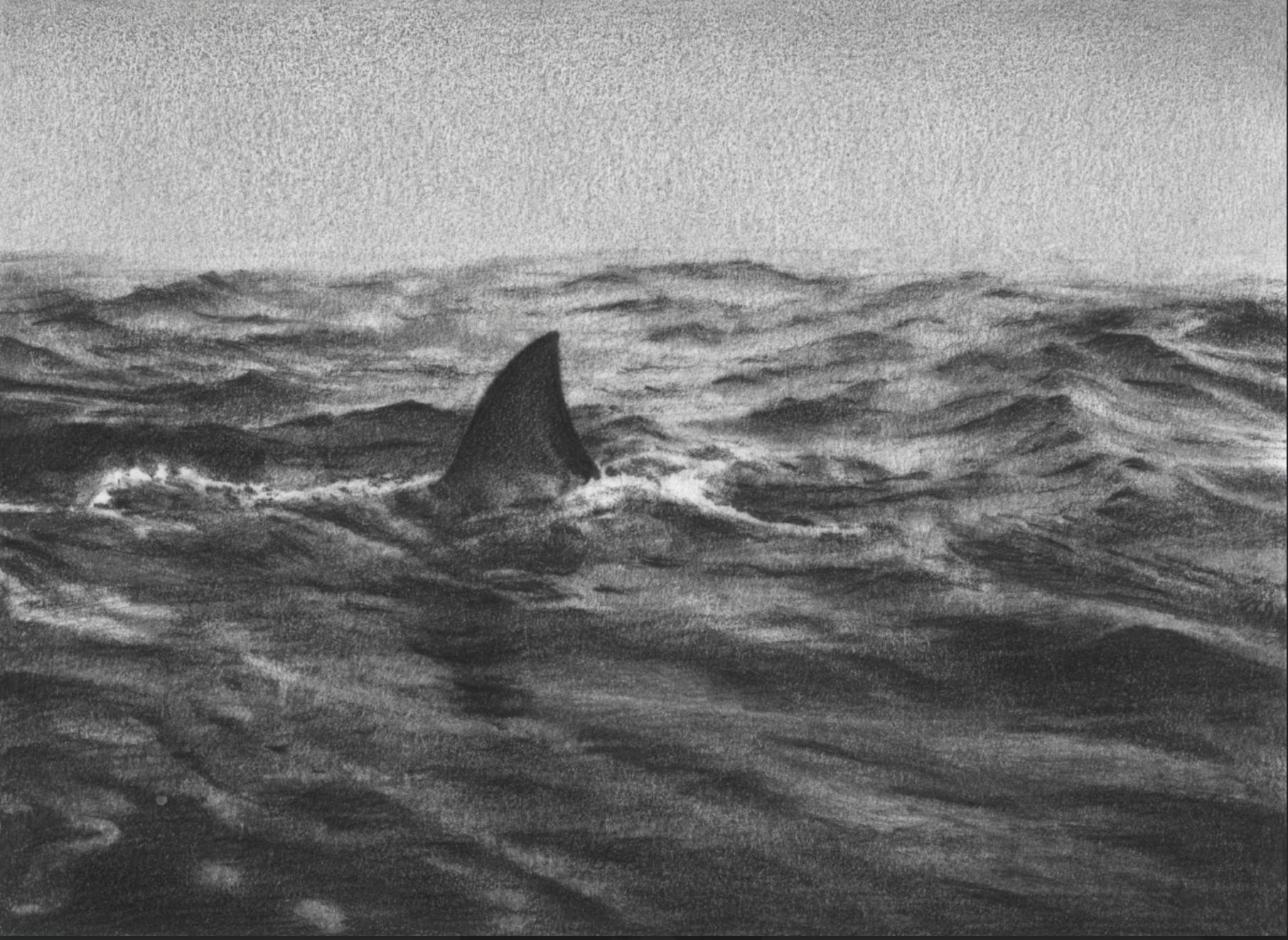
XII
I’ve always been curious about water and bullets, whether water effectively stops the bullets or just kind of slows them like a bulletproof vest. For some reason, no matter how many times some super-agent has escaped from our lair by diving underwater, we’ve never properly studied this in small-arms training, and as much as I can concentrate on not thinking about dying and not thinking about Lana’s betrayal, I try to focus on this issue.
Kevin Fincher – before Bond shot him while he was randomly trying to kidnap Lana in the middle of a firefight – used to give me a great deal of guff about my scuba certification, all the time I would sneak away from the lair while the inner perimeter guys were throwing knives or playing chicken with grenades, how, unfortunately, I would come back sometimes looking pretty genuinely ridiculous with my flippers and goggles, like an unusually square fish with jug ears, but I always thought that sooner or later it would help, and now it does – diving as far down as I can, swimming with neat breaststrokes like a jug-eared mermaid, finding there to be something almost sonically relaxing about the bullets peppering the water above me, while Sod who maybe put more time into steel-tipped-hat-throwing than he really had to when he could have been practicing scuba, trudges along behind me.
The challenge with underwater swimming is, of course, holding your breath, and the art here is just to stay as calm as possible for somebody who is likely either to drown or to be ripped apart by submachine gun fire, and my thoughts drift where they usually do – to Montclair, to the rainy afternoon in the house in the suburbs that is probably never going to happen, to Lana being perturbed about a noise somewhere in the patio, to my wandering out with a baseball bat to check, coming back and closing the curtain of the window, flipping the Patsy Cline record to the B-side, tucking Lana back in under the Supima Cotton sheets, maybe getting her a glass of water or something or grabbing her copy of People if it’s out of her reach. That whole scenario was, I have to admit, always a bit of a pipedream – probably more so now than ever after she betrayed me to Jacoby and sent a hit squad after me just to get me out of her hair – but I find in the henchman business, and Boorstin is adamant always on this point, that it is very important to never, ever focus on the negative. The way to advance in villainy is always one day at a time, one foot in front of the other, always focus on the task at hand, always push on to the next job when the one you have immolates in fratricidal massacre. And, as I get to ninety or a hundred seconds of holding breath, I reflect that I have a great deal to be grateful for, actually. It doesn’t seem totally possible that both Sod and I are unscathed, but that’s henchmen for you. The level of waste is incredible, all those bullets from all those ultra-sophisticated guns careening around the bar, and all for what? Just Coco’s furniture getting shot up – and how much better they could have spent that time worrying less about their physiocardio shape or that knife-throwing trick and instead just practicing, practicing sensible small-arms formations.
As I get up to about 150 seconds and as shells from some sort of howitzer seem to be going off in the water above me, my mood – in spite of all the things I have to be grateful for – drops a bit. It is hard to understand why I – who am always such a stickler about good training, about checking the air vents and putting mesh wire up on the ceilings of the detention cells – always seem to end up with a second-rater like the psychiatrist Jacoby or else swimming in the Caribbean, while the Vyacheslavs, with their useless knife-throwing and their dereliction of tactical fundamentals, end up with the gleaming, super-villain Jacobys.
The question that comes to mind from that, then, is whether my blowing out the brains of Vyacheslav and seeing his blood splatter onto Coco’s favorite teak table in a pattern somewhat reminiscent of a painting that I once saw in a trip to the Museum of Modern Art in Manhattan and stared at for a long time wondering if it was really art and whether it was better than anything I could do myself is any recompense for that feeling of deep loss, that feeling of for some reason beyond my control always being left behind, always being not-picked, and as I reflect on the unusually geometric pattern and my slight pang for Coco, I have to conclude that, yes, there is no question that it helps, but, as these things go, it only brings us so far. What would really compensate, I suppose, would be every single one of Julius Jacoby’s men lined up, I think on their knees, and then with no rush at all, each one blabbering out their apologies, their pleas for mercy, and then each one with just enough time as the blood coagulates off to the side of their heads for me to hear, reflect on, their very last thoughts.
But that really would only go so far, wouldn’t it. Julius Jacoby’s men, and the turncoats in Eric Jacoby’s lair, were almost completely unknown to me before today, and if I really think hard about this, as I do when I get up to about 200 seconds, which is I think the limit of the human body, I almost certainly would have done the exact same thing in their place if I had happened to be contracted to the more ruthless Jacoby and he had ordered me to take out his brother. No, what would really compensate for this feeling I have is for everything to go back to exactly the way it was – to be back in Lana’s room, with the lace curtains, with the afternoon sun and the view of the jungle and the macaque off in the distance, and Lana, in a voice I’ve never heard from her before, a voice as crystalline as a nun’s, saying, “Ok. I’ll go with you.” And if that was all a lie, as cheap a trick as memorizing a fake phone number and giving it to a passing stranger, well, what could possibly compensate for that? The blood from Julius Jacoby’s brain making the kind of splatter I saw at the Museum of Modern Art? I don’t know. Something about that just doesn’t seem to do it. It’s something to really reflect on, I suppose, and it would be nice to spend the next thirty seconds or so on this question, except that I’m at the limit of human endurance and my lungs are giving way and I sputter up to the surface and am greeted with a whole fireworks display of mortars and rocket-propelled grenades and even Jacoby’s helicopter is hovering somewhere off in the distance and a balaclaved henchman is standing in the open cockpit with a harpoon gun, but in quintessential henchman fashion, they all miss, just lighting up the water and sky with a great deal of pyrotechnics, and then I dive underwater again and have at least two minutes to myself to really think, to really mull this problem of the fitting revenge for a betrayal like Lana’s, and even though I make no progress on that, after the two minutes are up and I have to breath again, I have put a great deal of distance between myself and the shore and Dr. Jacoby’s henchmen, the helicopter included, have gotten bored and decided that I’m probably dead and have gone back to the lair to shoot up any other survivors they can find.
There’s that to be grateful for, but I am still, I have to say, in a terribly low mood. For one thing, I had never, all thoughts of Montclair aside, hoped to live a terribly long time in the henchman business, but my consolation had always been that, where most people die alone, as the expression has it, or at best surrounded by a few HMO nurses and maybe a Filipino home aide, I would at least die in a hail of bullets with my comrades, all of us maybe throwing ourselves on each other’s bodies or futilely reaching out to one other for support. For the moment, that seems not to be the case – it’s me and the moon glistening on the Caribbean and what looks to be the fin of a sand tiger shark but on closer inspection is what the original Dr. Jacoby might have called my “projection.”
Sod and I have been separated for a long time, and I’ve really felt a lot of resentment for his hat-throwing trick and his golf ball trick, neither of which are particularly useful when fleeing from a hail of gunfire, but just as I’m giving in to loneliness and despair and starting to swat away the imaginary sand tiger shark, there’s a rustle under water and Sod breaches the surface, swimming like a porpoise and showing no signs of exertion.
“Sod!” I say.
Sod nods to me in stoic acknowledgment of having passed one set of hurdles and having many more ahead of us if we are to survive.
“I thought you were a goner.”
Sod shakes his head.
“Oh for chrissake,” I say, “are you still keeping silent in homage to your father?”
Sod nods.
I try to be as patient with this as I possibly can be. “Sod,” I say. “We’re drowning together. Can you at least keep me company.”
Sod sighs through both nostrils. “It’s not a good idea. It expends energy,” he says.
“Look,” I say. “I don’t want my last moments on earth to be companionable silence as I slowly lose strength. I like to think things through. I don’t know why that’s so unpopular.”
Sod sighs through both nostrils again. Back before he was so hell-bent on revenge, it was a bit part of his bull imitation that used to be such a big hit in the canteen. “What do you want to talk about?” he says.
“I don’t know. Anything. How we got here. How you decided to become a baddie.”
He coughs. We’re both treading water. I thought it was possible that we might have both frozen to death by now, but the water is actually unusually warm and hospitable. If it weren’t for the thought of sharks, it might even be very pleasant.
“I don’t think I really decided,” he says. “I think that’s just the way it was.” His voice is maybe a little higher than he would like it to be, like a thoughtful student’s.
“Because of your father?”
“Well, my father was already electrocuted most of the time I was growing up, and I was with my mother, and dry cleaning was definitely an option but it just didn’t feel right, and I had some uncles around who were into the numbers game and some street-level racketeering and they thought I might be able to help them out.” He shrugs – as far as I can see in the darkness. “That’s all there was to it, really.”
“But was there a moment when you were, like, I know what I’m going to do, I’m going to be a baddie?”
He thinks carefully about that, or else is just annoyed with me. “Are you preparing your Speech?” he says.
“No, I’m not preparing The Speech. I’m just curious.”
“Oh Banx.”
“Was there a moment – ?”
“No. I wouldn’t say there was a moment. More of a flow.”
“Were you, uh, traumatized – ?”
“Well, I was molested a bunch when I was a little kid, but I wouldn’t say it was that.” Now it’s Sod’s turn to be thoughtful. “No, if I was giving The Speech I wouldn’t lead with it. I would just say it was kind of a rough childhood, and we needed the money, and it made a lot of sense.”
“Uh-huh,” I say.
“Any other questions or can we switch to the Dead Man’s Float now? Might save a lot of energy.”
“Yeah, I guess I just wanted to think through what we’re doing here. Like we both followed a kind of flow and the flow has led to this moment where, not for the first time, we’re treading water in the Caribbean and keeping an eye out for sand tiger sharks. And it’s, like, maybe we should change the flow, introduce a new flow?”
“To what?”
“Well, I’m just spitballing here, Sod, but what if for example we found our way to an organization that doesn’t have a shark tank, that doesn’t go in for all the self-massacres? Wouldn’t that make a difference? Wouldn’t that change our general likelihood of dying by shark / drowning in the Caribbean?”
“You don’t like the self-massacres?”
I think about it for a minute. On the shore, spotlights are sweeping the beach. The helicopter is flying over the water, but fortunately at a spot where it would make no sense at all for us to be.
“No Sod,” I say. “I don’t like them.”
“They inspire fear.”
“I know they inspire fear, but we are already terrified without them. It always takes forever to train the replacement. They only ever get to approximately the level of the first guy if they aren’t killed off first, and then they never show any initiative – have you noticed that? – because they’re so terrified of what will happen to them internally, that by the time we get to the fight they are always just charging pell-mell instead of actually demonstrating situational awareness and thinking through their options.”
“You should take it up with the Head of Security at the next gig we get,” Sod says and flips over onto his belly.
“Well, what about school?” I say. “What if instead of just moving on to the next gig and waiting for the evil twin brother to show up, we take a break and go to the villain school at Grand Cayman?”
“I need to avenge my father,” he mutters just over the surface of the water.
“The villain school will give you the tools you need to avenge your father,” I say. “I mean, as it stands, what really is your plan for doing that? Will you go into MI6, hold Moneypenny hostage, turn Q’s weapons against Bond, wait for him to show up, shoot him dead there?”
It’s an interesting reflection, I think as I say that, that nobody so far as I’m aware of has suggested that before, and it actually does make a certain amount of simple sense, but there’s something about the play of moonlight on the water and the weight of my arms as I flap against the surface that makes the thought evaporate almost as soon as I have it. Or, who knows, maybe lots of people have had that thought before – other henchmen as they chit-chat off the coast of their annihilated lair, just before they are picked off by a passing sand tiger or hammerhead.
“Find a place where Bond is likely to attack, get a job, and wait for him there,” Sod says into the silence.
“That’s your plan?”
As far as I can tell in the darkness, Sod nods towards the water.
“And me? What would I do?”
Sod seems to have renewed his vengeful vow of silence, but he temporarily rescinds it. “If I were you,” he says, “I would develop a signature. Have you noticed how, whenever we have a fight, most guys without a signature get killed off in the bullet-spraying round of things, but guys with unusually bad teeth or with a knife-throwing trick at least make it to single combat?”
“You mean like the golf ball-crushing trick?”
“For instance.”
I think about it. “What about the attention to small-arms close formation fighting? All the infantry manuals, all the years of work that went into that?”
“It’s not really a signature,” Sod says after a while. “You have an unusually thick forehead. Have you thought about turning that into a lethal weapon? Getting close and then bashing their brains out with a headbutt?”
I think about that. It’s not the worst idea in the world. I can’t think of anyone – even with all the thick foreheads I have known – who has developed that. “But Sod,” I say, “have you noticed how everyone with a signature seems to die a Grisly Death?
“There is that,” Sod has to concede.
Like so many henchmen adrift in the Caribbean, we seem to have made no real progress even with all this time for reflection. And maybe that’s how it should be. Sod believes in flow, Boorstin tells me that everything always works out in the supervillain business, and Boorstin is always two steps ahead of everyone, especially me, but try as I might, try as I do to think of gratitude and of the pristine unclouded path of the stone-cold killer, I can’t shake the feeling of regret, of having made some wrong turning somewhere along the way, which has resulted, irrespective of everything Lana-related, to once again finding myself treading water in the upper Caribbean and noticing the uncanny resemblance between every passing wave and the shape of a shark fin.
“Sod?” I say.
“Mm?” he says as a compromise with his vow of silence.
“There is more I want to say about all of this. Let’s pick up this conversation some other time, ok?”
Sod seems to not disagree with that. His gifts for self-survival are really extraordinary and I follow his lead, flipping onto my belly and floating like that for the next four or five hours. I’m mostly worried about falling asleep, but that’s not particularly a concern. All night long the searchlights rake the shore and the quiet is punctuated with the crack of gun shots as Jacoby’s men execute his brother’s last remaining loyalists.
I do drift off a bit towards dawn but come to with Sod holding me afloat, much like when we first arrived on Jacoby’s island, but before I have time to reflect more on the meaning of this coincidence a motor boat pulls up. It’s Coco on his way to the mainland for new deck furniture. He cuts the motor, throws us a rope, and we both clamor ashore.
“Hey mon,” he says in his lovely accent. “You doing alright?”
“We’ve had worse,” I say, speaking for Sod. “Sorry about your place.”
“You kiddin’ me, mon,” he says. He’s one of these lucky people who always seems to be unusually cheerful at first light in the morning. “I’s got the whole place insured to the nines. It’s worth far more to me every time there’s a shoot-out.”
“That’s a relief.”
“I been in this business a long time,” he says. He asks if we want to listen to some reggae, but I tell him that on the whole I’d like to stick with the silence.
“Sorry I didn’t know you two was hidin’ together,” he says. “I would have said something back when you was in my place in your separate crates.”
“No worries at all,” I say. “Sometimes it’s better to have the element of surprise, have your friend sneak up to save you when you’re sure you’re a goner.”
“Yass,” says Coco with real satisfaction and understanding. “So much to be grateful for in this business.”
And that’s exactly right, that’s the attitude to have – there’s Sod sitting on his bench and visualizing Bond’s gruesome death, there’s Coco holding his tiller and humming reggae to himself. It’s maybe the single most beautiful morning I’ve ever seen – the sun coming up over the distant shore, and all the birds of the Caribbean, the finches and terns and wrens and all the birds that Milagros could distinguish from a single warble but I can’t tell apart at all. No, there is nothing to be upset about. Life is the only thing that matters and the only way to live life is to cherish it. But since we have some time to kill, and there’s no particular need of stoicism, I go to the bow of the boat and turn away from everyone else and I cry all the way to the mainland.
PART THREE
XIII
I think I can skip over the jungle job pretty quickly. Once we land on the mainland, Coco deposits us at his favorite breakfast place, and we have bacon and egg sandwiches and coffee refilled to our heart’s content, while Coco goes off to the warehouse to look at new deck furniture and then to wait for the insurance office to open to file his claim.
Sod and I eat in very companionable silence and get in a game or two of backgammon and then, towards early afternoon, the thug Coco has promised turns up and comes to our booth and puts his elbows on the table and talks confidentially to the two of us.
“It’s a jungle job, nothing to it,” he says. He has really terrible breath but close talking seems important to him and I don’t have the cultural capital at the moment to ask him to back up a bit. His accent is unplacably muddy, Yugoslav maybe. I would ask Sod but Sod is gazing off into the distance thinking of his father. “There’s a team, maybe Nazi, maybe Soviet, I forget which, and they’re going upriver in the Amazon, there will be a series of waterfalls, maybe some snakes and crocodiles to watch out for, and then there will be a tomb to open up, and in the tomb once somebody deciphers the appropriate series of riddles, there will be, I think, a crystal skull – ”
“And what does that do?”
The thug shrugs. “I assume control all the power of the world and lead to world domination. What else?” He shrugs again. The waitress brings us a refill of coffee. He seems to be at a loss for gestures so he pinches her bottom.
“It shouldn’t be much. They just need a guard, someone to stand outside the tomb while they excavate it. Do you agree?”
I shrug. My clothes have by now pretty much thawed out but they still are sticking uncomfortably close to my body.
“Sure,” I say.
“Does he agree?”
Sod gives me the look that means that he has to go somewhere and wait for James Bond to attack him. I give him the look that means that Bond is fond of tropical locations and, if the crystal skull has world-destroying properties, then maybe it is a concern of MI6.
“What happens if someone has possession of the skull?” I say. “Does it somehow have a remote device to shoot lasers from space?”
The thug knits his bushy eyebrows and there’s a slight pulsation of a vein on his Neanderthal-like forehead. “Not as far as I know.”
“Would its possession lead to an arms race causing the US and the Soviets to shoot nuclear missiles at each other in a tragic misunderstanding?”
“Look,” he says, huffing his upper body forward. “There was a listing. I’m just repeating what was on the listing.”
I glance at Sod. With his almost inscrutable Oriental solemnity, he pushes his pupils just ever so slightly to the lower part of the retina to indicate that the job is beneath his contempt.
“He’s out, but I’m in,” I say.
The thug is less-than-fully-satisfied. “Do you have any special tricks?” he says. “They’re going to need to sign off.”
“Advanced small-arms training, more inner perimeter teams than I can count, recently Head of Security for the famous Dr. Jacoby of the electromagnetic pulse project.”
The thug gives that hazy thug look of being less-than-fully-convinced and wondering if he should shoot me to liven up his afternoon. Sod gives me a near-inscrutable look of Oriental wisdom and cunning letting me know that I should name my special skill.
“And headbutting,” I say. “I have an unusually thick forehead. I can headbutt a man to death with it.”
The thug looks over at Sod, who, as a muscle exercise, is in the process of demolishing the proprietor’s golf balls with his iron grip. “It doesn’t seem all that useful,” he says. “What about guns or knife-throwing?”
“If we ever get close enough, where our hands are locked with each other and we’re grunting into each other’s faces, don’t you think headbutting would turn the whole tide of battle?” I say.
The thug screws up his face in the way that means that shooting me really would improve his afternoon but, on the other hand, he’s falling behind in his recruitment quotas. “Deal,” he says. He reaches into the deep inner pocket of his rugged brown leather jacket, a little hot for this weather but well suited to a low-grade henchman recruiter working a dusty desert-type setting, and produces a pint of Jack Daniels that he pours a sliver of into each of our emptied-out water glasses.
“Salut,” he says.
“Salut,” I say. Sod and I clink. His face is a perfect mask of Oriental inscrutability but from the hooded way his eyes meet mine as our glasses find each other, I am able to discern that we are both, all things considered, glad to be alive and not shark food and not massacred into our Caesar salads, and that he will miss me greatly when we part ways for our next adventure.
“And you’re sure there’s no slick secret agent who’s interested in intercepting our project and confiscating the skull on behalf of MI6?” I say.
“Nah,” says the thug making the post-whisky sighing sound. “There’s just some aging can-do archeologist out there. I wouldn’t worry about it too much.”
***
I meet my new crew in a shady jungle town somewhere in the Upper Amazon. There’s a cantina where we stand each other drinks. Then we spend a whole afternoon loading various boxes into the backs of trucks while a commanding officer shouts at us in Russian.
There does seem to be some confusion among the crew about whether they’re Russian or German. The officers speak almost entirely in English but with thick accents and then when they curse they switch to Russian. The crew, on the other hand, features a few swastika tattoos and then that distinctive Germanic, craftsmanship-focused look that they have when holding submachine guns. It’s, in a word, the usual combination of toughs, with the usual camaraderie of muttering to one another in German or Russian anytime the commanding officer is given a particularly unreasonable order to shoot one of us for loading the trunks slowly.
But there is something wrong here. I suppose I feel it when I go up to the platoon leader as we’re bouncing along in the back of our thug-vehicle.
“I haven’t properly introduced myself. Banx Mulvaney,” I say. “Many time head of inner perimeter security. Most recently Head of Security for Dr. Jacoby.”
He is an unusually bald Slavic type with large upper arms. “If you were Head of Security,” he says, “then what are you doing as a lowly guard with us?”
“Well, we were attacked by the evil twin brother,” I say, “the second Dr. Jacoby. It wasn’t really a question of security per se, more a lapse of character judgment by Dr. Jacoby and wholesale betrayal by all his most trusted confidants.”
“I do not understand words coming out of your mouth,” says the platoon leader and for some reason several of the guards around laugh in that intoxicated Slavic way. “In henchman business, failure is failure and guard is guard. Evil twin brother is very first responsibility of Head of Security.”
“Well, in any case, we have a great deal in common,” I say. “I used to work for SMERSH, as Head of Inner Perimeter security.”
“I find that very difficult to believe,” says the platoon leader to another chorus of vaguely Cossack laughs. “We are SMERSH.”
“Well, maybe it was a different division of SMERSH. I was working for Blofeld,” I say, and wait for that word to have its usual effect.
“We know no Blofeld,” he says after, it has to be admitted, a somewhat impressed pause. “Blofeld is myth. Go back to post, soldier.”
And, as the truck careens over the unpaved road, I go back, as best I can without losing balance, to my seat at the very end of the truck, and the Russians, unless they’re Germans, kick me as I pass by.
I have been a bit misled as to what the idea is for the project. It’s not exactly to open the hidden tomb and to find the skull. It’s that this can-do archeologist already has the skull and is trying to put it back and our SMERSH team has already been in a series of skirmishes with him all across American college towns before coming to the jungle and now following him from a distance while engaging in occasional running gun battles with him all the way up the length of the Amazon.
We have an overwhelming manpower advantage plus the element of surprise plus a couple of other advantages that I’ll get to later, and we have a really impressive logistics operation, with our supply trucks and side cars somehow always catching up to the main body with fresh weapons, spare parts, and replacement soldiers each time that a bunch of our men are killed off in a skirmish.
Given all those advantages, I do have to question a number of our tactical decisions. Our ultimate leader is a very sexy Russian female scientist with a pageboy haircut who looks a great deal, I think, like Cate Blanchett. She has won many Orders of Lenin and certainly gives an impression of great intelligence as well as balletic grace, but a number of the tactical decisions are difficult to justify according to any of the innumerable, innumerable infantry manuals I have read. Instead of waiting for a clearing where we may deploy our numerical strength to advantage, we seem always to find ourselves in very tight quarters, with our open-air car running parallel to the archaeologist’s open-air car and trying to knock it off a cliff into the water. This makes sense from the standpoint of positioning, and we do have a follow car sending over a cascade of machine-gun fire, but the machine gun misses with every single bullet, and no matter how many times the operation leader, who is driving for some reason instead of delegating, shouts out something like “Dos vyidanya Mr. Jones,” his car doesn’t actually go off the cliff. Instead, it’s our cars that keep miscalculating their angle of attack and falling into the water.
I have by now finally made a sort-of friend. His name is Symbat Milkowski. He is Polish and, as such, perfectly willing to serve either the Germans or Russians. As far as I can tell, it makes no difference to him. He’s been part of the squad trying to catch the archeologist in different parts of America, and he tries to explain to me why it’s been so difficult.
“Well, for one thing, he’s a Yale professor,” says Symbat.
Since my admiration for education is second to none, this does affect me a bit, but it doesn’t seem to explain all of it. “And he’s in unusually great shape,” says Symbat.
“Still….”
“He’s very handy with a rope.”
“We have guns, Symbat,” I say. “We have pistols, rifles, submachine guns, machine guns, god knows what else in our trunks. All of our fighters are highly-trained. I have to say, it doesn’t really seem possible that a single professor, even if he does have tenure – ”
“He does,” Symbat confirms.
“Even if he does, and has the rope skills and the agility that you’re describing, would be able to overcome all of that.”
Symbat shrugs. He’s 20. He seems to be the runt of the litter as far as our team goes, but even so I can tell he feels it’s somehow beneath him to talk to me. As we bounce along and the car chase is happening in front of us, he shows me a photo of his girlfriend – well, not his girlfriend exactly, but they seem to have shared some letters and a few promises. She’s very blond and frankly a little sour-looking, silhouetted in the photo against the high sky of a Polish village. I pretend to be very impressed.
“You should put that away though,” I say.
“Why’s that?”
“It’s considered bad luck to show your girlfriend to someone else on one of these missions.”
He seems discomfited by that and has a flare-up of the bullying that the rest of the group has shown to me. “Are you just saying that because you don’t have a girlfriend?”
“I do have a girlfriend.”
“Oh yeah? Where’s her picture?”
“I told you. It’s bad luck – ”
“That’s what I thought – ”
“In any case, all my possessions were washed away when I was swimming in the Caribbean to escape Dr. Jacoby’s.”
“Well, what does she look like, this ‘girlfriend’?” he says in unnecessarily heavy air quotes.
“She’s very beautiful,” I say.
He gives me the ‘tell me something I don’t know’ scoff to the side. “More beautiful than mine?”
“No no,” I say. “Equally. Just differently, equally beautiful.”
“Blond?”
“No, not nearly as blond. Red-haired, auburn in the right shade of afternoon sun.”
“Hm,” he says. “What else?” he says.
And it’s funny, I’m not sure what else to add about Lana. All the money I’ve socked away into the vault at Key West, all the brochures I’ve read on Montclair real estate, all the Patsy Cline records I’ve listened to in my imagination as Lana and I sit indoors on a rain-soaked afternoon, and I’m not sure what to add beyond her appetite for People and her capacity to spend colossal amounts of cash. In as gentlemanly a fashion as I can, I place my hands in front of my chest in a circular, cupping gesture.
“Really?” he says and considers this for a moment. “But my Wanda,” he says and demonstrates.
I am, in as gentle a way as I can, about to dispute this, based both on the photo he’s shown me and the laws of physics, but before we can continue the conversation, the truck lurches to a stop. The officer from the passenger seat has come around to the back and is shouting “Schnell, schnell,” and we pour out and chase the Jones family – the archeologist seems, for some reason, to have brought along a woman, a teenaged boy who may or may not be his son, and a raving mad old man – into a clearing in the jungle where, unfortunately, an enormous number of fiery ants have been disturbed and are now crawling over and devouring everything.
“Schnell. Na khui,” says the commanding officer.
Once again, I really have to question this tactical decision. The mad old man is sprawled out on the ground holding the crystal skull, which has some sort of magic properties and causes the ants to spread out in a semi-circular pattern around it. Instead of taking position, as any training manual would advocate and pick off the entire Jones family from a distance, the officer in his confusing mix of languages is encouraging us to charge forward, pell-mell, and this unfortunately leads to many of us being consumed by the fiery ants.
With the ardor of youth, Symbat is preparing to charge and I put my hand across his midsection to stop him. “I wouldn’t – ” I say.
“Why not?”
“Well, for one thing, you just showed me a picture of your girlfriend, which is astonishingly bad luck, and for another, you could just stay back here and pick them off.”
But there’s a pistol to my forehead. “Syxa. Bilyat. Pezdetz,” says the platoon commandeer. “What the fuck are you waiting for?”
“This is the Grisly Death,” I say. “I can’t think of anything that makes me contractually obligated for the Grisly Death.”
“Syxa, my pistol in your face is the contractual obligation,” he says.
“Look,” I say, “from the perspective of any small-arms training, it’s completely obvious what we should do here, and frankly I have reached a place in my career where I am entitled to pace around with my hands behind my back and supervise, and as for Symbat – ”
But Symbat has fallen out of the conversation. He has, with more courage than cunning, tried to skirt a course around the perimeter of the space that has been cleared by the crystal skull, but with a slight turn of the skull by the mad old man and an unfortunate trip just as he is approaching Jones, the ants crawl up through his pants legs and then sweep through his mouth and into his insides and within seconds turn him into mush.
“I’m not going to do it,” I say.
“Up tvoi mat,” says the platoon leader, cocking the pistol, which, incidentally, he’d forgotten to do earlier.
“Just listen to me,” I say. “I understand that you are following orders. Orders,” I try, giving it a thick pronunciation in case that happens to be the Russian word for it. “But there really is no order that justifies the Grisly Death. I mean, maybe if you have worked up the hierarchy and find yourself in single combat with the secret agent just before he fights the chief baddie….”
I am very sure that the platoon leader is not listening to my logic, but he doesn’t shoot me either. Instead, he hears a sound behind him. He turns and points his pistol right at this random teenager accompanying Jones and he grins maliciously before pulling the trigger, but that pause is yet another tactical miscue and he forgets to look down as the carpet of ants, redirected by the skull, have reached his pants leg and crawl up and devour him before he has time to fire.
Now that he’s gone, along with the rest of the platoon, I book it back to the road, a few steps ahead of the ants, and hop in to a truck from the reinforcement convoy. I can’t even tell you how depressed I am by now. The truth is that this Wanda, sour or not, was out of Symbat’s league and she wasn’t actually waiting for him back in the Polish village, whatever her letter or two to a baddie’s cantina might have said, but he didn’t know that and now the whole platoon, all the guys I rode in with, is destroyed – and for what, for a hack attack, squandering all our many tactical advantages over a carpet of fiery ants, for some promise of wages that never, in the end, actually come to us.
And this low mood holds all the way through to the next car chase when we have them really cornered at the edge of a cliff and then the Jones vehicle vaults over the cliff and somehow catches on a large hausaí tree and the tree nicely deposits their car onto the far side of the water before snapping back and hitting one of our platoons, which has for some reason been rappelling down the cliff in pursuit of the vehicle, but now the impact of the tree against the cliff face knocks them all loose and into the mouths of waiting crocodiles below.
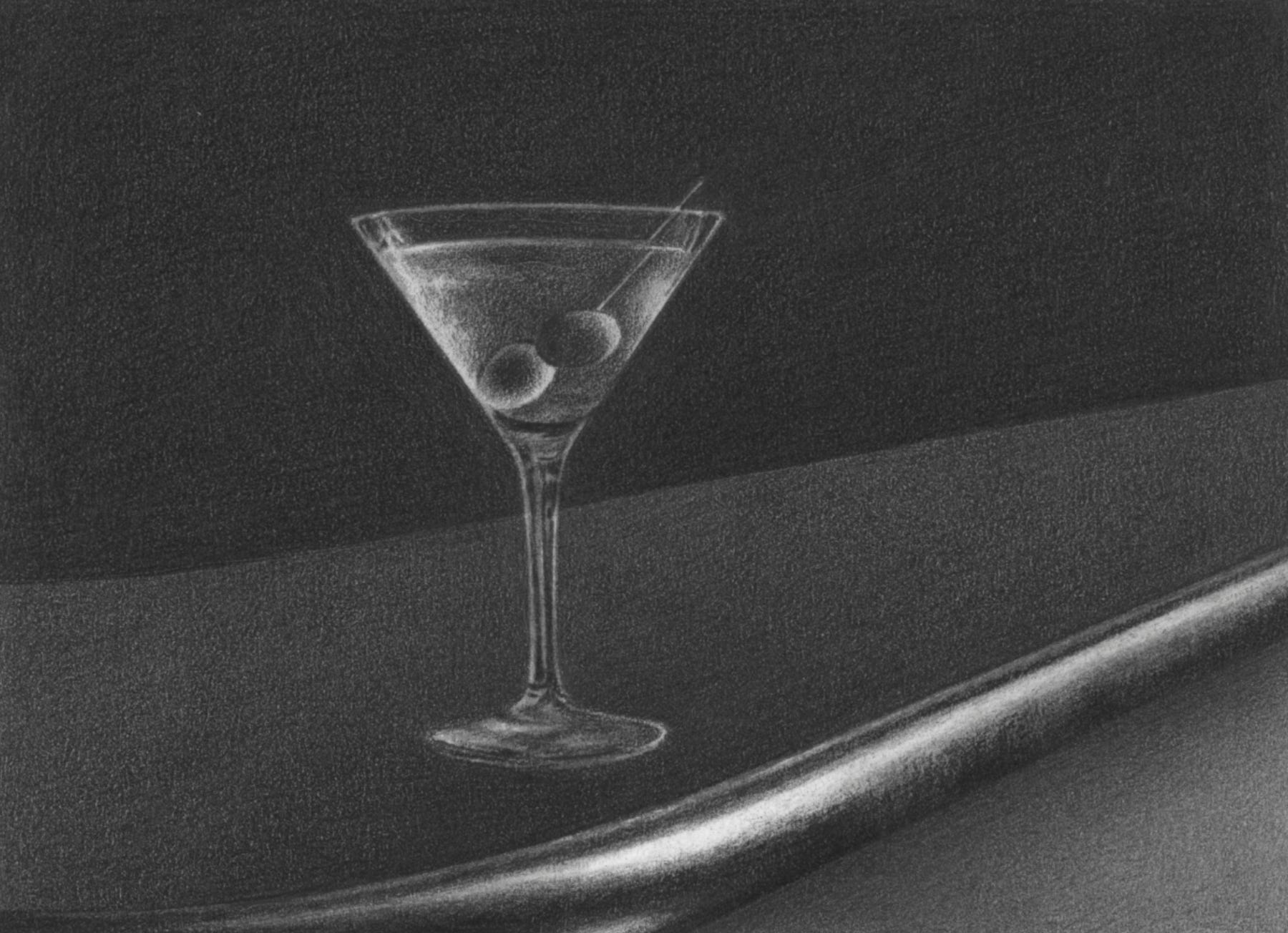
XIV
It’s just unbelievable, it really is. And this mood of absolute futility and depression holds even when we achieve our signal success of this project. Jones, closing in on the lost city of Akator, serendipitously rendezvouses with a native archeologist he knows from many previous escapades. With our usual multiple layers of duplicity, the native is of course on our payroll and, after undergoing many difficult travails together to enter into the sacred resting place of the crystal skulls in the city of Akator, pulls a gun on Jones just as he is preparing to place the skull on its holster and to close out the adventure.
The baddies waiting outside the tomb are in a state of immense satisfaction as all this is happening. We have some time to spare. The treacherous native still must navigate a daunting obstacle course before he hands off the skull to the SMERSH commanding officer, who will then treacherously kill him. Jones is subject to a whole series of booby traps inside the tomb but he will escape them and then there will be the sadistic pleasure of greeting him once he comes staggering outside with the sight of the skull and of his bound-and-gagged family. There is some discussion about The Speech. The Cate Blanchett-look alike with the pageboy haircut wants it to be a fairly orthodox statement of Marxist-Leninism, in line with Cold War ideology. The cunning Frenchman, who has been brought along as a sort of technical consultant on the project, thinks it should be more about the purity of archeology – questions of grave-robbing and turning to the dark side and that sort of thing. As usual, there’s no consensus – there’s always so much to say, even the most cold-hearted of baddies have a tendency to run long when they have the secret agent staring down the barrel of their gun.
In the end, the Soviet woman sings a Cossack dirge of immense melancholy and beauty and does a surprisingly sultry dance while a few of the other Cossacks do an acrobatic number involving high kicking. It’s great fun, the kind of thing that I really used to enjoy, but I seem not to be able to shake the low mood from the Caribbean near-drowning. It’s the feeling that I’ve sometimes had in down-time at the lair of playing with the same Rubik’s cube for hours on end and just not being able to get it to fit together. I am the last to question the multi-layered duplicity of villainous plans, but I can’t help but wonder why – if we had the treacherous native the entire time – we devoted so much energy to car chases and let a whole platoon get wiped out by the fiery ants.
As the Cossacks are hitting their heels with their hands, I find myself looking for somebody to chit-chit with and wander over to the French archeologist who is looking on bemusedly at the spectacle.
“Banx Mulvaney,” I say, “former Head of Security for Dr. Jacoby.”
He gives me a look like I might be speaking Czech or Montenegrin. I double-check myself and it seems I am speaking English, which he himself speaks as well. He is clearly a worldly, educated man, fluent in several languages, with a debonair sexual magnetism – including a flirtation with Mrs. Jones herself at an earlier point in our quest. He seems as reasonable a place to look for wisdom as any.
“If you don’t mind my asking, what made you decide to join this project?”
He looks around like maybe the fiery ants are going to attack or some python leap out of the trees, but there is none and he replies. “I want the skull of course,” he says – “it’s been promised to my small museum in Lyons once the Russians are done with it. Plus a contract for my work on the expedition. Plus a finder’s fee if it succeeds. Plus, I suppose, my seduction by the dark side of objects.”
“Which is what?”
The Cossacks have shifted to placing bottles on the tops of their heads. In spite of his great worldliness, the Frenchman has no bottle-balancing skills and no real reason not to answer my question. “I find that objects have a truth to them,” he says. “The truth is not what our mothers told us the world would be like, or our priests. The objects simply want what they want, and I like to place myself in line with their energy. This skull clearly wishes to suck up the psychic energy of the world and turn it over to an omnipotent master, and I feel myself to be a humble servant of that.”
He has a lovely, gallant energy to him and a very rakish way of wearing a hat, and considerately he turns to me.
“And for you?”
“Well, money,” I say. “I did need money. Everything I had was wiped out in the massacre at Dr. Jacoby’s and my swim across the Caribbean and I didn’t even have enough really to get to my own vault at Key West. But I don’t think it was just money. I wanted freedom – I wanted to be able to laugh our never-ending villains’ laughs and at something that is actually funny and carefree as opposed to just joining in with the headman in the truck, as sometimes happens. I wanted to pursue truth, the kind of thing that my friend Milagros had when he shot this ex-cop in a bank in Roques and took his confession – I mean, real truth, truth about life and death and what it all means, unmediated by anybody else, the kind of truth that you can see sometimes in the eyes of those violently dying, I’m sure that as an archeologist you can understand – ”
This Frenchman likely could understand, but when I look up to check up on his reaction I find that he has wandered over to the buffet of skewers and pigs in blankets that the logistics team has thoughtfully brought up for us. That’s just as well, I suppose, since the rest of what I have to say is mildly insulting to him.
“And I wanted integrity,” I think to myself – but, to clarify the thought, say it slightly out loud. “When this is at its best, we live by a code. It’s better than any job, any professional standard, anything like that. We cover each other’s backs, we lie for one another to the boss, even for guys we just met, we go charging pell-mell around some corner knowing that our backup guy is laying down tracer fire for us. I see no reason at all,” I think / say, “why I can’t be in a lair that has all that, based simply on that, on an ethic of camaraderie and on the integrity of the mission, and why instead it’s always the shark and the fiery ants and The Speech that’s always some babble about the hidden dark side of archeology.”
Fortunately, there’s nobody to really notice that I’m speaking to myself because the commanding officer has returned with the skull and Jones, in pursuit, has emerged right behind him and now we all have our AKs pointing at him, and I point my AK as well, and Jones says, “Thanks for the warm welcome,” which I don’t think is clever or funny, and the Soviet page boy woman discusses the inevitable triumph of dialectical materialism and works in a word or two about the dark side of archeology, and then there’s a rustle from the bound-and-gagged maybe-son and for some reason we all point our AKs at him and Jones bounds away and several shots are fired at his heels kicking up dust and, interestingly enough, I find myself right in his path. With his usual agility, he manages to knock the AK out of my hand, and we have our arms grappling with one another’s and this does seem really to be a golden opportunity, and I swing my head back on its axis and bring forward my unusually large forehead to mash into his, and he staggers back a bit but looks more surprised, I would say, than anything, but there’s a click on the other side of the gathering, with the pistol cocked against his ex-wife’s head. “I wouldn’t advise that Mr. Jones,” says the pageboy woman, and Jones is trussed up now and thrown back into the tomb, which is boarded up, and we all go off on our merry way, loading into the next round of support trucks and headed for a depot along the river.
It's yet another one of these situations where nothing could possibly go wrong. Our material superiority is overwhelming. We have the hostages all trussed up. We have the skull somewhere safe. We’re bouncing along in our troop carriers. There’s a landscape of sand dunes, which doesn’t seem very Amazonian, but no one asked for my opinion. The German/Russians keeping sentry duty seem unusually smug looking over their gun turrets.
“Keep an eye out for a man on a horse knocking out the driver,” I say, poking my head out of the truck.
“Doesn’t seem very practical,” says Max the German, standing by his turret.
“Just – ” I say. “I’ve been in this business a long time.”
I’m scoffed at, but then, sure enough, from a dust cloud on the horizon emerges a lone rider, who charges parallel to the truck, and all the turrets are trained on him but they all miss and he leaps from the horse into the driver’s cab of our truck, and now the truck starts banging around, and the two hostages who are in the back, the mad old man having died at some point having fulfilled his life’s journey, manage to cut free of their poorly-tied knots, and then the truck is flipped on its side and we all go flying, and the two hostages leap onto a car that is coming up driven by the treacherous native, who wasn’t really that treacherous at all but had a change of heart, and they go off, and then it’s a gunfight, and the French archeologist and I are inching forward together through the sand dunes, which would be a nice opportunity to pick up the thread from earlier, but instead Jones gets a clear shot at the archeologist and once the archeologist realizes it he grabs me by my gray field jacket and pulls me in front of him and the bullet goes right into my sternum.
The nice thing about the villain business is that – not always but usually – there isn’t actually that much blood when you get shot, and there’s just my body corkscrewing around and the feeling like all of me has been turned into some sort of tube alloy and I’m just ringing and ricocheting with pain and I lie in the sand dune for a while and the whole party goes off chasing after Jones and, in total and complete disgust, I place a bandage over my bullet wound and just lie there for a while and then when it seems that I’m not going to bleed out, I stagger off to the river depot and catch a separate boat and don’t even wait to be swindled out of the money I am owed for the expedition.
***
Somewhere in here cell phones have been invented and there’s a text message of a $14 million bounty placed on the head of a New York gangster named John Wick. New York is in striking distance of Montclair, which is something. So I stop by the locker in Key West, which, in retrospect, seems largely to have been a figment of my imagination and clear out whatever’s in there and use that to settle the now-considerable cost of the storage unit, and then head onto I-95 and shoot the driver of a cute little Volvo station wagon and then drive that to New York thinking hard the whole way.
There really wasn’t much in the locker, but there was a gold coin that is enough to stay at a swanky hotel, the Continental on Manover Street in the Flatiron District. Rather than pay the extortionist rate at a parking garage, I simply ditch the Volvo at the garage’s entrance and check in, heading to the bar for, I would imagine, the next several days.
There is a great deal that I like about the Continental. The lobby is vaguely Italianate, with soaring columns and heavy on the marble. The aesthetic is what I believe the kids now are calling steam punk and the color palette is subdued and somber and with Oxford blue as, I would say, its base. One thing I would say about the staff there is that they really know how to wear scarves. The concierge himself stands outside in the cold wearing his Paul Smith Men’s in a reverse drape cross and takes the suitcases I’ve picked up in my journey north and then sends me up a backway and sends the tailor to take my measurements and fit me with a basic gray flannel suit that I can wear into the bar.
The bar itself I find somewhat less imaginative. It’s red curtains everywhere and sultry jazz and some risqué art and then drinks that, I have to concede, are done with a heavy pour in elegant long-stemmed glasses. The manager is at a table of his own. He is in a Cucinelli double-breasted suit, the shirt worn loose around the neck, with a cravat and pocket handkerchief. I spend most of the next several days talking to him.
“Was there a moment,” I say, “when you first became aware of the existence of power? I mean, when we were kids, right?, we weren’t particularly excited because so-and-so’s dad had a rich father. We were all just kind of hanging out with each other, and then at some point you’re introduced to power and it has a logic of its own. But it’s like, was there a moment when we became aware of power as a force in the world, and if there was a moment, is it possible to reverse-engineer that moment and say to ourselves, you know what, maybe I won’t go down that path, maybe there’s a better way to do things?”
As he does for the entire time I sit with him, the manager has a dirty martini in front of him, gin and vermouth, and he seems to enjoy chewing on the olives unusually slowly whenever I speak.
“What makes you think that it wasn’t always there?” he says. “The prime mover. That the first day you walk into your little school you are looking around for protection, you are looking for some little friend who can confer it and they are looking for the same from you. That even long before you are aware of it, that those are the rules of the game you are playing.”
“But in school I don’t believe I was looking for protection,” I say. “I think I was just looking for equals, in the way that I am looking for equals anytime I am in a lair and we all sit down at the canteen together.”
“But even the school you are in is the result of a long process,” says Winston the manager. “It is your parents – or whoever raised you – very consciously choosing which neighborhood they want to be in, which little kids they want you to associate with and which they don’t. When you meet the other little kids in school and become fast friends, they are not your equals precisely – they are part of a great scheme of power that your parents, or surrogates, have adopted in order to be slightly superior to whomever they feel themselves in position to be superior to. And, as for the canteen, you have been in henchmen’s canteens. Can you imagine any of them running the entire lair the way they act in the canteen? A lair has to be the result of a single intelligence – and the only way to determine which intelligence runs the lair is, in so many words, for the strongest among you to kill off the weakest, or at least to kill off any potential challengers, and then to run the lair as an extension of their own personality.”
I slump back at that. The bar at the Continental is best known for its mixology, but something about it doesn’t agree with me. I have been drinking beers from a can. Winston the manager is unfailingly gracious. He has a Pilot Metropolitan fountain pen with which he scribbles different things on his accounts and usually pushes his reading glasses off the bridge of his nose whenever I introduce a fresh topic for inquiry. From time to time, various patrons stop by to discuss the ongoing hunt for John Wick, usually after he has killed off every other member of their crew and the lone survivor has retreated to the Continental for a quick drink and to discuss options.
“Look,” I say after Winston has explained to the most recent lone survivor that he really is just a hotel manager and then has plunked his reading glasses back on the bridge of his nose and resumed scrutinizing his accounts. “Here’s what I don’t understand. I talk to dapper older men – to that French archeologist with the rakish hat before he pulled me in front of him to stop a gunshot, to yourself, to Boorstin, who is the single cleverest accountant I’ve ever come across – and it seems like, with all that experience, with all those glimpses of human vanity and the futility of conflict, that you should have some greater wisdom, some way of organizing things that’s not just feeding your own subalterns to the shark.”
Winston takes his glasses off. This time he actually folds them up, places them on the table and pushes his accounts book away from him.
“You’re looking for work,” he says. “You need work.”
“I have plenty of skills. I never worry too much about work.”
“You’re sitting in this hotel, in the charity of my tab. If you step outside this hotel, what would you do?”
I think about it. “Something Mafia-related,” I say. “I think it’s mostly the garbage collection business that the Mafia is in now. Maybe shoot somebody on the street, take their MetroCard and enough of their cash to get to Newark or Elizabeth, find an enforcer there and offer my services. Save up for a bit and it’s really only a step away to Montclair.”
He gives me that misty look that street-wise British men have.
“Can you fly or anything?” he says.
“No. Why would I fly?”
“There’s a lot of work right now for guys who can fly.”
“Henchmen don’t really fly,” I say.
“Well, grappling hooks, anything like that. Rooftop chase stuff – ”
This is so insulting that it takes me a long time to reply. “What I don’t understand,” I say, and I don’t think there’s any trace of choking-up in my voice, “is what’s wrong with small teams of roughnecks. That’s how it’s been for a long, long time. That’s kind of, wouldn’t you say, the primary unit of social organization?”
The manager has a neatly folded copy of The International Herald Tribune in front of him. With a certain amount of ceremony, he places the reading glasses back on the bridge of his nose and reads. “Here,” he says after a bit. “Mysterious Planet Mongo On Collision Course With Earth. Gravitational pull of Mongo disrupting weather patterns all over earth. Impact, and human extinction, greatly feared.”
He passes the paper over. “Interesting, no?” he says.
“What would you recommend?”
“I would recommend going to Mongo and seeing if they have work there,” he says. “Don’t worry about your tab tonight or breakfast in the morning. The concierge desk can bring you to the secret space station and see if they have flights to Mongo.”
I look at the paper for a bit. He’s not wrong – there is something very interesting in this whole opportunity.
“I have a woman who is very important to me,” I say. “Breasts out to here, auburn hair the color of a fireball sun setting over a desert sky, a certain chemistry with any chiffon dress that she ever happens to be dressed in. It would be very difficult for me to be as far away from her as Mongo.”
The reading glasses are fully on and the account book is out, but he slides the lenses down his nose to peer over them.
“If I were you Banx,” he says, “I would forget her for some time. Go to Mongo and see what you can do on Mongo – they have a lot of Polarite on Mongo. If it works out there, come back here and see if anything is different with this beauty of yours.”
He writes for a bit with the fountain pen, although, as I stand up to leave, I happen to note that it’s mostly just squiggles.
“The reason we dapper old men never offer any wisdom is because there isn’t any,” he says. “I should like to tell you something different but I’m afraid that’s the way it is. There was power long before you were aware of it, and there will be power always and forevermore. There are only two approaches to take to this fact – either to serve it or to fight it. From long experience – ” here, in his usual capacious way, he takes in the bar, the different toughs sipping at their martinis, most of them in slings or back braces or nursing in some way the gunshots or simply the brutal karate chops that John Wick has administered to them – “I would say that it’s better to serve it or at the very least to get out of its way. But Banx,” he says, “I think you will find that no matter where you go to in the galaxy, or which mysterious planet you find yourself on, that it will be very difficult to get out of its way altogether.”
As usual when Winston talks, there are two or three points in there that I would like to pick up on and to discuss in greater detail, but amidst the clinking of rueful glasses and the chanteuse singing Gloomy Sunday and Winston’s dapper-man cynical advice, there is another voice in my head. Just before I left the diner in the Caribbean with Coco’s thug friend and went to the jungle job, I tried to start up a conversation with him on many of the same themes that I am now discussing with Winston, and, to my great surprise, Sod, who had been silent all day, all through our breakfast and our backgammon games, temporarily lifted his silence to say, “Banx. You really are going to have to control that side of your personality.”
And so, no matter how much I still have to say to Winston Scott, the manager of the Continental hotel, I listen to him and I listen to Sod. I thank him for his time and I sleep very, very well in the Boll & Branch high thread count sheets, and then in the morning I’m up early and take the shuttle to the secret space port somewhere in Rockaway and blast off on a cute needle-like spaceship to Mongo.
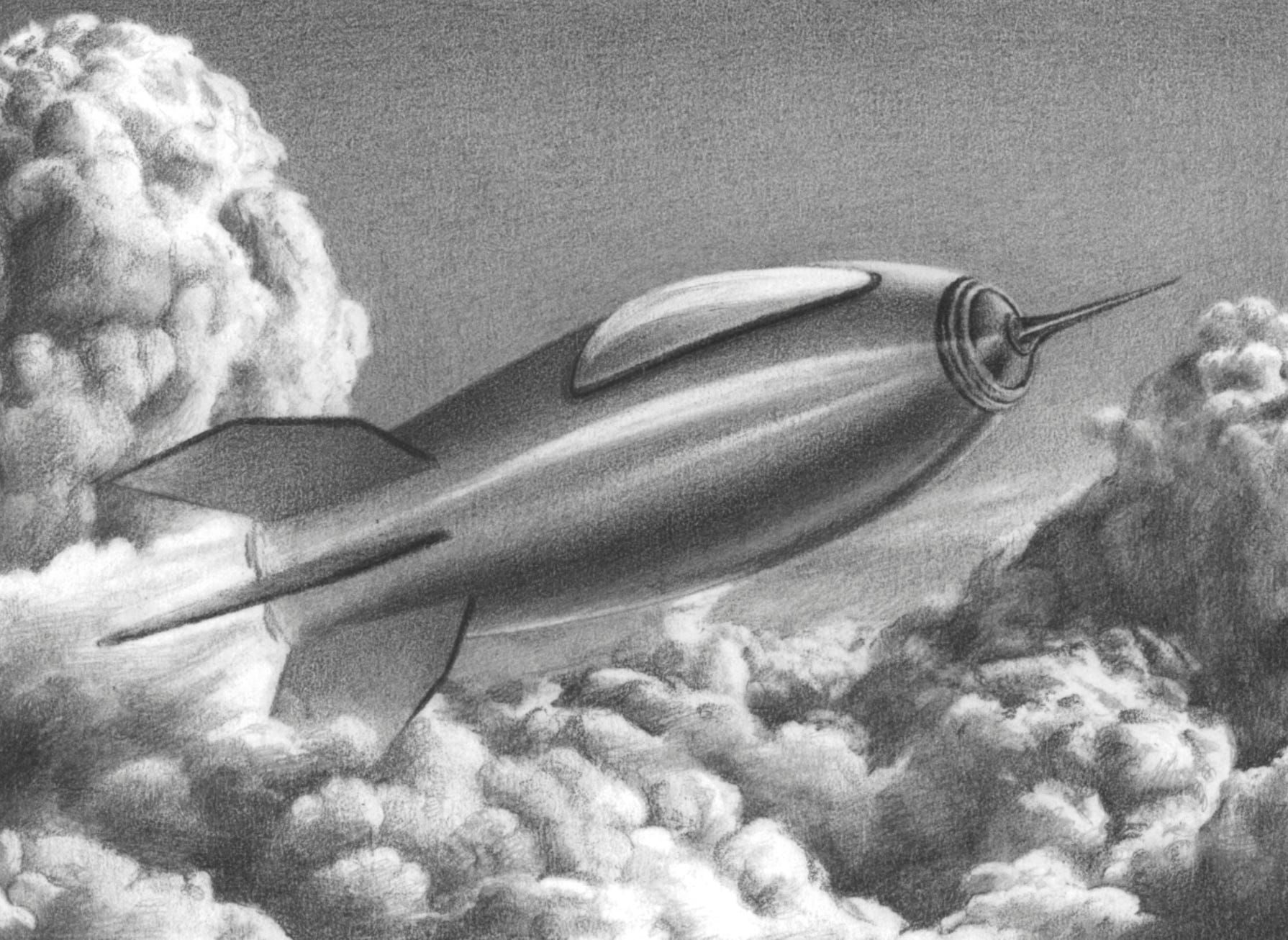
XV
I suppose the question to consider – and which I do consider on my days-long flight to Mongo – is whether all this exploration of mine, all this thought into the roots of the henchman business, is really just a sign that I am slowing down.
In all that time in New York, so very close to Montclair, I didn’t take a single shot at John Wick – and no matter that at one time, I’m pretty sure, I was part of the hit squad that killed his wife; and no matter that that $14 million would have bought me an astonishing McMansion in Montclair and might even have covered the entirety of the renovation.
So why didn’t I when I always enjoy trying to kill John Wick? Well, it’s strange to say, but no matter how adroitly that dapper Frenchman pulled me in front of him to block a bullet and no matter how determinedly Winston Scott screwed his reading glasses onto the bridge of his nose to stare at his accounts while I was speaking to him, I haven’t been able to shake the feeling that, in some higher henchman sense, I am equal to all of them. The French archeologist is really just a kind of technical consultant. Winston Scott usually just pours himself a fresh martini when the fighting begins. And I have killed – how many? four hundred, five hundred, maybe a couple of thousand? These have been so many, my own men certainly, random bystanders, but also black best friends of the superheroes and high-ranking baddies of other gangs as we have consolidated their enterprises, and so many more, countless more. And does all that really count for nothing? That seems to be the consensus of the Jacobys and the Scotts, but I think about Milagros at the credit union on Roques, I think about the way he nursed – which is a good word for it – that ex-cop into his death. It was tender and it was intimate and it meant something in a way that just giving an order to open the chute and feed the shark can never, I think, mean something. It was an understanding of who that ex-cop was and what a pity it was for him to leave the world and it was carried out by someone who got it, who really got it, and the last look that ex-cop had, I swear to you, was relief. And I’m sure Winston Scott is right, as that French archeologist was right – men in double-breasted suits are always very difficult to argue with – that power is primary and is inalienable but I do want to be part of an organization that, if it is rooted in power, is based as well in something else, in something that I saw exchanged between Milagros and that ex-cop in that bank robbery in Roques.
This is what I was going to say to Winston Scott, and this is what the voice of Sod Job stopped me from saying. It’s not just that I would have to get ahold of this side of myself but that there is no point in saying any of this while the henchman business is what it is. I will have to prove what I mean – a different way of going about things – and, for that, I likely will have to mine a great deal of Polarite from the planet Mongo.
Yes, these were my reasons for not running around chasing John Wick, because I have moved beyond that. Because I have suffered enough and killed enough that the $14 million and the McMansion in Montclair and the pool and deck and bay windows and heated floors and remote-controlled fireplace that can come with the renovation aren’t enough to satisfy this particular hunger. And what will do it is – well, first things first, I think, as I doze off and stare at the pitch black outside our capsule window, first things first is a shit ton of Polarite.
We touch down at a spaceport in a desolate strip with large lizards crawling around. I’ve never been to another planet before, but it’s a relief to discover that it’s filled with oxygen – no need for a helmet or anything – and that everybody speaks perfect if, I have to say, somewhat stilted English.
The pilots ferrying baddies around the universe head off to some other planet, and the passengers on the ship are brought by hovercraft to the throne room of an imperial palace. I find that spare travel is very horizon-enlarging. I’ve traveled all over the world – spent a great deal of time in the Caribbean, some in the Amazon, some certainly in roughneck America, been to opium dens in China and meth labs in Southeast Asia – but everywhere I go there’s a certain sense of familiarity. There’s the lair, whether rock-hewn or sometimes fully underwater. There’s the canteen, the barracks for the henchmen, the private quarters of the chief baddie, but there’s no particular reason, I think, why it should all be like that. The Continental Hotel was run by a man sipping a gin martini and reading the paper and no one killed each other or did anything really except order room service and get their laundry done. And this is the heady, oxygen-rich air of a different, desert planet, and the possibilities multiply about all the different arrangements we can have for Polarite extraction, maybe cooperative labor, maybe a gang of veteran, can-do henchmen all working together in perfect equality.
The passengers from earth are a pair of evil scientists, a sightseer or two, and then a group of grunts, of which I am, I suppose, one. The throne room is done in Oriental splendor. The ceilings are very high, even higher than in Blofeld’s lair, as befits a galactic emperor. There’s some kind of pagan idol, maybe 15 feet high, with arms criss-crossing back and forth, and some indeterminate number of dancing girls writhing in front of it dressed, I would say, like belly dancers in tunic-style outfits. We wait respectfully for the performance to finish, and then we are summoned to the side of the Emperor Ming, who is completely bald, with a Fu Manchu moustache and beard, and is dressed really fabulously, I think, in a high arching collar that surrounds his head and a long robe. He is very, I would say, polite with the dancers, clapping as they finish their act, and then dismissing them with a slight, authoritative wave of his finger. He is more stern with us.
“Sire,” says one of the evil scientists, which seems to be a little premature in its obsequiousness, “please tell us how we may serve you.”
“The planet Mongo is rushing headlong towards the earth – ” says Ming.
“The whole planet is in a state of frenzy,” confirms one of the sightseers.
“You intend to collide and destroy both planets?” says a scientist.
“Not at all,” says Ming, who may be a space alien but has better elocution than any other head baddie I’ve encountered. “I have complete control over the movement of my planet. I shall not obliterate my planet and the earth together, but shall destroy the earth in my own way.”
“Why destroy the earth? Why not use it?” says the most impetuous of the evil scientists.
“Rest assured. I will wreak immense havoc on the earth, for reasons of my own.”
“What reasons? To hoover up its natural resources? To seek revenge?”
Ming coughs politely. “If you don’t mind, I’m saving The Speech for a more fitting occasion,” he says.
“Shall I execute these men, sire?” says a somewhat beefy guard standing to the side. “They are presumptuous.”
“All earthmen are before they fall under my yoke,” says Ming. “I can use them. These scientists are bright and unscrupulous. Take them to the laboratory. Give them everything they desire except their freedom.”
A group of cloaked, sallow-looking scientist types come and take them away.
“These goons I leave to you, Captain Torch,” says Ming. “You may employ those you find fit. Toss the others into the Pool of Peril.”
“Sire, I would prefer the Bottomless Pit.”
“As you wish,” says Ming and makes his slight gesture with his finger to dispatch us and to signal the buxom woman by the gong to adjourn our meeting.
“Sire,” I say, since this seems to be my moment. “I am Banx Mulvaney, former Head of Inner Perimeter Security for Ernst Blofeld, most recently Head of Security for Dr. Jacoby. I have come to serve you – yes – but also to secure a concession for Polarite.”
“Polarite is the sole antidote to my death dust, which I will use to sow terror and destruction on the Earth.”
“Yes, and I believe it to be very valuable and would like a mine of my own.”
“Captain Torch, do you know this Dr. Jacoby?” Ming asks.
Captain Torch, with his hand on the ray gun in his jacket pocket, shakes his head.
“Polarite will be of very little use to you once the Earth is destroyed,” Ming says.
“And that is why it is of no particular use to you. I should simply like my own mine.”
“I hope you will not use it to save the Earth and thwart my plan,” says Ming.
“Not at all. At the appropriate moment, when I have already mined my concession, I should like to send a spaceship and to extricate Lana Lynx, a gangster’s moll of unusual beauty and bright red hair, but other than that I fully approve of your plan – ”
“You like it?”
“I do. The Polarite is entirely for my own fortune.”
Ming has his arms folded over the sleeves of his long robe. “I like a man as unscrupulous as you,” he says. “Captain Torch, make him part of your crack hit squad. If he serves you well, I will reward him with a mine of his own on the frozen kingdom of Frigia. If not…” Ming does not need to spell that out as Captain Torch takes me by the arm and leads me and the rest of the goons away.
***
As I got into the spaceship in the Rockaways, I had thought that Mongo might be structured a bit differently from the lairs on the earth, but it’s not so surprising that it’s exactly the same – and I am able to take that in stride.
There’s a barracks for the chief henchmen of Ming. There’s Captain Torch, who wears a handsome beige-and-grey uniform with double rows of buttons, epaulets, cloak, a helmet with a mask that can slide over his face and somewhat strange knobs over the ears that speak to his alien origins; there’s Lieutenant Thong, his mustachioed deputy, dressed the same way but without the epaulets; and there’s Sonja, until recently a spy in the court of our enemy Prince Barin, endlessly treacherous and cunning as you can sort of guess from the way she smiles entirely from the corner of her mouth, and for some reason wearing a long rope as a sort of necklace. I am dressed in the same double-buttoned suit as the others although without the cloak that Lieutenant Thong has.
“I wouldn’t, uh, I wouldn’t speak to Ming that way in future,” says Captain Torch.
“No? I thought he appreciated the initiative.”
“That’s not really how Ming runs things here,” he says. “He is the merciless ruler of several planets stretched against multiple galaxies. We operate on more of a pyramidal structure.”
“Trust me,” I say and try not to sound too offended, “I am used to pyramidal structures.”
“Just, uh, we kind of have a code for how we do things here,” Captain Torch says.
That’s good enough for me. I like codes. I’m given a crash course in using a ray gun, which is really pretty easy – you just point in the right general direction and it seems to shoot. And then the four of us go marching together, in our cute little uniforms and cloaks, our visors up in keeping with our status while the guards with their visors down salute by crossing one arm over their chest, as is the custom on Mongo. As we’re turning down a corridor to the side of the throne room, a familiar face with grey hair combed neatly around a bald spot pokes his head out of one of the offices.
“Boorstin!” I say.
“No time to waste,” says Captain Torch. “Our chief enemy, the earthman Flash Gordon and the cunning Dr. Zharkov have been spotted attempting to mine Polarite in Frigia. Our orders are to destroy them.”
“This is my mentor, Boorstin,” I say. “The cleverest accountant I have ever come across.” Torch and his hit squad step slightly back. “What are you doing here?” I say to Boorstin.
In spite of the astonishing coincidence of coming across one another on this distant planet, Boorstin seems surprisingly composed – this is, I suppose, the two-steps-ahead-of-everything mindset that makes me trust him in the way I do. “You think Ming the Merciless doesn’t have to keep a balanced checkbook?” he says. “When Dr. Jacoby’s island lair was destroyed – ”
“Destroyed?”
“There was a cousin even more ruthless than he who wanted a share of the empire. I escaped with my Bathosub and answered an ad from the spaceport in the Yucatan – ”
“Boorstin,” I say, and, I’m sorry to relate this to you, but I take the ends of his cold fingers in my own hands and stand there for a bit sort of gazing down on him. “This has really been a difficult period. I’ve felt like it’s just one thing leading to another, like billiard balls bouncing around, but meeting you here, in this coincidence of coincidences, it gives me the feeling of, I wouldn’t say hope but destiny – ”
Behind me, Lieutenant Thong coughs. “The Emperor Ming is merciless and we really can’t afford to delay,” says Torch. “He has executed men for shorter delays than this.”
“We’ll speak when I return from Frigia,” I say.
Boorstin adjusts his spectacles and nods at that.
The flight to Frigia is a perfect opportunity to chit-chat and to get to know my new companions. It seems to really be a pretty good setup that they have here. Ming’s iron rule has extended to several different planets, but Mongo is where he has the most palaces and the most slave girls writhing in front of the strange pagan idol. For money, they seem to take Mongo around on joy rides and hoover up the natural resources of different planets. There’s only one problem, really, which is that anytime they come close to destroying, or otherwise crippling, the earth, Flash Gordon and Dr. Zharkov show up and somehow thwart them.
“Once we were on Mars and we tried to send a destroying ray, once we tried to come close enough with Mongo to knock the earth out of its orbit – ” says Captain Torch.
“But something always goes wrong,” admits Lieutenant Thong.
Sonja coughs and they all look at each other. The Ming ship is pretty spacious, just a few control panels on the sides and, otherwise, we can all sort of lounge out on the barré-type bars at the ship’s edges.
“You can tell me,” I say.
“You promise…”
“Of course I promise.”
“The Emperor really has a thing for the earth girl Dale Arden,” says Captain Torch very slowly. “The issue is that we always have to capture her alive, and sometimes Flash alive, and every time we do that Flash always overpowers his guards and rescues Dale – ”
“And Dale is just the most ordinary girl you can possibly imagine,” says Sonja.
“She does have a way of fainting whenever the clay men emerge out of a wall or an enormous lizard shows up from around a corner – ” says Lieutenant Thong.
“But Ming likes that,” says Torch.
“And Flash likes that,” says Thong, bristling his moustache towards Sonja.
Sonja shakes her head furiously. “This is what I don’t understand. Flash is a man of action. Why wouldn’t he be interested in a woman of action – ”
“Well,” I say, trying to be helpful. “I think I can speak to that. I’m, for instance, a man of action – thirty or forty henchman jobs, hostage situations, bank robberies, atomic bombs stolen and used against the countries that had them, diamonds turned into space lasers, and somehow I find myself very taken with a certain Lana Lynx, who has shown no action proclivities, and who if we’re being honest mostly sits around and reads magazines but who nonetheless somehow seems like the perfect pairing to a man of action, and I am not the only one who thinks so – ”
“I think we’re coming over Frigia now,” says Lieutenant Thong. We all peer into our spaceograph and see the high peaks and barren landscape of the frozen kingdom.
“Maybe a bit of music?” says Sonja.
Torch hits the spaceoradio and puts on Franz Liszt, which does nicely accompany our approach.
In the end, the mission is a little too easy. Lieutenant Thong looks for a while into the periscope, which for some reason connects up to the top of the Ming ship. He gives up and falls quickly into despair. He passes the periscope to Captain Torch, who, as the music crescendos into the allegro tempestuoso of the Liszt prélude, spots the mining party walking along a ridge with ropes attached to one another and surprisingly underdressed given how fabulously cold Frigia is supposed to be. We make a spin in our rocket ship. I’ve picked up the knack for driving it, point the needle downwards, Lieutenant Thong releases a bomb that somehow misses. I go back up to altitude, spin down again. Captain Torch devises the cunning plan of missing on purpose but starting an avalanche, and Sonja, sitting on her barré, cackles her approval.
This time Thong is far more accurate, we hit the peak of a mountain, and as the allegro tempestuoso really swells, the avalanche cascades down, with snow and ice and rock very prettily sweeping over the mining party.
“That avalanche took care of the activities of Flash Gordon and his party,” says Torch, neatly folding up the periscope and giving the signal to me to head for home.
“Are you sure?” I say.
“No one could have survived the impact of that avalanche,” says Torch. “We must report this to the emperor and I will claim my 100,000 mingals as the reward.”
“Sir,” says Lieutenant Thong, “what about the standing order to capture Dale Arden alive?”
That sends Torch into real thought. “Well,” he says, “it’s been a while since we’ve gotten that order. Wouldn’t it be more important to stop Flash Gordon’s party and continue with the destruction of the earth?”
Sonja laughs at that in her cold, calculating way. I have to say that I’ve taken a real dislike to Sonja.
“I don’t know boss,” says Lieutenant Thong. “The Emperor Ming wants Zharkov to work in his lab to aid in his conquest of the universe, and Dale to be his bride, and Flash to be brought to him to meet such an amusing death as he may devise – ”
“Look,” says Captain Torch. He’s already put the periscope away and the design of the spaceship is very minimalist, but I can see the strong urge in him to hit some nearby object. “It’s freezing down there. I don’t have the sort of transparent anti-freezing suit that Dr. Zharkov has no doubt devised. I don’t know any way of starting an avalanche that’s capable of only killing the ancillary members of the party and sparing Flash, Dale, and Zharkov. I don’t really have the manpower, do I, to go down to ground level, shoot everybody else in the party, and then kidnap Flash, Dale, and Zharkov without freezing to death in the meantime. I mean, really, what exactly would you suggest I do?”
He's, I would say, a pleasant, slightly chubby type with what Gloria, the aunt who raised me, would call the “kind of face that they don’t make anymore.” Even facing the controls and keeping my head down, I am very sympathetic to the position he is in. It is not at all easy to run a hit squad or to be the commanding officer of small groups of infantry, and least of all when there are a set of contradictory orders from above. I understand his frustration, I do, I understand the absence of good alternatives for the not-unclever course of action he has adopted, but I also know what happens when you lose control of your band like this, when you let anyone else into the myriad thoughts that are running through your head.

XVI
We return to the palace in triumph, though. The Emperor is temporarily busy with a show by the belly dancers writhing in front of the idol, and it’s an opportunity for me to get caught up with Boorstin.
He has the first office over from the throne room. It’s possible to hear the exotic, decadent music through the wall. The slide rule is still on the desk and, to my amazement, a copy of The Wall Street Journal.
“It’s been a rough patch – I don’t mind saying that to you,” I tell him. “I felt that I had gotten to a solid place on our island together, Head of Security and able to implement a number of measures that I had never been able to get through with Blofeld or anyone else and then I ended up with the wrong Jacoby – ”
“I did try to warn you,” says Boorstin in his quiet, somewhat purring voice.
“And then the jungle job was a botch all the way through, and then I made it as far as New York but I just didn’t have it in me to go after John Wick – ”
“Probably for the best,” says Boorstin. “Nobody ever gets John Wick.”
“But what this period has been good for is it’s given me the chance to do a lot of thinking. I’ve been thinking a lot about what you told me on the two Jacobys, why one was always going to defeat the other, why Julius Jacoby was always going to win – ”
“Except against his cousin,” murmurs Boorstin.
“And I think I do get it now. I talked to a couple of different men in double-breasted suits and they gave me some tough talk and said some things that I really took to heart. And, basically, it’s money, I just need to make a lot of money. That’s what Blofeld had, and the Jacobys, and there’s no reason I can’t get it too. I’m already the number four man here on an elite hit squad – ”
“After Sonja,” Boorstin clarifies.
“Yes. After Sonja. And I have a concession from Ming that as soon as we destroy Flash Gordon and his earthmen – which we already have – then I will have my own mine in Frigia and will get Polarite and sell that as a kind of insurance to anybody who is trying to avoid the Purple Death from Mongo.”
“Insurance is a good business,” says Boorstin. He has the slide rule in his hands and is pressing it into the by-now-well-worn-crease in his palm, almost as if he were giving himself a new life line with it.
“I thought you would like that,” I say. “Once I mine the Polarite and flip it, I’ll use the profits from that to go back to earth and buy Lana from wherever she happens to be at that moment.”
“Won’t she have already been destroyed by either the Purple Death or any of Ming’s other nefarious schemes?”
“I’ve already thought of that,” I say. “And I have already secured an agreement from Ming to visit the earth in a rocket ship and take Lana off it before that happens.”
Something about that gives Boorstin pause. He makes one final crease in his palm and then snaps the slide rule shut. He paces towards the back wall of the room with his hands folded behind him and stares out the window at the view he has of an alley between buildings on the palace compound. He is wearing the gray tunic with a bit of imperial insignia at the neck that is the signature of Ming’s administrative staff.
After he has stared for a while at the alley he returns to the desk and sits down. He takes off his glasses and uses his thumb and forefinger to pinch the bridge of his nose. In all of our adventures, I don't think I have ever seen Boorstin look quite so exhausted.
“Banx, it’s just not going to work,” he says.
“What isn’t?”
“Any of it. Any of your plan.”
“You mean the Polarite consortium?”
“That too, but what I was thinking of in particular is Lana. It’s never going to work with her.”
“You mean, because the last time I asked her to come with me she ratted me out to Julius Jacoby who then intercepted me on the beach?”
“I would consider that a good example,” says Boorstin. “But I don’t think it’s that alone. I think – I strongly think, if you must know – that any further interaction with Lana will end in pretty much exactly the same way.”
Boorstin is speaking very deliberately and in a way that he thinks may wound me, but there is something about these kinds of conversations that I find very animating. I prop myself up on my elbows.
“That’s where I think my jungle job was so useful,” I say. “I gave a great deal of thought to this, and I agree with you that it’s not just money, it’s status, it’s a certain – how would you put it?”
“A certain je ne sais quoi,” says Boorstin.
“Exactly. A certain je ne sais quoi that all the chief baddies have that I need to get myself, whether that’s from the Polarite mine or my service to Ming the Merciless – ”
“As the number four behind Sonja.”
“I just started, Boorstin. I’ll work my way up.”
These all seem like excellent arguments and I am surprised that Boorstin does not take them in turn. He does this thing he sometimes does where he touches the plastic nose pad of his eyeglasses as they lie on the desk and fiddles with the glasses from their bridge.
“I don’t know how to explain it to you Banx,” he says. “It’s just not going to work. None of it. I think you’ve done the right thing in coming to Mongo – it’s good to get away. And maybe you’ve done the right thing in identifying Polarite as a business – ”
“You think the insurance business is a good idea?”
“The insurance business is always good. And I’m sure you’ll make an excellent miner. But Lana isn’t your kind of girl, she just isn’t. She’s never going to go for you and you’re never going to be happy with her either. The sooner you understand that, the better.”
“The jug ears – ?” I say.
Boorstin spreads his arms wide and somehow manages to shrug at the same time. “And an intergalactic Polarite consortium, it’s just not you – ”
There are many different points in here that I would like to respond to, but I stick to this topic for now.
“Why not? You don’t think an intergalactic Polarite consortium is a good idea?”
“It’s an excellent idea,” Boorstin says. “You’re just not the man to do it.”
As cruel as he’s maybe being, I can’t help but have a certain sympathy for Boorstin at this moment – how tired, how world-weary he obviously is. “Look,” he says. “Being a supervillain isn’t for everyone, it’s really not, and, all things considered, it’s probably better that the number of supervillains be kept very small, only for those who really have for whatever reason no other option but to do it.”
“I’ve been in villainy all my life,” I say.
“I know, I know,” says Boorstin almost with gentleness. “But being a supervillain isn’t just about bank robberies or hit squads or however many people you’ve killed – ”
“Around 450,” I say.
Boorstin closes his eyes for a moment. “It’s about being willing to betray everybody around you, at a whim, at a moment’s notice, to do it without remorse, and without compunction, to put yourself and only yourself first, no loyalties, no little side-glance-confederacies-with-your-fellow-subalterns, just cold hard calculation and aggrandizement.”
“You don’t think I can do that?”
“Banx,” he says. “What I would recommend to you in the strongest possible terms is to carry out your deal with Ming, get yourself a plot of land in a survivable part of Frigia, find yourself a nice Frigian girl who can withstand the cold and settle down. As your mentor, as your friend, that’s what I very strongly suggest.”
“You don’t think I can be a supervillain?”
“No Banx, I don’t.”
“And why not Lana? Why can’t I bring her to Frigia?”
“Because Lana wouldn’t like that.”
“Because Lana wants to be with someone who’s all the things that you describe?”
“Because that’s what makes her wet,” Banx says so softly, so gently, that I think I may have misheard him.
The gong has sounded in the throne room. The music has shifted from Oriental decadence back to the Liszt prélude we were listening to on the spaceship. I bring my big hand in a single gesture over my face. “To be continued,” I say and fall in step, just behind Sonja, as the four of us process to Ming’s throne to give our report.
Torch and Thong bow low. “Sire, we have destroyed Flash Gordon and his party,” says Torch. “We have come to give our report and claim our reward.”
“Your standing orders were to capture Dale Arden alive – and Zharkov for that matter.”
“We were in a rocket ship. It was freezing outside – ” says Torch, but Ming stops him with a single raised finger of his left hand.
“Owing to your partial failure, there can be no reward,” he says. “However, the destruction of Flash Gordon’s party compensates some.” Captain Torch and Lieutenant Thong exchange a look. Sonja, standing next to me, smirks out of the side of her mouth closest to me. At this moment, a guard from the control room with his visor pulled down over his face, comes and reads a message off a scroll.
“A message, sire, from Captain Sudan,” says the guard.
“What is the nature of the message?” says Ming.
“Sire, I have just intercepted a secret radio message on an ultra low wave band. It was from Dr. Zharkov to somebody I could not identify stating that his entire party is safe and will start mining Polarite at once.”
After reading that, the guard bows low and heads back to the control room. Ming, as he was speaking, tapped the armrest of his throne. Sonja’s smirk has noticeably widened.
“You bungling fools,” says Ming. “You are both to play an important part in my subjugation of the universe. If Zharkov obtains Polarite then my death dust is useless.”
“There must be some mistake sire,” says Torch very quickly. “We saw Flash Gordon and his party go to destruction.”
But Ming has raised his finger again. I must say that I have started to feel a certain hard-to-describe warmth and comfort whenever I am in the presence of Ming. “You know the fate of those who fail,” he says.
Standing from where I am, I can see the upper shoulders of Torch flinch in the way that everyone flinches when they think about the Bottomless Pit. But at this moment, fortunately, there is another message, this time from one of the evil scientists in the laboratory, announcing that the test on the mechanical robot Annihilants has been successfully completed.
“Excellent, excellent,” says Ming readjusting his seat in his throne, and that curious warm feeling deepens in me. “I’ll give you one more chance,” Ming says to Torch. “My annihilants are walking bombs. You are to take them, return to Frigia, and accomplish that which you previously failed to do.”
“This time we shall not fail sire,” says Torch, now with perfect posture in his somewhat chunky frame and not a hint of a shudder in thinking about the Bottomless Pit.
We all bow and head to the laboratory for training in remote-controlled use of the Annihilants and then we load the Annihilants into the cargo hold of the Ming ship and head back to Frigia. Flash Gordon’s party, apparently entirely unaffected by the avalanche, is mining away in a spot that, it occurs to me, may well be perfect for my Polarite concession. They seem to be making good progress, and the counter-freeze solution, devised by that clever fiend Zharkov, seems to completely neutralize the cold air of Frigia.
I’ve been very quiet on the flight over, thinking, for the most part, on the conversation with Boorstin, but Captain Torch and Lieutenant Thong are in a chatty mood. Sonja sits on the edge of the ship and smirks.
“He said to destroy the party,” says Captain Torch, “using walking bombs. What else can we do with them except blow everybody up?”
“He said to ‘do that which you have previously failed to do,’” says Lieutenant Thong. “You really need to listen very closely. That means taking Dale, and probably Zharkov, alive.”
“He was alright when we came back with the news that the entire party had been destroyed – ”
“He called it a partial failure,” says Thong. “A partial failure, and Ming, as you know, is merciless to those who fail.”
“I know he is merciless,” says Torch. “But a partial failure is also a partial success. And Ming did say that we both have an important role to play in his subjugation of the universe.”
I don’t know all the ins and outs of Ming’s palace, but there is something very wearying in this conversation – like a tune I have heard too many times on the radio. It’s a relief to me that I can concentrate on flying the ship and keeping my visor down as I do it. I do happen to glance over and, as I do, my eyes lock with Sonja. I like her no more than I have before. She is smirking in this way that seems to be permanent with her and makes me wonder how she lasted so long as a spy in Prince Barin’s kingdom, but our eyes do catch and at the moment they do we are thinking the exact same thought, and in a universe as shifting as this one, with everyone – as Boorstin noted – always pursuing their own agendas always and all the time, catching one another’s eyes and sharing the same thought does, after all, count for something.
I ease the ship down behind a ridge. Thong lines up the Annihilants, Torch gets on the remote control device, and, I have to say, he does a really great job with them. There is always something very impressive in watching a veteran henchman, with his life at stake, performing in a high-stakes situation, and Torch, even if he strikes me as not the best at hand-to-hand fighting, really is something to watch with a joystick. Flash tries to stop the Annihilants with a ray gun, which of course doesn’t work, and then two of the sillier members of Prince Barin’s crew try and, to demoralize the party, Torch blows up an Annihilant to destroy them, and then Dale panics and faints, just as Sonja predicted, and Flash tries to save her, but gets into a hand-to-hand fight with an Annihilant holding a spear and Torch thinks for a moment of the reward money of taking Flash Gordon alive but then hits the red button on the control panel and blows up the Annihilant together with Flash, and then another Annihilant heads over to where Dale has fainted. “Careful,” says Lieutenant Thong. “Remember that Ming is merciless.”
“Would you stop saying that,” says Torch, and, like someone who has grown up on a planet as high-tech as Mongo, he, with really lovely delicacy, gets the Annihilant to bend down and to extend its creepy tin arms to pick up Dale and then to haul her back towards the ship.
Zharkov, who is very brave for a scientist, goes running to rescue Dale. “Explode the Annihilant,” says Thong, who is panicking a little – as Sonja, I notice, notices.
“And kill the girl?” says Torch. “I have a trick or two for that.”
“Remember that if we fail our lives are forfeit,” says Thong, but Torch has his head down in the control panel. The gadgets look very simple, but somehow, using only a single knob and joystick, he is able to manipulate two different Annihilants to, in a single motion, loop their arms around Zharkov’s and carry him back to the ship while the other Annihilants form a line and march in procession behind Dale.
***
I have to say that I am with Sonja on Dale. I mean, she’s not bad – she’s kind of fresh-faced and stylish in the black-and-white Frigian jacket she has on – but she’s certainly no Lana and I’m not sure what she has that any of the harem girls writhing around on the weird pagan idol don’t have. Well, it’s far from my place to question the erotic tastes of the Emperor Ming, but the camaraderie that’s developed between Torch and Thong as they’ve operated the Annihilants seems to have gotten the better of them.
Thong has finished tying up Dale and then rejoins Torch at the front of the ship.
“Do you see it?” he says.
“Not really,” Torch admits. “The number of opportunities we’ve wasted just to get this girl.”
“Well, all’s well now,” says Thong.
But it’s not really. And as we sit in the anteroom, preparing our entrance, the grapevine of palace gossip reaches us quickly. One of the harem girls, who is shtupping an operator from Captain Sudan’s radio room, tells us as she cools down from the writhing act that they’re in the middle of decoding a radio signal sent by Flash from earth.
“Unbelievable,” says Captain Torch. “We saw him explode with our own eyes.”
“The radio message says he is unharmed,” says the harem girl.
“Maybe you exploded it too soon,” says Thong.
“Or maybe the explosives were improperly loaded. The main issue, I would say, is with Captain Sudan. Why do you suppose these messages always arrive just as we’re giving our report?”
The harem girl, who is blowing a fan over her cleavage, makes a face at that to Sonja, who returns the look with only the very slightest of smirks. It’s amazing, I think to myself, how quickly I am becoming versed in the ways of the palace.
“We still have these two,” says Torch to Thong, nodding his head to Dale and Zharkov, trussed up in their chairs. “Do you think it’s the right moment to mention the 100,000 mingrals?”
The Liszt processional music has started and a group of guards are driving Zharkov and Dale in front of them.
“I would save it,” says Thong. “Let him digest Sudan’s news about Flash first.”
We all go processing into the throne room. The gong girl hits the gong for our entrance and then stands aside. Ming is dressed now in a more Hapsburg imperial style with rosette decorations from one or another of his planets on his chest and a rope, much like Sonja’s, strung around his neck and hooking together his cloak. He is no longer bald but has a tight-fitting black cap arranged in a male-pattern receding hairline and a white arrow shooting down it that I fancy very much. There is the usual hard-to-explain sense of ease and relaxation in his presence.
“Welcome back to Mongo, Dr. Zharkov and pretty Dale,” he says with consummate hospitality. “It is too bad that our friend Flash Gordon is not with us. It seems he met with an unfortunate accident.”
Dale hasn’t had the benefit of the palace grapevine and she blinks her eyelashes at the thought of her missing love.
“Now that you’re here, Doctor, tell me the formula that enables you to land in the frozen land of Frigia,” says Ming.
“You’re wasting your breath Ming,” says Zharkov. “It matters not how you torture me. You’ll never learn that secret.”
“I have an easier way of learning Doctor,” says Ming. One thing about Ming is that he really does know how to sit in a throne. Everything is relaxed and casual. I suppose that this Zharkov is being very brave or something, but it somehow doesn’t have quite the same effect. “Captain Torch,” Ming says and Torch steps forward and bows very low. “You will return to Frigia and bring back Dr. Zharkov’s rocket ship. The apparatus he used to combat cold is aboard it.”
“It shall be done Sire,” Torch says and bows again. He and Lieutenant Thong head off. I suppose that I should go with them but I am still not fully up to speed on palace etiquette. It seems like somebody should guard the prisoners, and Sonja has stayed hovering behind Dale.
“You have a short time to decide, Doctor, whether you will help me with my conquest of the universe or will meet with such an amusing death as I may devise,” says Ming.
“I have told you – ” says Zharkov. He has a Russian name but a vaguely Irish accent and his voice is quivering with indignation.
“Don’t answer now, think it over,” says Ming, with that really lovely wave of his finger. And Zharkov is grabbed by a pair of evil scientists and hauled away to the lab.
“Ah my dear,” says Ming to Dale, and Sonja, standing next to me, flinches slightly. “You are lovely. More beautiful than ever. Having deprived you of your sweetheart, it is only fair that I should take his place.” This is, I suppose, a part of the henchman business that has always bothered me slightly – and makes me grateful for the ones like Blofeld who have had their genitals irradiated away – how we have these suave rulers, sitting comfortably in their thrones, who suddenly lean forward and rub their hands together at the sight of, I would say, an average-to-upper-middling beauty. Well, it’s something you can get used to; Dale, for her part, seems vaguely flattered. “Take the girl to the women’s quarters and have her dressed in garments befitting the wife of an emperor.” Sonja shakes her head slightly at this, but a pair of evil blond handmaidens show up and carry off Dale.
It's starting to get a little awkward, I think, Sonja and I just standing there while everybody else steps to carrying out the emperor’s instructions. But Sonja seems to be in no rush to move and taps her foot in a surprisingly dainty way on the imperial carpet. An officer with his mask down and a scroll out is marching forward in that unusually officious way that marks out everybody who works for Captain Sudan. Captain Torch and Lieutenant Thong, moving in their stately fashion, heel-to-toe and arm movements synced, suddenly, I notice, pick up the pace at the far end of the throne room and head out the door.
“Sire, we have intercepted yet another secret radio message on another ultra low wave band,” says the guard. “It is from Flash Gordon to his father on earth saying that he has finished mining Polarite and is returning to the earth to drop it on Mt McKinley.”
Ming grips the armrest of his chair much as he did before. “What else?” he says.
“His father said that the world is waiting to give Flash the greatest welcome in the history of mankind.”
“The cheering people?” says Ming.
“I’m afraid so,” says the guard.
We all take a moment to consider that. God, we all hate the cheering people.
“Then my death dust is useless,” says Ming with what seems like real sadness. I’ve, to be honest, slightly lost track of what our evil scheme is at the moment, but it seems that, for a while, it hasn’t been colliding with the earth, or cataclysmically disrupting its weather patterns, which was still what was in my mind, but a plague that leaves a single purple dot on a victim’s forehead. It must have been an extraordinary technical feat, and I can see why Ming is being hard on himself, but to give him his due he adjusts quickly. He summons another guard, this one with the sloped shoulders and black cloak of the real death-and-destruction people. “Load my Solarite ship,” he says. “The earth shall not survive this.”
The guard in the black cloak goes shuffling off. Captain Sudan’s guard is already back to the control room with the high step and unnecessarily swinging arms of all of Captain Sudan’s people.
“And as for you, you bungling fools,” Ming says to Sonja and myself, “explain to me how Flash Gordon has once again escaped my scheme – ”
“Sire,” says Sonja. “It was not us in command of the expedition. It was Captain Torch and Lieutenant Thong. Lieutenant Thong outfitted the Annihilants and Captain Torch operated them. We saw the explosion that we thought took out Gordon, but Captain Torch was slightly crowding the screen – ”
“Silence,” says Ming. “Captain Torch is my finest officer and counselor. I will not have ill spoken of him by a second-rate spy – ”
That would seem to finish Sonja’s protestation, but she can’t completely help herself. “Captain Torch was the commander of the expedition. If there is failure, then the ultimate responsibility – ”
At one level, it’s easy enough to understand. I have stood at the side of so many villains with complicated moustaches, maybe not on Mongo, but sitting in oversized thrones or petting Persian cats or giving orders for their freshly-discovered elements to be loaded onto warheads or rocket ships or U-boats or whatever it is, that it makes sense for this scene to run together with all the others. But, at the moment, the déjà vu is not taking me to Blofeld or either of the Jacobys or that KGB Colonel in the Amazon.
It's taking me to these very awful paisley-patterned cushions and to a sound – which is rain – and to a smell, yes a very distinctive smell, which is Winston-Salems and, more specifically, that sickly sweet listerine-ish smell of menthols. And not just menthol – it’s amazing, the madeleine-ish way that smell, even the memory of a smell, brings you into the past. There is, too, the smell of cinnabuns from Pepperidge Farm. And then there is the TV on, a 12” inch RCA, with the picture in black-and-white and the sound cranked all the way up.
There is a rugged type on television, with a craggy face, and he seems to be lifting his hat, but the hat, I would say, is sideways, and so are the paisley cushions, and everything seems to be very large in a way that suggests that I am a little kid lying on a couch and Aunt Gloria is speaking to me and tapping her menthols into the ashtray as she talks over the television. And as much as I am trying to tune her out, her voice is distinctly there.
She is monologuing. She is discussing my future, or the absence of it. “Well, what’s it to be Banx?” she is saying. Context is missing in this déjà vu – although, I think to myself with a quiet shudder, it’s maybe not really a déjà vu, maybe more of a flashback, maybe even, although I do not think this out loud, even in the privacy of my own thoughts, an origin story – but it seems to be part of a larger, more encompassing reprimand, something that is sending me horizontal onto the paisley cushions. “How are you going to live?” Gloria’s voice is saying. “Like this or like that?” When she says, “like this,” there’s a sweeping gesture from the Winston Salem-clutching hand, a gesture that, all by itself, takes in the ashtray and the cinnabuns and the altercation that’s currently breaking out on Queens Boulevard below us. And when she says, “like that,” the cigarette’s tip-end jabs towards the screen. The rugged figure with the craggy face has been talking for some time and now he tips his hat towards the gathered townspeople and turns his horse off towards the sunset. The credits are starting to roll, and then roll faster, as another movie, exactly like that one, is teed up.
Context is missing. There is some trick in here, there is the way I always have to scan for tricks every time I speak to Aunt Gloria. But I take my usual scan and, when I reply, even though I have been crying very recently, there is, I can’t help but notice, a different timbre in my voice. “Like that,” I say. The hero seems to be riding an unusually long time, even with the credits sped up, he seems to be remarkably at ease alone with himself and his horse.
“Are you sure?” she says in the listerine-ish, menthol-style that’s a dead giveaway that it’s one of her tricks. Her teeth are bared towards me. She’s sucking on the Winston-Salem with that edge of her mouth. The teeth-baring is the signature that she’s letting me into some pay dirt of adult life.
I scan that for tricks, for the usual morals about escapism, about the lies that the screen offers. I sense myself coming vertical, the screen into better focus. “Yes I’m sure,” I say. “I want to have all that life has to give.”
Aunt Gloria cackles at that and stabs the cigarette’s end into the ashtray. “If that’s what you want,” she says.
But what does any of that mean? Why am I seeing a flashback of a Western when I am throne-side with Ming the Merciless? Why am I thinking of Aunt Gloria, who kicked me out, I think, days after that and who I never saw again except when she had lung cancer and I had an inner perimeter job with Paco “Pistols” Scaramanga and a letter asking for help with hospital bills reached our lair in the Caribbean? It seems, I think, not really to be about Aunt Gloria, whose welfare money, I’ve long since understood, wasn’t really enough for the two of us. It seems to be about what I said – that I wanted all that life has to give. I must have been thinking of the craggy-faced figure on the horse, of the brim low over his face, of the grateful townspeople, but even then, I think, I must have intuited that not everybody gets to be the lone ranger, that, in fact, it can be a bit boring and tiring to be the lone ranger, that the lone ranger isn’t really himself without all the baddies, and it’s the baddies that give all of what life has to offer. And what I must have intuited then, even if it takes this déjà vu all these years later, and a planet away, is that the baddies aren’t just the thugs who, in this picture, presented a fairly easy target to the gunslinger and were mowed down one by one without the gunslinger’s even bothering to reload. That there was another side to it as well – that there was Gloria’s laugh cackling over the screen. If I chose that, I somehow chose this as well. The point though, the real choice, is all of it.
“I think you can do better than Captain Torch,” I say.
Very little time has elapsed, and Sonja is still struggling to find her appropriate excuse. Ming taps his forefingers on his armrest in time to the allegro ma non troppo movement of the Liszt.
“Captain Torch is the best pilot I have,” says Ming. “He has been with me for many years – ”
“The ships are not at all that difficult to fly,” I say, “and Captain Torch said that he believes your obsession with Dale Arden has undermined your own rule.”
Ming looks from me to Sonja and back again. “He said that?” he says.
“He thinks you could have killed Flash Gordon long ago if you weren’t so focused on taking Dale Arden alive,” says Sonja adroitly. “And he thinks that Dale isn’t particularly pretty – just an average earth girl.”
Ming frowns in a way that only he can frown, his fu manchu curling far down over his jaw. “I don’t particularly like snitches,” he says.
“But they’re a necessity, wouldn’t you say?” I point out. “It’s extremely lonely at the top, it’s impossible to really trust one’s subordinates, and of course one’s subordinates are always scheming – ”
“Torch and Thong were trying to see if they could get the 100,000 mingrals even though they knew that Flash wasn’t really dead,” Sonja adds.
Ming strokes the ends of his beard. “You are?” he says.
I’ve already said all this, but Ming is busy and I don’t mind repeating myself.
“Banx Mulvaney. Long-time head of Inner Perimeter Security to Ernst Blofeld, most recently Head of Security for the wicked Dr. Jacoby.”
“You can fly my ships and lead my men?”
“I can sire,” I say.
“He’s an excellent pilot,” says Sonja.
Ming glances towards the gong girl. To be honest, I find her much prettier than Dale Arden, and don’t know why Ming wouldn’t simply make her his consort or any of the other writhing girls, but she seems to be so used to Ming’s iron rule that she glances down demurely and doesn’t reciprocate.
“And what would you do with my Captain Torch?” says Ming.
“I believe he mentioned something about a Bottomless Pit?” I say. “You have one of those?”
“I do,” Ming concurs. “Alright,” he says, “it’s been some time since I’ve wreaked terror on my inner circle. And I will not stand insults to my intended bride or to my affection for her. You are now my Head of Security,” he says. “Do not make me regret it.”
Both Sonja and I bow low. “Sire,” I say.
I’ve been living one way for a very long time, and it’s had its satisfactions – the belly laughs in the canteen when Luka Morezh pretended to be Jaws and Jaws himself laughed so hard that we had to do the Heimlich; and the confessions we extract, the deep truths of the dying as they’re cradled in our arms and complain of the pain or cry for their mothers; and the microscopic way we communicate, the flickers of eyebrows and tightening of jaws, the ways that even when our colleagues happen to be torturing us with jumper cables at a given moment, they can let us know that their hearts aren’t really in it, that they’re with us, that they’ll place the jumper cables in some relatively non-painful place just so long as the boss doesn’t notice – but this new way, I admit, does have a taste and texture of its own. The word I would use is vertiginous, the idea that, in addition to small-arms training and perimeter security and martial arts and the knife-throwing trick and underwater hijinks, that betrayal can be added to my arsenal – and that, I would say, makes me dangerous in all possible directions.
Torch and Thong have already changed back into their warmest clothes to return back to Frigia. They’re standing by the ship, a bit impatiently, as it warms up. “Change of plan,” I say. “We’re to take a different ship, the Z-O ship.”
“Oh yeah?” says Torch. “Where is it?”
“Just on the other side of the Bottomless Pit.”
In my career, I’ve met so many people like Torch. They’re certainly not bad guys. Yes, they’ve made their own use of the Bottomless Pit, yes, they haven’t gotten to their adept use of a ray gun without trying it out on myriad Frigians and Arboreans, yes, they’ve gone quietly along with the Purple Death and the near-collision with the earth and will almost certainly go along with the Solarite ship as well, and, yes, they have their little side-schemes to pick up some not-entirely-fully-deserved mingrals, but, fundamentally, they’re no better or no worse than anybody else, just eying their own Polarite concessions, stashing a few mingrals away, thinking about how they’ll spend them on some Mongo girl or other – and, actually, I’m pretty sure I know exactly which Mongo girl Torch has in mind; I’ve seen the way he steals a glance at Sonja when he thinks I’m busy flying the plane.
No, I have nothing against Captain Torch personally, but this new vertiginous feeling is here. There’s Gloria’s voice in the rain-soaked apartment on Queens Boulevard and there’s Boorstin fiddling with his glasses on his desk and saying “It’s not going to work,” and there’s Lana on the dock in her yellow dress and her Chanel bag, her auburn hair about to catch on fire, in just the moment before Dr. Julius Jacoby steps away from the bar with a pair of submachine gun-toting men at his side.
“There’s been one more change of plan,” I say as we get to the Bottomless Pit and Torch and Thong step dexterously to the side of it.
Captain Torch looks at me in perplexity, but by then I’m already racing with my full force at him and am knocking him to the pit’s edge. However, Captain Torch is – as I’ve noticed before – unusually chunky for a Head of Security, and if that makes him have to angle slightly to fit through the door of a rocket ship and a little self-conscious as he does the heel-to-toe movement up the imperial carpet to Ming’s throne, it does give him a certain solidity that comes in handy when he’s being treacherously knocked into the Bottomless Pit.
He rights himself. We fight with karate moves for a little while. Given that there is no reason for karate to have reached Mongo, Torch is surprisingly proficient. We block and spar. Torch somehow spins around and has me by the shoulders and my back to the pit, but I have my own body mass solidity, and manage to plant my heel on the Pit’s edge and hear the gravel go over the side and then disconcertedly make no sound at all as it tumbles into the abyss, and then he brings his weight back and leans in to knock me over, but I haven’t spent years sparring with Sod Job for nothing and dive off to one side, with one foot out, and Torch catches on that and goes plummeting into the depth of the pit, and its perfectly cylindrical aspect creates a unique echo effect, so that I can hear Torch screaming for a long, long time.
Lieutenant Thong has, even notwithstanding the element of surprise, been strikingly slow to pull out his ray gun and take a shot at me. As soon as Captain Torch plummets, he does take the shot, and I am in point-blank range, but, fortunately, the gun jams. Now, I have my ray gun out and he is in point-blank range, but, unfortunately, my gun jams as well. It seems like a good time to give up on ray guns, but Thong adjusts some catch, and lines up the shot again, and the Liszt, which happens to be playing from a nearby loudspeaker, really hits a crescendo, but now Sonja, who has been standing docilely to one side, steps over and with a clean judo kick knocks the pistol out of his hand. And instead Thong rushes towards me. He seems not to know karate, but grabs me by both shoulders and we shift our weight back and forth against each other and has me against the Pit’s edge with the gravel making its uncomfortable non-sound as it goes over the side, but all that weight-training does pay off, and I shift myself around enough that we are both lateral to the pit’s edge, and Lieutenant Thong stares at me with his neatly-trimmed moustache and his bewildered, newly-betrayed eyes, and as he does so, I swing my head back and bring it forward with a mighty movement right onto Lieutenant Thong’s forehead and he staggers out of my grip and blinks rapidly in a way like he’s seeing stars. And then Sonja, who’s been standing off to the side, steps forward and pushes him down, and, with the remarkable acoustics of the Bottomless Pit, Thong and Torch’s screams form a kind of harmony with each other’s as they plummet downwards, and I stand over the Pit for a little, not so much looking after them – they’re pretty forgettable henchmen after all – but meditating on this new vertiginous feeling and what it might mean.
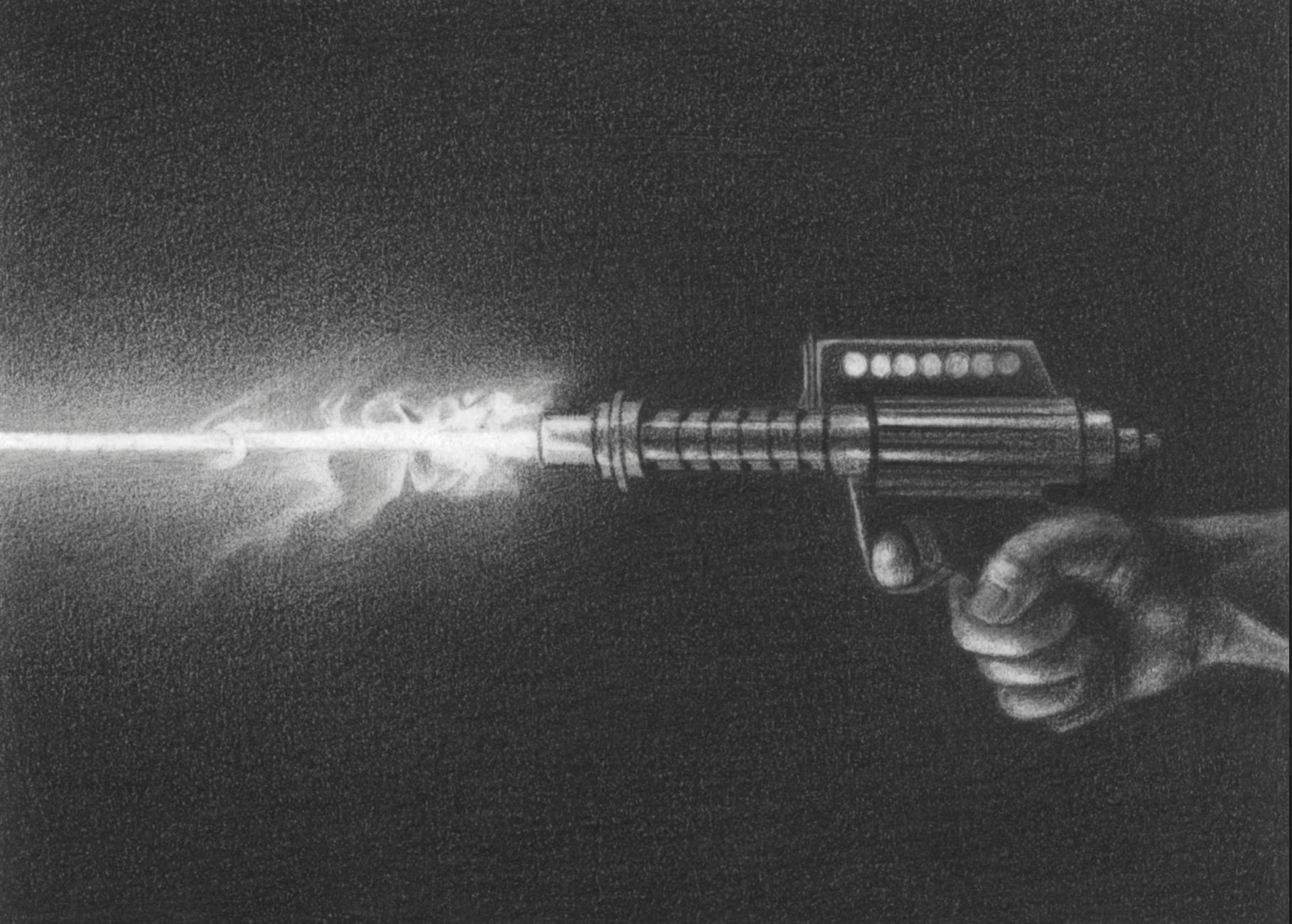
XVII
As it turns out, there is no need for Sonja and I to take the rocket ship to Frigia. I had thought that the Earth and Mongo were still pretty far apart, but somehow Flash seems already to have dropped the Polarite on Mt McKinley and been congratulated by his dad and returned to Mongo and broken into the palace disguised as one of Ming’s men.
A number of our security precautions seem to have broken down. Dale has been brought to the women’s quarters and is confined there by an electric carpet, but Flash and Prince Barin of Arborea turn off the electric charge of the carpet, which is controlled by a panel in the hall right outside. Zharkov is to be destroyed by a newly-improved version of the death ray, and we all gather to watch, but Flash leaps across the palace floor to rescue him. It’s really a very clear shot to Flash, a hard-to-miss shot, but Ming, in his sadism and cunning, prefers to have Flash destroyed together with Zharkov by the death ray. From a tradecraft perspective, I can appreciate that, but, unfortunately, the death ray is entirely controlled by a clock, which Prince Barin shoots in the nick of time. We still have clear shots on Flash and Zharkov, but the ray guns are not as accurate as they should be – except when Barin fires them – and we all miss, pick-pocking the floor of the palace.
Now there’s a certain amount of running around. We seem to have switched from the malfunctioning ray guns to swords, which is a nice reminder of an early-career gig I had serving a sociopathic earl. Zharkov has been recaptured, but, in spite of his clear stand on conscience, Ming has once again sent him to the laboratories where he now swiftly takes possession of Ming’s secrets, together with a variety of other renegade scientists waiting for the moment to seek revenge on Ming’s actions against their peoples. We suffer a whole series of reverses. Dale is taken prisoner again and rescued again – this time, she seems to have changed from the gossamer robes befitting the wife of an emperor, which I quite liked, back to the Sherwood Forest aesthetic that makes it easier for her to be rescued. The entire party is surrounded in the laboratory, but they slip through a tunnel passage, right under the main controls, that Ming for some reason knows nothing about.
Now the Solarite ship is readied, which is nice. I do have the deal in place to rescue Lana before the earth is destroyed, but in all the chaos, and with my new promotion, it just seems like not the time to bring it up. And, in any case, the guards for the ship are overpowered by Flash, and Ming worries that the entire palace will be destroyed and the thing to do is to head to his high, remote tower with his personal retinue, of which I am invited.
We march out of the throne room in our usual smart formation. The belly dancers have finished their act for the day and are sitting off to the side, rehydrating. The gong girl, it seems, is being left behind. It does seem very sad that, after all the service she’s done for Ming, all the years of standing there and looking pretty, and then slightly less pretty and then being very worried, I imagine, that she might be replaced by some other gong girl captured from some other planet, that she would, in the end, be incinerated when Flash Gordon sends the Solarite ship into the palace, but that’s the pain, I suppose, of being a lesser villain, of which I am not anymore.
I do have one quick stop as we go marching away to The Tower. I duck out of formation and into the office of Boorstin, who is reading The Wall Street Journal.
“Congratulations,” he says, peering over the paper with his glasses down the bridge of his nose. “Those epaulets become you.”
“Thank you,” I say. “I think I have reached a new place of vertiginous amorality to get them.”
Boorstin considers that. “By pushing Captain Torch and head-butting Lieutenant Thong into the Bottomless Pit?”
“Yes. I don’t know why I was so averse to betrayal before. I’m thinking of it like a new quiver for my bow. I think there was a real limitation to my worldview – my confederacy with all of my colleagues. And, now, I’m, how should I put it, omnidirectional. I feel like I can do anything at all.”
“A dangerous man,” Boorstin agrees.
“I’ve come to warn you,” I say hastily. “Flash Gordon has taken possession of the Solarite ship and means to use it against the palace. The Emperor and his closest retinue are going to The Tower to manage the defense by means of the auxiliary controls.”
Boorstin looks at me like he’s waiting for me to say something else.
“Come with us,” I say. “Save your life.”
Boorstin does the thing with the slide rule driving a deeper crease into his palm. “I’m a bit busy here,” he says thoughtfully. “I’ll join you later.”
What is it about his voice that strikes me very oddly? It’s like being in a dream and having a siren go off that seems like it’s part of the dream, but, in retrospect, proves itself to be an alarm clock – part of a different dispensation altogether.
“But Gordon has the Solarite ship. He means to attack the palace now.”
“There will be some time when he and Dale make different promises to each other, and he and Prince Barin debate who will sacrifice themselves. The truth is that the expenses for all this weaponry have driven the empire into unbelievable debt, and I’m very busy with a credit derivative swap to keep the whole ship afloat.”
He pushes his reading glasses all the way back up his nose. “If the ship is on its way, I’ll join you.”
“Alright,” I say, very moved. He and I shake hands. As always, there’s the revelatory feeling, the feeling of my mind expanding, whenever I walk out of Boorstin’s office. All these henchmen, with all their weapons, and none of them ever stop to think about what it all costs, about the heroic accountants, working even with their lives in peril, to execute on their financial instruments.
I race forward and catch up to the procession, vaguely goose stepping ahead of me. Sonja is the only one who seems to have noticed that I have been missing and smiles at me in her sickly way.
The Tower is very snug. There are about 15 or 20 of us there, most veterans of abundant other Ming campaigns against other annihilated planets. There’s an enormous clock, with the numerals left out in Mongo style. There are a series of different control panels, with a variety of widely-spaced knobs on them. There’s a large, glass-plated window so that we can take in the vast expanse of clear blue sky and look out over Ming’s empire on Mongo. I find there to be a very cozy feeling standing with the supervillains in a situation like this. There’s no room really to sit, but everybody is very good at keeping to their own space, standing with hands folded behind backs and gazing out over the empire.
There’s only one small issue, which is that there seems to be a breakdown in communication and we can’t get through to Captain Sudan in the control room to switch on the auxiliary controls.
“I can’t get through,” says the radio officer.
“You must. Our lives depend on it,” says Ming. I really have come to appreciate Ming, as I’ve gotten to know him. He’s merciless, yes, but fair – I find him very fair and consistent, never executing based on whim but based on the need to apply force to cement his iron rule. What I have learned on Mongo is mostly that curious shooting feeling from the art of betrayal, but I have learned a great deal, as well, from watching Ming secure his domain. If it’s really all a giant pyramid scheme, and he needs to keep conquering new worlds to pay off his debts for all the arms manufacturing, well, I suppose that’s just par for the course in this business.
There’s a new note in his voice, though. If, before, it was a glimpse of an unfortunate but understandable side of him to see the way he rubbed his hands together at the, to my mind, thoroughly average Dale Arden, now I’m seeing something else – panic, physical terror, the sense of his entire interplanetary house of cards toppling down on him. I find it very difficult not to feel for him. I push the radio officer away and leap into the chair.
“Captain Mulvaney calling Captain Sudan,” I say, with unmistakable urgency and authority in my voice. “Captain Sudan, come in. Captain Sudan, switch on the auxiliary controls immediately.”
But, even as I am speaking, the retinue are distracted from the drama of the radio by a sight out the window. It seems that the Solarite ship has been turned around and is headed straight for The Tower, cutting the sort of wobbly arc a ship has when the pilot has already parachuted out to safety.
“It’s going to hit us,” one of the less calm and collected henchmen says. Some of the others, Ming included, have already started to throw their arms up over their heads. I must say that I really do keep it together, my heart rate is down, my breathing is controlled through a trick I learned from Sod Job’s specialists. “Captain Sudan, will you come in,” I say. But my focus on the radio controls, as opposed to the kamikaziing ship, has another fringe benefit. I am looking in a different direction from everybody else and am able to see Sonja pop open a trap door in the Tower wall and start to slide through it.
It really is not like me to desert a group of comrades when a Solarite rocket is bearing down on them. I am a go-down-with-the-ship type, but I have changed immensely, really immensely, since I have been in Mongo. Sonja looks slyly to the side and around her, with her sickly smile, just as she’s beginning to climb down the chute, and something about that smile takes care of a great deal of exposition and gives me a sense of what might have happened with Captain Sudan, of the real relationship that Sonja has with Prince Barin, and why Sonja might have been so eager to get Torch and Thong out of the way.
It's with – I don’t mind telling you – an immensely guilty conscience that I leap away from the controls and get my foot into the trap door just as Sonja is closing it behind her. There’s a glance back at the retinue, with their arms up to defend against the Solarite, and a real pang. I’m very sorry all of a sudden that Ming was so reticent with The Speech when he spoke to me in the throne room, and, as far as I know, with all his intergalactic domains, all his weaponry, all his remarkable cunning, he never actually got to give it. It occurs to me that I might never know why Ming was so hellbent on his destruction of the earth – whether it was an arcane part of the pyramid scheme he’d worked out with Boorstin or some trauma that an earthman had inflicted on him once upon a time, or whether, as I secretly think, it was that he was older and lonely and wanted to do something to really impress Dale Arden, to make her forget all about Flash.
In any case, there’s a last glance back. Sonja fights with me a bit to close the door, but it seems to not be worth it to her to attract the attention of the full retinue, and I kick her hand away and then slide down the chute, which is like an enormous slide, and we go careening down The Tower very fast and in a way that makes it very hard to believe that we won’t simply break our necks from the fall, but the slide, which seems to have been built by the original architect of The Tower in a desperate attempt to evade their own inevitable execution, has enough twists and turns in it to slow down our motion, and Sonja and I hit the ground together safe from our fall and safe also from the Solarite explosion which is now occurring above us and is scattering debris in all directions although, fortunately, not right on top of us.
I have a confession to make when it comes to Sonja. While I find her reprehensible, a double or, who knows, triple agent, with a really nasty smile, and also not my type at all with her platinum blond hair, I have been alone on a distant planet for a long time. I have been away from my Lana, and I have had to deal with a certain amount of confusion from Lana having turned me over to Julius Jacoby to execute me in place of our agreed-upon rendezvous. Different, not-entirely-rational thoughts have crossed my mind where it comes to Sonja, and, as we hit the ground together, I stand up with a crooked smile and a twinkle in my eye and say, “Well, I guess we could think of ourselves as the last two people on this world.”
But Sonja has landed slightly ahead of me and has the ray gun out. “Trust me, earthman,” she says, “I wouldn’t think about it if we were the last two people in this galaxy.”
Which is a point of view that I really don’t understand. I guess this must go back to the theory of the jug ears, but, in any event, I don’t get clarification on this. I nod, I pout a bit – which happens to be genuine – but it also enables me to step slightly to the side and out of the direct line of her fire. And then, using classic small-arms technique, I move very quickly, tucking my arms into my body and my head down, jackknifing to close down the distance between myself and Sonja, then twist her arm back, getting an, I must say, satisfying scream as the tendons, or whatever, in her arm start to snap, and the ray gun falls out of her grasp.
“I know you,” she says. “You would never shoot a woman.” She’s fallen to the ground and is clutching her maybe-broken arm. She’s looking up at me with that sickly smile.
She has, as it so happens, touched on an unusually interesting question that has been subject to a great deal of debate in various canteens of mine over the years.
“Ordinarily,” I say. “But my personal view is that, with the kind of treachery you have carried out, you have canceled out the gentlemanly deference that I would normally exercise.”
“I don’t have brawn,” she says spitting out a bit of blood. “Treachery is what I need to survive.”
That’s an interesting point, and in all the discussions we’ve had on this question in all the different canteens, I’m not sure we’ve ever quite considered it from a woman’s need to survive.
“I liked Ming,” I say, “and his whole retinue. I don’t know why your being a woman should somehow outweigh the deaths of all of them.”
“Don’t give me that,” says Sonja. “I saw what you did to Captain Torch.”
“Yes, but that was ordinary career advancement,” I say, feeling a confidence as I start the sentence, which somehow diminishes by the time I get to the end. “Working with Captain Sudan to overthrow the entire administration that supports you – to me, that’s completely different.”
“Captain Sudan,” she says, and to my surprise spits out a tooth even though I don’t remember having punched her in the mouth. “You really are the stupidest henchman I have ever met. You think this is about Captain Sudan? It goes so much deeper than that.”
“Then what?” I say shoving the barrel of the ray gun into her mouth, although, since that keeps her from speaking, I withdraw it again.
“Polarite,” she says with that sickly smile. “A consortium of Polarite, to be owned by Prince Barin once Ming was out of the way, and with Boorstin getting all the consulting fees, plus the commission for anyone he sells it to.”
I have long since been tired of Sonja’s tricks, but this does pull me up short. “Boorstin?” I say. “My Boorstin?”
“We would have cut you in on it but Boorstin thought you were too stupid to see the angle,” Sonja says. She spits out another tooth. “However,” she says very wearily, “since you have a ray gun pointed at me, we can still bring you in on it. We’ll give you your own mine on Frigia – no need to pay duties to the consortium on it.”
My new vertiginous sense of villainy seems only to have gone so far. My hand is distinctly shaking.
“Think about it Banx,” she says. “Trust me, you’ll make me far more on that than you ever will in the henchman business.”
I do give it some real thought. The Purple Death will no doubt have caused a panic on the earth and driven up the demand for Polarite. Even if Flash has dropped a sufficient amount of it on Mt McKinley, nobody would entirely believe that – and the market should be strong for a long time to come. As always, Boorstin has come up with an entirely foolproof scheme.
“I’ve thought about it,” I say at last.
“And?”
“I do think that the treachery that a woman may arguably need to survive doesn’t outweigh a basic code of conduct to everyone else. If a woman wants to survive in a man’s world, then she also needs to abide by the same code of conduct as a man.”
“That may be,” Sonja says. “But you’re also very tenderhearted, Banx. Even if that’s where your canteen logic has led you, you’re too much of a simp to ever pull the trigger.”
I consider that. I may have underestimated how pretty Sonja is. All the focus on Dale Arden has clouded my mind as well. She has a very clean, Nordic kind of beauty. And the bottomless amorality of her adds, I must say, to it. “Ordinarily that would be true,” I say. “But you’ve met me at a very interesting moment in my life.”
I pull the trigger and this time the ray gun works perfectly. It hits Sonja in the chest and the ray circulates around her thorax and electrocutes her in a series of jolts.
The Tower has collapsed all around me, and I pick my way through the burning debris and back to the palace, which is unharmed. There’s a spaceship taking off from a small little docking station behind the accountant’s office, and Boorstin is at the controls. He and I lock eyes for a moment before the ship continues its circling ascent and then disappears out of sight. Prince Barin’s men are storming the palace, and my sleek double-buttoned suit and epaulets are suddenly a real liability. Well, if Flash’s crew can steal our uniforms all the time, I suppose we can do the same. I wait behind the door of the accountant’s office, and then when a dawdling Arborean comes by, I step out, headbutt him into unconsciousness, drag him into the accountant’s office and replace my uniform with his. Unfortunately, he’s several sizes smaller than I am, and I waddle around very uncomfortably in his lincoln green leggings and feathered hat. There had been some thought of checking in with the gong girl, with whom I have shared several glances in the down-time of Imperial briefings, but that now strikes me as unwise. Prince Barin has already moved into the throne room and the writhing girls are doing a ceremony to welcome him and, as far as I know, the gong girl is already a part of it. At the main spaceport there’s a shuttle to Arborea to pick up some traditional Arborean decorations for the welcome ceremony, and my disguise seems to be good enough to get me aboard. Once we’re airborne, I overpower the three members of the crew and stuff them one by one through the portholes of the ship and then I steer course back to earth.
As I’ve already discovered, space flight is a good time for rumination. There is one school of thought, I suppose, that would view my trip to Mongo as a series of unremitting failures. I didn’t get my Polarite mine. I didn’t in fact get any of the mingrals that were owed to me for the work I carried out for Ming. As the head guard of Ming’s retinue, I failed to protect Ming from the Solarite ship or the treacherous Captain Sudan. And the case could be made that I killed Captain Torch and Lieutenant Thong for no reason at all – they probably are still plummeting down the Bottomless Pit as I speak, although to be fair, I know very little about the mechanics of bottomless pits and perhaps the acceleration of the fall has made them black out, and, in any case, had I not treacherously shoved them in the pit they would have been incinerated in the Solarite explosion.
But, strangely, this is not how I think about things as I fly through space and then pass through the Van Allen belt and then steer my course for the spaceport at Fort Tilden in the Rockaways. Wisdom, it seems to me, isn’t to be found in the sum total of actions, however successful or unsuccessful they may be. Wisdom is to be found in the domain of non-attachment. I had been crippled by a certain attachment to the henchman’s code and, when I overcame Captain Torch’s karate moves with my own superior training and knocked him into the Bottomless Pit, I overcame as well a very deep attachment and liability. I make no great claims to this. I suppose I have other, deeper attachments as well – to Boorstin, for instance – but, as Boorstin himself might put it, it’s a step forward, a breakthrough. It seems to me somehow that I now have it in me to do anything.
***
The immediate problem I have on my arrival in New York is that I have no money – not even enough to pay the Breezy Point attendants for parking my ship. They duly impound it, which is no real concern of mine, and one of the attendants himself gives me the fare to take the ferry into the city. After we dock, I take a long walk to stretch my legs back to Manover Street where the concierge, with his exquisitely-tied scarf, is waiting at the reception desk.
“I don’t have any gold coins,” I say.
“Then I regret that I cannot offer the services of this hotel,” he tells me.
“I do, however, have a handful of mingrals,” I point out, reaching into my pocket. “Do you think you can exchange these?”
The concierge holds them in his hand and bounces them up and down. “I will see what I can do,” he says.
The head of the currency exchange desk is summoned and he peers at the mingrals in the light, and in the end I am given a token for a single drink at the bar.
I don’t think I have ever enjoyed a single gin martini as much as I enjoy this one, and I make every effort to drink it as slowly as possible, although am not successful – the conical shape of the glass is deeply deceptive as to how much liquid is in it.
“You’re back,” says Winston Scott, at the table next to mine, peering over his account book. “Did you find work?”
“Did I ever,” I say. “I have been on some kind of an adventure.”
He smiles at that in a way that is not what most people would recognize as a smile but is a moistening at the corners of his eyes, which is a sign of begrudging respect that real men have for other real men.
“Staying with us long?”
“No money,” I say, turning out my Arborean pockets.
Winston nods grimly at that, although it doesn’t change the look of underlying respect at the corners of his eyes. I cut, I suppose, an odd figure – the Arborean outfits, which have a certain style on Mongo, don’t translate particularly well to New York, and the size mismatch of the leggings and the feathered cap bouncing on the top of my head is somehow more accentuated in the steampunk-aesthetic, red-velveted Continental bar. The women of the Continental seem to take a somewhat circular pattern as they move around my table with their drinks, and even the bartender managed to plop the olive stick into my martini with unmistakable disdain. But a real man, like Winston Scott, can see past all of that, and he does.
“Looking for new work?”
“Certainly,” I say.
He gestures with his eyes over to his table. He has his hand over something and then he moves his hand and I grasp what’s underneath it, which has the plastic texture and serrated edge of a poker chip.
“It’s a marker,” he says. “There’s a supervillain – the toughest, baddest supervillain I’ve ever come across – who’s looking for henchmen for a new project. Show this to the concierge. He’ll tell you how to get there.”
My eyes moisten in the way that all real men’s eyes moisten at a show of respect, although mine, unlike Winston’s, have actual tears in them. I put the token into my otherwise perfectly empty Arborean pocket.
“Now get out of here,” says Winston. “You’re scaring the customers.”
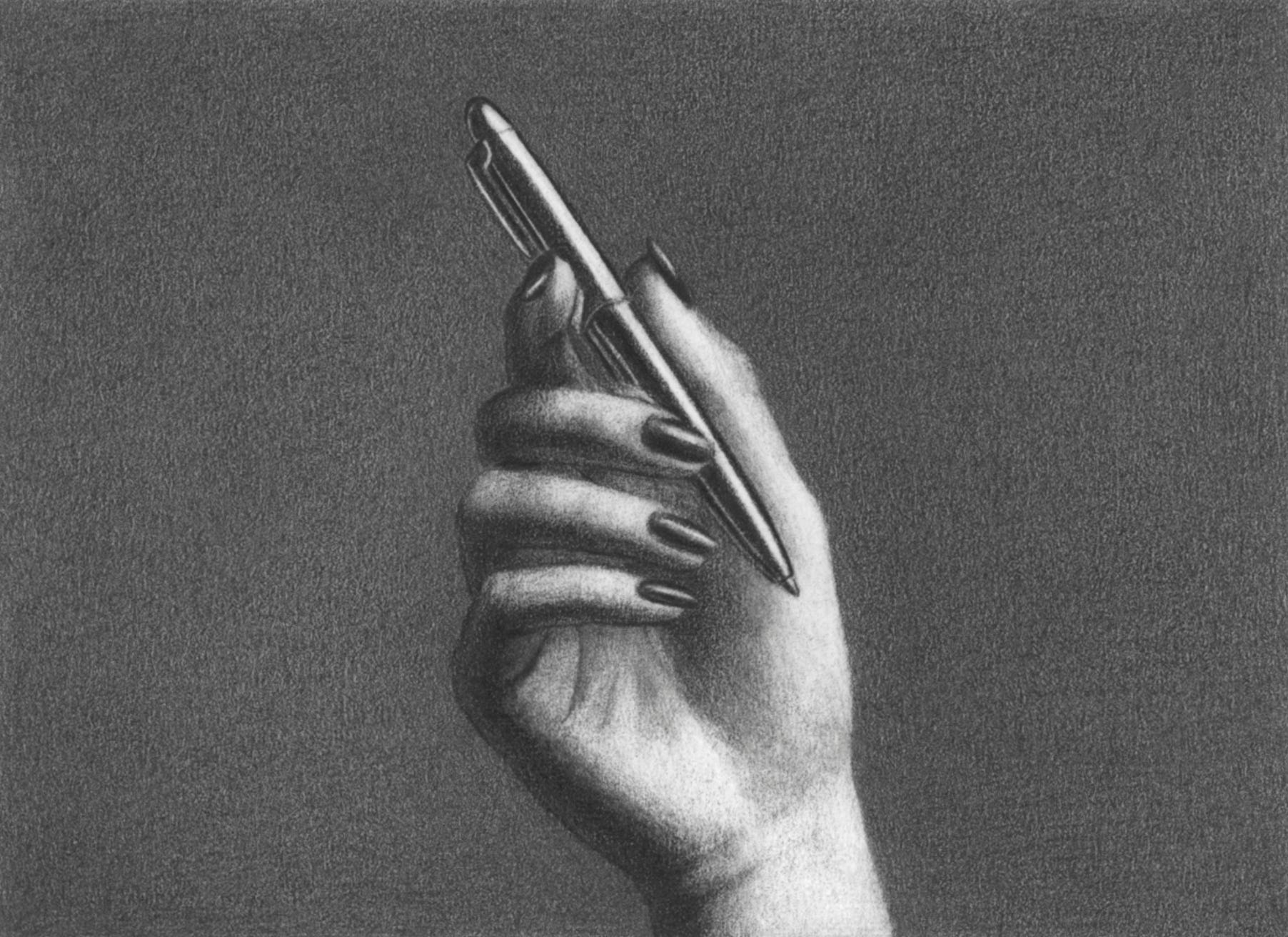
XVIII
The concierge accepts the token when I slide it across the counter to him, makes a phone call, and then I am moved, with really impressive dispatch, out of New York and towards international waters.
I can’t tell you too much about this journey. I am either clubbed or gassed, and pass out very quickly after stepping into a white van that meets me at the service entrance to the Continental. When I come to, I am dressed, thank god, not in the Arborean lincoln green but in a handsome white outfit with a high collar, somewhat like that of a waiter in a very high-end restaurant. One of the Continental’s tailors seems to have accompanied me for at least part of the journey and the new outfit fits perfectly.
There is a sea breeze, that particular clean air of international waters. I am in a stark white anteroom that feels vaguely familiar. There are no magazines, there’s nothing to do but fiddle, fairly enjoyably, with the cufflinks of my new outfit. At last, when I have already been psychologically weakened by my long isolation, the locked doors slide open and a Persian cat with a diamond collar comes through. The cat has very yellow eyes and, even if it is a fine breed and very beautiful, something about those yellow eyes make it clear that it’s not to be pet. In any case, I know from experience how painfully that cat can bite if touched.
After the cat has yowled at me a little, Blofeld, wearing soft-soled shoes to magnify the surprise of his entrance, slides into the room.
“So, Mr. Mulvaney,” he says in his purring way. “You have returned to the fold.”
“Blofeld,” I say. “We meet again.”
“But of course, Mr. Mulvaney,” he tells me. “You can’t expect to answer an ad for a supervillain, a supervillain of immense resources and diabolical schemes, and have it be anyone else, can you?”
“It’s a crowded market,” I say. “Anyway, what are you working on?”
Blofeld places his hands behind his back and wanders towards the window. We seem to be underwater. It’s just a porthole looking into the black but Blofeld considers it thoughtfully. “A scheme so dastardly, so far-reaching, that you may not even be able to encompass it in your mind.”
“Try me.”
“You know that the Americans have been sending rockets to the moon?”
“I do.”
“We shall intercept one of those rockets as it helplessly circles the moon with one of its astronauts trapped on the surface, then route that ship to a space station that is currently under construction, and, as the world contends with the loss of morale from the abandoned astronaut, use the rocket to launch attacks on the world’s principal cities, which will then be repopulated by a genetic perfect master race that I have been developing in a different space station.”
He looks at me with that creeping smile of his. The cat is sniffing at the hem of my leg.
“What do you think?” he says.
“It’s a brilliant scheme,” I tell him truthfully.
“Much more complicated, isn’t it, than bank-robbing in the far reaches of the Caribbean or running around the five boroughs trying to collect the bounty on John Wick?”
“Nobody else is a world-encompassing criminal mastermind. You are,” I say.
Blofeld gives the look that is, in my experience, completely universal for criminal masterminds. He winches up the corners of his mouth at the obvious, flagrant flattery but does not reject it altogether.
“And may I ask where I fit in to this scheme?”
“You?” he says and he laughs a bit unnecessarily, I think. He paces back and forth across the linoleum floor.
“I imagine you’ll need a Head of Inner Perimeter Security,” I say, “on the off-chance that Bond attacks before you’re ready with your space station. Since we’ve parted, I’ve been full Head of Security for Dr. Eric Jacoby on Devil’s Atoll and for Ming the Merciless on Mongo. I’ve developed skills that, to be honest, would make this fortress impregnable in a way that it never has been, but given that I have been away for some time and you have doubtless made personnel changes, I would accept it if you wanted to keep me at Inner Perimeter Security only.”
“You have been away a long time,” says Blofeld finishing his circuit of the room and repeating it.
“Exactly,” I say, trying to keep the exasperation out of my voice. “That’s what I’m saying. And in that time I have developed a great many skills that I didn’t have before – how to guard against crocodile attack, how to properly secure the Solarite ship, you name it.”
“It seems to me,” Blofeld says, pausing a little uncomfortably in his pacing, “that the last time our paths crossed, you were the head of my inner perimeter security, and my inner perimeter was breached was it not?”
I am getting a very distinctive feeling – the feeling of cold sweat. It is a feeling that accompanies both the narrow-mindedness and conservatism of bosses and the feeling of being suspended over some ravine with the crocodiles chomping below. I find myself pressing into the ground with the toe of my foot – an involuntary gesture that, were I to have a psychoanalyst, the psychoanalyst, I’m pretty sure, would suggest is my unconscious attempt to check the floorboards for a hollow area leading to a shark chute.
“I would say that was more of a full systems failure,” I say standing my ground.
“Oh?”
“I note that Jared Mellett’s external perimeter defenses were no help at all in guarding against a battalion of rappelling ninjas.”
“Jared Mellett was fed to the shark for that,” says Blofeld.
“I see.”
Blofeld stands still and looks at me, still with his hands menacingly behind his back, but there is something different about him – there is, I would say, a twinkle in his eye.
“Nonetheless, I know you to have been a loyal and diligent henchman, maybe not the brightest, maybe not the most effective, but serviceable, definitely serviceable.”
“Thank you sir,” I say. My active toe relaxes slightly.
“While the organizational bylaws of SPECTRE do not tolerate failure – ”
“SPECTRE?” I say.
“That’s another thing Banx,” he says. “I heard that you were under the impression that, the entire time, you were working for SMERSH – ”
“I thought that explained all the Russians.”
Blofeld, for the moment, looks genuinely sad. “I don’t know what it is with you Banx,” he says. “How can I have a Head of Inner Perimeter Security who doesn’t even know what organization he’s working for?”
“I won’t make that mistake again,” I say. “I do know that it’s SPECTRE.”
He shakes his head. “SPECT-RE,” he says.
“SPECTER.”
He does something that might be an ‘r’ roll or might be suspending the syllable or might just be a kind of dead-eyed expression and smooth slicing gesture through the air with one of his hands. “SPECT-RE,” he says. “In any case, I suppose it is my unusually forgiving disposition, and my optimistic outlook at the moment, that is allowing me to overlook your abundant failures and to keep you both alive and in my organization,” he says. “You will tend to the shark. You will feed it every day, you will liaison with the veterinarian whenever he visits, and you will clear out the remains of your associates should it be necessary to teach any of them a lesson about efficiency and organizational discipline.”
I have many, many thoughts on everything Blofeld has just said, but I lock my heels together and say, “Very good sir.”
“Do that for some time and, who knows, maybe you can find your way back into the inner perimeter squad,” he says.
I am, needless to say, less than thrilled about this assignment, and Blofeld hasn’t specified, for instance, how I am to fish out the remains of my associates without being devoured myself, but there is, I can’t help but notice, something different about Blofeld – something that is, he may be right about this, unusually optimistic.
“Before removing you to your new quarters, you may be interested to meet a few of your supervisors, some of whom, I believe, are already known to you.”
He presses a spot on the wall that seems to connect to a button and, within moments, the door is sliding noiselessly open and two figures walk in.
“I imagine there are many other figures in my current crew who may be known to you,” says Blofeld, “but I believe you may like to make the acquaintance of some old friends. And you do know each other, yes? This is the beauteous Captain Lana Lynx, the head of my private air force. And this is the unsung hero of the entire operation, my invaluable right hand, Zachary Boorstin, CPA.”
Lana is in, it must be said, a remarkably handsome outfit. She is wearing a crisp, small tie over a white button-down shirt, with striped epaulets and a yellow-brimmed black cap turned jauntily to the side on her head. Her black skirt extends down to, I would say, the mid-part of her upper thigh. Blofeld squeezes her bottom as she enters into the room and salutes, and then he pulls her in close by the shoulder as he introduces Boorstin, who looks exactly the same as he did the last time I saw him on Mongo, with a pair of pens in the breast pocket of his shirt, one leaking slightly, and in a brown Zara suit.
“Banx Mulvaney,” says Boorstin, looking genuinely perplexed. “I thought you would still be on Mongo.”
“Left to die in The Tower, you mean?”
“I don’t know. I thought maybe you would be working your Polarite mine.”
“And giving you all the consultancy and transportation fees?”
“I’m a middleman,” Boorstin says mildly. “I would just have taken the cut of any middleman.”
“A lot has changed, Boorstin,” I say, “I work on my own now.”
Boorstin glances at Blofeld and the two of them share a slightly mystified look.
“I thought that, assuming you made it out of The Tower alive, Sonja would read you into the Polarite operation, and she could be your point person on that. To be totally honest,” Boorstin says, in that confidential way of his that is always so winning and gives the impression of his being always two steps ahead, “I thought that you and she might make a good pair in every sense.”
“I shot Sonja with a ray gun,” I say.
“Ah,” Boorstin says. “Well, then, I guess it wasn’t meant to be.”
Blofeld’s stubby hand has been alternating between Lana’s shoulder blade and buttock. He has the usual discomfort of a boss when the subordinates suddenly have an extended conversation amongst themselves.
“Well,” he says. “I see you have a great deal to catch up on. When you are finished, you may see that Mr. Mulvaney is escorted to the custodial quarters, and Ms. Lynx, please do be sure that our air patrols are scanning for any sign of MI6 interference.”
“Yes sir,” snaps Lana with a very smart salute, accompanied by her hip jutting to the side.
“Well if that’s it, I’ll leave you to it,” says Blofeld. He whistles for the Persian and begins to leave the office. He really is very different than back in the days of the two atomic bombs – just more jazzy and carefree. It seems hard to believe that Lana’s switch to the pilot’s uniform would have done it, but, racking my brains, that seems to be the best explanation.
“Oh one more thing,” says Lana.
“Yes love?” says Blofeld.
“Boorstin, your pen,” Lana says.
“This one?” says Boorstin grabbing the leaking pen.
“No, the other.”
“Of course,” says Boorstin, and unclips the Montblanc pen from his shirt pocket and hands it to Lana.
“What did you want to say to me?” says Blofeld, grazing her side with the back of his hand.
“Not me. Boorstin. He had an idea for a credit derivative swap.”
“As you know, I always have time for a credit derivative swap,” says Blofeld with a broad smile.
“This one won’t take any time at all,” says Boorstin.
Boorstin is to my right. Blofeld is between, so that he is facing Boorstin but his face is also angled towards me. I can see the broad smile he has – a really new quality of his, as he seems to be mellowing with his age – and can see the abrupt way the smile changes to incredulity and then to rictus-y pain as Lana presses the button twice of the Montblanc pen, turning it into a poison dart knife and jams it into Blofeld’s back with the perfect positioning for the poison to enter immediately into his heart. A bit of blood trickles from the side of Blofeld’s mouth closest to me and then he keels forward, in a straight line to the ground, slightly bouncing on impact but not dislodging the dart knife.
The three of us look at him together.
“That’s it?” I say.
“Seems to me,” says Boorstin.
“That’s a major, major supervillain. Aren’t you supposed to kill him in some appropriate way?”
“Not necessarily,” says Boorstin. “Sometimes an understated death has its own ironic impact.”
“A reminder of the fragility of all life,” says Lana in an unfamiliar voice, although her look of flashing-and-yet-very-cold-eyes is unfortunately familiar to me from the pier on Dr. Jacoby’s island.
“And now what?”
“Now we kill off Blofeld’s inner circle, sell the captured rocket ship back to the Americans for whatever they’re willing to pay for it, and take over SPECTRE,” says Boorstin.
“SPECTRE,” I say.
“SPEC-TRE,” confirms Boorstin.
“Why wouldn’t SPECTRE just revenge itself for Blofeld?”
“He was going soft,” says Lana in that new voice of hers.
“What I think you have failed to realize, Banx,” says Boorstin in a very gentle voice, “is that for a long time there has been a new force in the galaxy. The banking income of the Caribbean, the mineral wealth of Mongo, the mark-ups on Blofeld’s construction projects, they have all been flowing to the same place – ”
“To you?” I say.
“To the unsung hero, the invaluable right hand working inconspicuously in the drab accountant’s office,” says Boorstin modestly. “But now is the time to strike.”
“Why strike?” I ask. “If it has been all going so well, and invisibility is part of the secret of the operation, why be out in the open?”
“An excellent question,” says Boorstin, and Lana wags her eyebrows approvingly towards him. “But there is a certain logic to power, and, eventually, power simply has to show itself for what it is. At a certain point, when even a credulous fool like Banx Mulvaney can’t help but understand how it all works, it seems only fair to showcase all of it to the world.”
The jab at me seems unnecessary, but I let it pass.
“Why share so much of this with me then?” I say. “Why kill Blofeld in front of me? Why let me into so many of the different pieces of your complex web?”
Boorstin looks at Lana with what seems to be mystification. She has drifted a few steps over and is now standing in the crook of his arm, while Boorstin wraps the brown sleeve of his jacket over her shoulder.
“No real reason,” Boorstin says. “You just always seemed to be in my office.”
“I took a real interest in your work. I had a great respect for your brand of villainy. I figured that that was why you helped me escape on Jacoby’s island.”
“He didn’t,” says Lana.
“No?”
“No. As soon as you left, he ratted you out to Jacoby’s men and they used me as a trap to execute you on the pier.”
This is all very new information and repixelates everything greatly. “So you didn’t set the trap?” I say to Lana. “You were coerced into it?”
“No, I also did,” Lana says, and the pixels return to their previous shape. “Boorstin told Jacoby what to do and I reminded him to make sure he didn’t forget about it.”
An order seems to have gone out somewhere in here. There is a spattering of machine gun fire somewhere out in the base, the abbreviated scream of large groups of henchmen being taken by surprise but dying before they can finish their cry of anguish.
“Why?” I say. “I can’t remember doing anything bad to either of you. You – ” I say to Lana. “There were the rocks, but other than that, all I was doing was saving up for Montclair. You – ” I say to Boorstin. “I really was just asking questions. I think I wanted to be taken under your wing.”
Lana and Boorstin look at each other. She caresses his shirt – the side without the leaking pen.
“It’s hard to explain Banx,” Boorstin says almost shyly. “It just wasn’t to be. I tried to tell you this on Mongo.”
“It’s like the way I just asked that last question.”
“Exactly,” says Boorstin, grateful for the help. “The pleading in it, the beaten dog feeling in it. Would you say that that is the quality of a supervillain?”
Lana presses her lips together and shakes her head once, firmly.
“Would you say that that is a quality that can win a woman like this one?”
Lana makes an impatient look like it’s time to get on with the ongoing coup.
Boorstin still has his thoughtful demeanor though. He seems obligated to explain it in a little more depth.
“Have you heard the parable of the scorpion and the frog,” he says.
“I have,” I say.
“Or the expression ‘it’s a dog eat dog world’?”
“I have,” I tell him.
“Well, that’s really all it is – in the villainy business like, I suppose, anything else. All this asking me questions, all this wanting to know what it all means – ”
“It’s just not very attractive,” says Lana.
“Right,” says Boorstin. “Well. You’ve wanted wisdom and I suppose it’s, as you would say, appropriate that this wisdom is your last thought. And now the two of us should get along with supervising our massacre and should finish you off.”
Something seems to disconcert both of them. With her auburn falling prettily out of the pilot’s hat, Lana whispers something into his ear.
“It’s not really a problem that we don’t have a weapon,” Boorstin says. “This office locks only from the outside. We’ll leave him here and a few of our gunmen will come back in a bit to finish him off.”
“Alright,” Lana says, impressed as I have been so many times, at how Boorstin always manages to be a step ahead of everything.
“Well,” Boorstin says, as he ushers Lana out ahead of him. That thoughtfulness, and need to explicate, seems to be a difficult quality to extract out of himself. “Maybe you’ll find that it’s better in the next world,” he says with real considerateness and smiles at me before he locks the office behind him.
***
The rest of my afternoon is spent with a familiar set of reflections. There is the plink-plonking of individual pistol shots as the Blofeld loyalists are caught and executed and then, occasionally, a rat-tat-tat of a machine gun, say if a group has been caught hiding in a closet or something. As on my swims across the Caribbean, as on my drives to New York City, as on my lonely trek to Mongo and back again, I have to ask myself what is it that I keep doing that makes me find myself in the same set of circumstances over and over again. If it’s my love for Lana, or my desire to learn from Boorstin, or my loyalty to my various confederates, but over and over, it seems, it’s the gun turned on me by the people I trust most in the world and then a massacre being carried out that I am helpless to prevent.
There are a few possibilities that occur to me while I am there in Blofeld’s office with the Persian cat looking up at me in a not-particularly-friendly way with its yellow eyes. There are the different buttons and control panels that must be hidden somewhere in the office, and I spend a long, long time searching under the desk and against the walls for any hint of gradation in the surface materials, but, really, to no avail. I am fairly sure that I can identify the tile that feels loose and probably gives way to the chute for the shark tank, and the thing to do would be to release the catch which must open up the chute and then to either grab on some hook in the chute to arrest my fall, as Flash Gordon routinely does in the various pits and pools on Mongo, or else to take the shark by surprise when I land in the tank. And let me tell you, I really do scrounge, I look in every recess of the desk, run my hands very, very slowly over the surface, but technology has never been my specialty and for the life of me I can’t figure it out. It must – I assume – have something to do with a weight being on the right spot on the floor, in addition to hitting the button, and I drag Blofeld’s corpse over, but, again, to no avail. The dart knife, too, is wedged astonishingly deeply into Blofeld’s heart – a tribute to how far Lana has come as a villain, which makes me think of Montclair and of the stories we could tell each other as we listen to Patsy Cline, but the thought does flash across my mind that it was Lana who got me into this mess, as she has gotten me into so many messes before – and, pull as I might, I can’t manage to extricate it. The real trick, I suppose, would be something involving the corpse. Maybe I should sit the corpse up in the chair and pretend to be the corpse myself; or change clothes with the corpse so that the gunmen, when they show up, will think that Banx is dead and I am Blofeld.
But there are obvious disadvantages to all of these schemes and I don’t pursue any of them. Then there are the tricks of doors and ceilings and air vents, but it’s a starkly minimalist office in a kind of Philip Johnson style leaving very few recesses for hiding a body, and the architect seems to have learned from many similar lair catastrophes and hasn’t included an air vent in the room but has, unfortunately, all on his own figured out my idea of putting up skateboarder-deterrent-type wire on the ceiling to keep anybody from hanging there and then leaping down on the gunmen when they show up. The portholes are sealed tight, and, in any case, we seem to be deep underwater and I would certainly drown if I got out. I am, I am sorry to say, still working on the adhesive substance for the windows when the gunmen, with surprisingly cat-like tread, open the door from the outside and enter the office.
There are four of them and I am very surprised to see Jaws as their leader.
“Jaws,” I say. “I thought the shark got you.”
He looks exactly the same, still with the same baggy pants and unkempt haircut. “Banx,” he says and grins wide with his metal teeth, the sight of which always makes me involuntarily turn away. “No, no, I was able to overpower the shark.”
“You’re kidding,” I tell him. “That was a man-eating Carolina hammerhead shark. And you’re trying to tell me that you, what, wrestled it to the bottom of the pool?”
“I bit it,” Jaws says and starts to laugh. “I bit it right on the spiracle, behind the eye, and held its jaw shut with my arms and was able to bite to kill it.”
“That seems not at all plausible,” I say, but the other gunmen – Devlin Auberville and Lionel Drawley among them – are shaking their shoulders in a it’s-funny-because-it’s-true kind of way.
“That’s why I have these beauties,” says Jaws, flashing his disgusting teeth, and starts laughing in that heaving, diaphraghmic way that makes me think for a moment that we might have to give him the Heimlich.
“It’s nice to see you alive,” I tell him.
“You too Banx,” he says and is clear enough despite his speech impediment. Jaws has always been a big softie. “I mean, I’m sorry we have to kill you, but better us than anyone else, right?”
“How do you figure?”
“Well, I’ve thought about this a lot,” says Jaws, “and I think it’s better to be killed in the end by someone you know, isn’t it?”
Auberville nods very thoughtfully at this. This has clearly been the hot topic in the canteen.
“So many of us are killed by strangers – ”
“Or Bond,” says Drawley.
“Or Bond. And it’s like does Bond ever think about us ever again? But if it’s someone you know – ”
“You’ll think about me?”
“Sure,” says Jaws. “We always liked you Banx. All of us. Auberville. Drawley. Sod Job.” Sod has slid into position with a snub-nosed 9mm parabellum submachine gun. He seems to still be keeping his vow of silence and makes only the slightest nod at me. “The new guys, Vlad Mikolić and Janis Peteris. They haven’t met you of course but they’ve heard about you – ”
Vlad and Janis nod to me but of course do not take their hands off the trigger of their Kalashnikov PP-19 Bizons.
“They all know about Lana Lynx and your plans for Montclair and how you followed her around from base to base,” says Jaws.
“You talk about that?”
Jaws laughs in his diagraphm-y way. “It’s a beautiful story,” he says. “At least I think it is. No matter how many times she tries to have you killed, there you are, never giving up, still looking at listings for your house.”
“I suppose you’re right,” I say. “I suppose it is beautiful from a certain kind of view. I guess if that’s how I’ll be remembered.”
“Yes,” says Jaws enthusiastically. “I mean, we’ve gotten tired of the story. But you know how it is – from time to time. And that you died on your feet like a man. We’ll remember that too.”
Auberville flashes a tight smile at me. He and I were never exactly on the same team, there was always a bit of professional jealousy between the hot shots on the assassination squad and the regular grunts in inner perimeter, but it’s nice to know that there was always mutual respect there, that he and I were, at the end of the day, colleagues in the same business.
“You’re right,” I say. “It is better to die with friends.”
“I think so,” says Jaws with that very winning way in which he bows his shoulders forward when he really agrees with something. They’ve clearly been hashing this over a great deal in the canteen.
“Alright,” he says, “any last words? Message for Lana, anything like that?”
I have to scan my imagination. Strangely enough, with all the time I spend thinking about every aspect of the henchman business, I’ve never actually scripted this out. “Just – I guess maybe don’t do this?” I say.
Auberville and Drawley have that disappointed look where they glance at each other out of the bottom corners of their eyes. Oh, how hard all of us work to avoid that disappointed look.
“I’m one of you. We’ve been good comrades – and friends,” I say. “You can carry out the orders of the new boss, but you know how it will go, he’ll start picking you off one by one, feeding you to the shark, and then somebody else will come in and take his place – ”
“Banx,” says Jaws gently. “This sounds like pleading. We don’t like pleading.”
“You can tell us to fuck our mothers or something,” says Vlad Mikolić. “We don’t mind that.”
“Anyway, we want to work for Boorstin,” Auberville says. “Boorstin’s the smartest accountant any of us know. He’s gotten pure profit out of this place, just on the futures market. He’s given all of us equity.”
I nod at that. It’s very hard for me to argue with the idea of Boorstin as boss.
“Well,” I say. “For old times. All the times we’ve cheated death together, drilled together, trained together, all the times we’ve had each other’s backs, that has to count for something, doesn’t it?
Auberville and Drawley are glancing at each other. They look really disappointed. Jaws sighs. I’m a little disappointed too, to be honest. I would have expected something different from myself – and surrounded by all my friends, and knowing the way that they gossip. It seems, for some reason that I can’t quite piece together and don’t have time to at the moment, that I really want to live, although who knows for what.
“Banx,” Jaws says. “We’re thugs. That’s what we are. At the end of the day, we follow orders. You knew this when you got into the business.”
“Yes,” I say. “I did.”
“Well, unless you have anything else, I think we should get started.”
I rack my brains to think of what my reason for living might be – why this mysterious part of me is so insistent on it – but can’t really come up with anything. “No,” I say. “You can go ahead.”
“Right then,” says Jaws, and looks down the line, and nods his head in that heavy way of his to give the order, and they do all reach for their triggers, and I’m a bit confused for a moment at what’s happening because gunfire is coming in my direction and bullets ricocheting all over the office, but the bullets seem to be passing through the four men on the hit squad, Vlad and Janis kind of splaying their arms out as the bullets rip their torso apart, Drawley having a dull, sinking look as a single bullet hits the back of his head, and Devlin Auberville, who has always been very put together, with a signature hair flip, is for a moment gruesome and ugly as half of his face is shot off, before he falls to the ground, and I suppose there is something to be said for being shot by your friends, that the lair coroner will likely be perturbed by this body and it will fall to me, who has known him for years, to remember how handsome and dashing, what a ladykiller he really was.
Now it’s Jaws’ turn to plead for his life. He’s been unarmed from the beginning, and he puts his hands up and mumbles something but his speech impediment gets the better of him and it’s hard to make it out, and Sod, who’s never been big on ceremony, puts the Vityaz to his forehead and blows him away.
“Sod,” I say. “Why in the world did you – ?”
But Sod seems to be keeping to his vow of silence.
“Alright,” I say. “Let’s get out of here. Anything we need?”
Sod shakes his head. I grab Drawley’s Bizon.
“Boorstin always keeps a Bathosub hidden for his own escape. Maybe we can get ahold of that.”
The lair is surprisingly quiet, which is always a bit disconcerting. Sod and I move quietly and quickly, keeping down, stepping over bodies of the inner perimeter guys when we come across them, duck into Boorstin’s office.
The rest of our escape is actually pretty easy. I rummage through Boorstin’s desk but don’t find much. The key to the Bathosub is hanging on a ring by the door. It seems like I should take something that will really wound Boorstin, but in the end I just take today’s copy of The Wall Street Journal, opened to the stock report and with a few companies circled that I remind myself to invest in if Sod and I should find time on our Bathosub journey.
The sub itself is docked by the freight port. It’s meant for one and a little small, but Sod and I have had more hair-raising escapes than this. We cram in together, put the key in the ignition and go shooting through the water. One of the guys on perimeter defense fires a volley from the underwater cannon at us, but he misses, as the guys on outer perimeter defense always miss, and Sod and I go spiriting away.
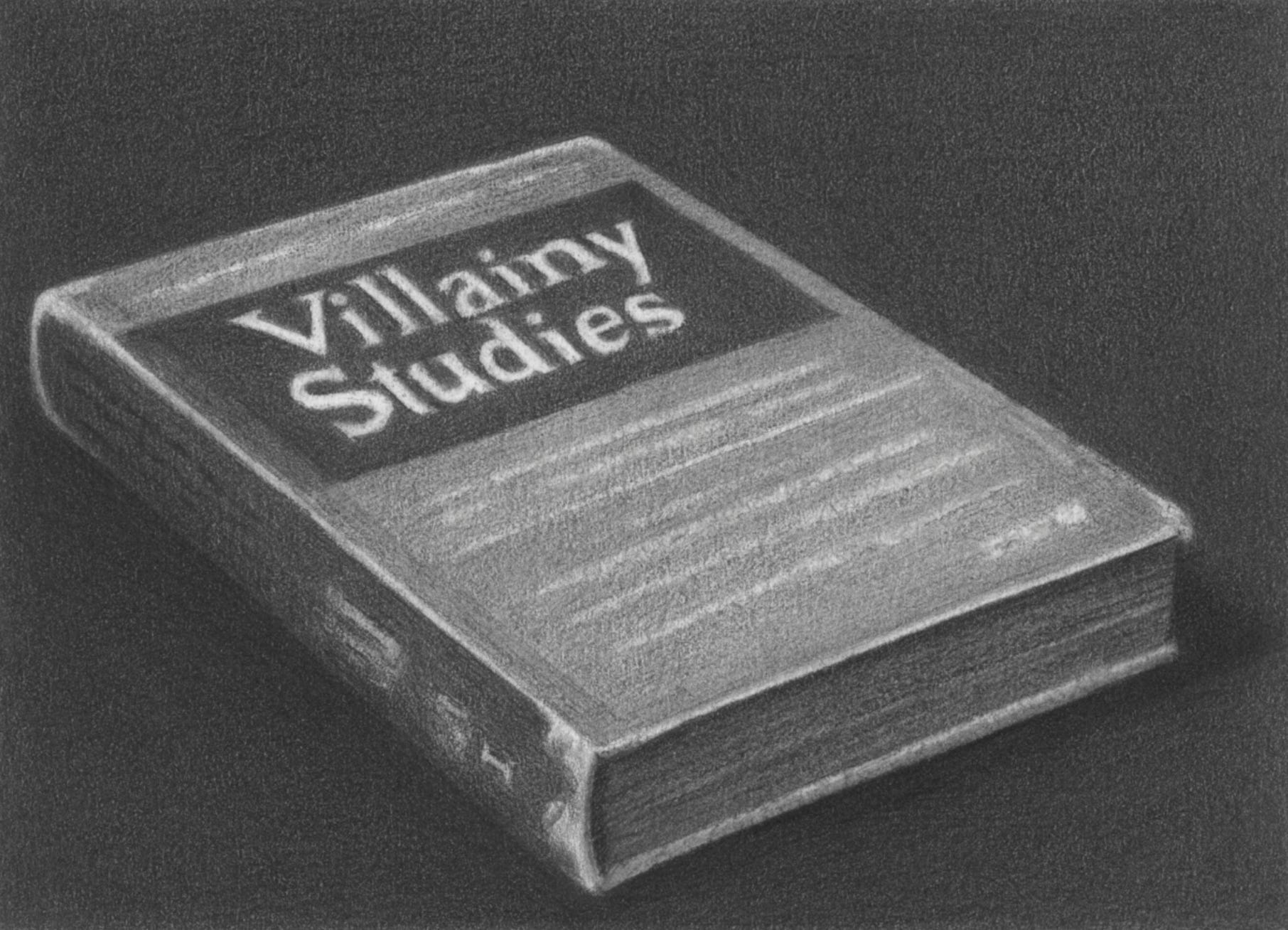
XIX
Bathosubs turn out to be ideal vehicles for reflection. The two of us go jetting around a very long time, largely because we have no idea where to head next. Sod has been keeping to his vow of silence, but this makes him, on the whole, I would say, better company than just about anyone I’ve spent time with recently – and, in addition to Sod’s many other virtues, his golf ball-crushing ability, his ninja-ish stealth, his willingness to save me when I should by all rights have been gunned down in cold blood by my own colleagues, he is a first-rate listener.
“Sod,” I say, “have you given any thought as to why we’ve made it alive all this time? Like why us, out of all the people we know?”
The question hangs there. Sod continues to listen in his exquisite way.
“We’ve had Blofeld’s base destroyed – not once but twice. Jaws, Devlin Auberville, Freddie Frixson, Kevin Fincher, Jared Mellett, Tubby Malfoy all killed. And somehow we survived. We survived Jacoby’s island. We survived the shark-infested waters around Jacoby’s island – not once but twice, and once when I was completely unconscious and you had to drag me. You weren’t there for this, but I survived the crocodile-infested waters of the deep Amazon, I survived a direct hit from the Solarite ship on Ming’s towers. And then god knows how many other encounters the two of us had that I’m forgetting about right now, how many other times our lairs have been attacked, and everybody we know gunned down if they haven’t already been fed to the shark.”
Sod is driving. Through the headlights of the Bathosub, he steers around a coral reef.
“And the question, I suppose, is why. Why out of all these people are we the ones still standing – cruising around the Caribbean. Broke but otherwise cruising. What do you think it is? Is it that we’re so much better than anyone else? Is it the small-arms training we kept to when everybody else got slack, the fact that we were accurate in our shooting when Vyachslav’s men, impressively toned and coiffed as they were, were basically just randomly shooting up Coco’s patio furniture? Is it just dumb luck? I know that it would have taken just a word from Blofeld to drop me into the tank or to electrocute my chair during one of our staff meetings and that would have been it – and the reason he didn’t depended, god knows, on his whim of the day, on their being somebody in his line of sight who seemed more in need of electrocution. Or is it – ”
And here Sod seems to tense up slightly, as he always does when I get into the depths of these sorts of reflections.
“Is it that the two of us were chosen in some way? You must have noticed that the way that Bond fights, or Flash Gordon, is different from the way that anybody else we know fights. How Bond’s shots always hit home and the bullets always miss him – no matter how much time the henchmen have spent in preparing for exactly that scenario. But it’s been interesting, recently, to feel that something similar might have been happening to us. It did seem strange to me that Vyachaslav’s men missed as badly as they missed, that none of Jaws’ crew got a shot off on me before you mowed them all down, that Sonja knew a secret passageway out of The Tower and I was able to crawl behind her. Is that all luck?” I say, “or is it that something is bending to favor us? We may not be the most beautiful specimens in our business, and we may not exactly have a super-memorable signature, and maybe we’ve been blending into the crowd for a long, long time – at least I have – but it’s kind of like, if the bullets always seem to curve around Bond or Indiana Jones, and, to be honest, I don’t really see what’s so special about either of them, especially Jones, then is it possible that the bullets can also start to curve around us? That, actually, as much as we’ve been assuming that we are expendable – trained, I would say, to believe that we are expendable – that we are in fact central? That what happens to us matters at least as much as what happens to Flash Gordon or Dr. Jones? Is that such a crazy thought?”
Sod gives me a tight-lipped look to say that that is a crazy thought, and exactly the sort of thing that might get us mowed down in a second or two, but there is something about Bathosubs, and Bathosubs deep below the surface of the water, that invites these kinds of speculations, that makes us feel that there is no particular ramification for indulging in just this sort of hubris. It is a very strange feeling, to feel at once at the center of everything, the one the bullets curve around, the one the Solarite ship misses, and also completely invisible, that whatever mechanism controls these sorts of things will allow a crazy thought, like the one I’m having, to pass.
“But if I’m right, Sod, and we are central and not peripheral, how would that change things?” I say. “Would we still just cruise around the Caribbean and then, when we run out of gas, join up with whoever runs the island that we stop off at for a refuel? Will I just keep saving up for Montclair – on which project, I have to say, I have made no progress at all so far? Will you just sign on with somebody whom you think Bond might attack and wait for him there?”
I shake my head. I look at Boorstin’s Wall Street Journal, which, I have to say, has no information at all that seems in any way relevant to me. “Or will we make ourselves central?” I say. “We’re the ones with the Bathosub, we’re the ones with the skills. We’ve survived death more times than I think anyone can count – and that has to matter for something. What if we take all that into consideration, plus the vertiginous feeling that I had when I pushed Captain Torch into the Bottomless Pit on Mongo, and we say that it’s our time, that there’s no one else but us, that we can form our own lair, recruit our own people, that we won’t have a shark – except maybe for decoration – that we’ll treat our recruits the way we would want to be treated, we’ll have bank robberies and diabolical schemes, we’ll steal atomic bombs and ransom them back, no muss no fuss, no one even especially needs to get hurt, but we’ll be very rich, and we’ll be able to employ a lot of people – that’s really the point. We’ll be able to employ a lot of guys just like us, who will do it right, who will check the air vents and the ceilings of the cells, who will guard the perimeters, but really, and they’ll have what we never did – they’ll be treated fairly. What do you think, Sod?” I say. “If not us, then who? If not now, then when? It feels like everything that’s been going around us has been pointing in one direction, and that’s what it is, our own island, our own organization, a little paradise for guys like us. What do you think?” I say unable to take the silence any longer.
“I think it would take a lot of capital,” says Sod, briefly breaking his vow.
“Yes, that’s true,” I have to admit. All those lairs, with the impressive architecture, the canteens with the villains laughing their rich villainous laughs, in the end it all comes down to lots of capital, doesn’t it. But capital, I’ve come to understand, doesn’t necessarily come from brilliant investments or from holding cities hostage. Capital is very often a trick of the mind – an accountant’s trick – and that means that, if only we can get an accountant who understands credit derivative swaps, then we’re in business. And it seems to me that I have just the accountant in mind until I remember that he betrayed me terribly and sent a team of gunmen to kill me, more than once. Well, I think, Rome wasn’t built in a day. If we don’t have capital now, we’ll have to go about getting some.
From some instinctive level, the discussion about money makes me check my pockets. Needless to say, there is no money in them, but there is, strangely, a business card with an octopus-like insignia on it and a phone number. I have no memory of the card, but that is not so strange in itself – I was knocked unconscious and trussed up somewhere between the Continental Hotel in New York and Blofeld’s lair. The business card may easily be from the tailor, or costume shop, that has made the white waiter-like outfit that I am wearing.
But tailors don’t usually have mysterious octopus insignia, and, since Sod has gone back to his silence and I seem to have finished my rumination, I dial the number from the Bathosub’s landline. We are very deep underwater, but this seems not to be a problem. Crisply, after the second ring, a voice answers.
“Grand Cayman School for Higher Villainy. State your business.”
“I don’t have any business,” I say. “I was just calling this number.”
“You received our invitation?”
“I believe so.”
“Registration for the fall semester is open until the day after tomorrow. Dock in the secret cove on Grand Cayman between now and then, say the word ‘Excelsior’ to anyone who asks, and we may have a place for you.”
“How much – ?” I say, but the line is already dead.
***
Fortunately, the secret cove on Grand Cayman is clearly marked on one of Boorstin’s maps. It’s a long journey there, but, fortunately as well, Boorstin has kept the gas tank in the Bathosub completely filled. We dock. A pair of serious-looking deckhands rope us off. Since we have no money, they impound the Bathosub and give us a ticket to reclaim it once we can settle the debt.
There’s a cantina near the cove. Sod and I settle in for a papaya juice. There’s something about the furniture that seems vaguely familiar. I’m trying to put my finger on it when Coco himself comes out to fulfill our order.
“Hey mon,” he says to both of us pumping both of our hands. “You survived the jungle job – ”
“Not just the jungle job,” I say. “I survived New York City. I survived Frigia and the Solarite ship. I survived the destruction of Blofeld’s lair – ”
“And now you’re here,” says Coco, whistling. “The end of the rainbow. Unbelievable.”
“Is it?”
“Oh yes,” he says. He really has the best attitude of anybody I’ve ever met in this business. “First of all, look at the sun, the sky. Every day you survive in this line of work, that’s the best day you’re ever going to get. And then look around, look at the furniture I’ve got, look at the specials I’m offering, look at everybody around you – ”
I’ve been too busy thinking about the nuances of fate to really pay attention, but he has a point. The specials are these elaborate mixes of protein powders and smoothies of every kind of fruit you can imagine. The furniture isn’t just that one teak table the way it was on Jacoby’s island, and then lots of plastic. Here, just about everything is wood – tree stumps retrofitted into chairs, tables carved straight out of the tree bark. And the clientele – lots of form-fitting black ninja suits, a few balaclavas, but everybody young, everybody fresh-faced, everybody with that look like they have the theft of atomic bombs on their minds.
“You see it, don’t you?” says Coco laughing happily. He makes the money symbol with his thumb and forefinger. “If this isn’t the end of the rainbow, I don’t know what is.” He calls out to the waiter, “For my two friends here, put it on credit. Everything they want on credit until they get settled in.”
Sod and I clink our glasses and allow just the slightest hint of a smile. The end of the rainbow? Well, why not. No one has deserved it more than us.
We have a full breakfast of bacon and egg sandwiches and sign for it on the little chit that is given to us and then ceremoniously filed away behind the counter. The school itself is an enormous cave, with pathways stretching in every direction. The registrar seems to be the same disembodied voice I spoke with from the Bathosub. He is very pale and all business. He looks, if I were to put a name on it, a bit like Boorstin.
“You wish to enroll,” he says.
“We do.”
“State your credentials.”
“Head of Inner Perimeter Security for SPECTRE – ”
“SPECT-RE,” he says.
“SPECT-RE. As well as many, many other outfits. Head of Security for Dr. Eric Jacoby and Ming the Merciless. Small-arms certified. Karate and close-formation infantry. Killed, I don’t know, somewhere between four and five hundred.”
“And him?” the registrar says.
“He’s taken a vow of silence until he avenges the murder of his father – ” I say but the registrar doesn’t particularly seem to be listening. Sod has taken a golf ball out of pocket. He holds it in the tips of his fingers as a magician might and then he places it in the palm of his hand and, with a single gesture and only the slightest grimace on his face, crushes it into shards of white rubber. He holds those out for the registrar to inspect.
“I believe we can find a place for you,” says the registrar, with his reading glasses on, glancing at a list in front of him.
“Our full program is four years. There are a handful of legendary figures who have graduated in three.”
“How much does it cost?”
“Nothing,” he says. “Well, nothing upfront. The next four years are the end of the rainbow, paradise on earth. After that, we take 70% of your earnings your first three years on the job, 60% for the three years after that, then 50% for three years and so on like that until you are debt-free.”
“Seems like a lot.”
He shakes his head. “It’s worth it,” he says. “You can ask anyone.” He hands both of us a thick blue book. “Read that,” he says. “Then let me know if you have any questions about the payment plan.”
We stand to the side in the mouth of the cave. It is a busy day for the university and a line has formed. Different figures in ninja-black step forward to finalize their offers. Both Sod and I read our books, and, it must be admitted, the registrar has a point.
There is an entire course, mandatory for all first-years, on checking air vents; and another on perimeter defenses. There are courses for small-arms training specifically with Kalashnikovs and with AK-47s, courses on reloading during firefights and courses on properly taking cover. But, as I start skimming ahead in the book, there are entries that make me catch my breath – and Sod and I steal a glance at each other. There is a course on credit derivative swaps taught by one Montgomery Burns and another on mark-to-market accounting taught by Henry F. Potter of the College of Pottersville. There is a course on hiding one’s financial trail by Professor Keyser Soze and one on the interrogation of suspects by SS Colonel Hans Landa. Flipping further ahead in the book there are entries that have to be seen to be believed. There is a course on senseless killing in the Sociopathy department by Anton Chigurh and one on advanced weaponry by Ming the Merciless, who seems to have somehow escaped from the Solarite ship, and then, at the very end of the book, accompanied by a long list of prerequisites and qualifications, there is a course on the manipulation of the dark side of the force taught by Professor Darth Vader himself.
“Any questions?” says the registrar at a gap in the matriculation line.
“Where do I sign?” I say.
He hands me a very long waiver. I skim through it very rapidly. It includes the release of liability for any inadvertent drowning in the torture classes and for immolation in pyrotechnics. All of it is written in a cunning legalese that makes me deeply trust whoever wrote it. I flip to the end and sign off.
The registrar glances at my signature and then at Sod’s. He gives us a slightly ghoulish smile. “Welcome to the end of the rainbow,” he says.
***
I would like to tell you more about this time, but it all flows together into a single happy memory. Our accommodations are spartan – a bunk bed in a cave wall – but I really and truly couldn’t care less. Almost every minute of every day is accounted for – and the school is somehow perfectly balanced between strenuous physical exercise and calisthenics for the mind. The small-arms drills are a piece of cake, but I am up late at night almost every night with the headlamp on in my bunk bed reading my texts over and over again for how wealth can be passed through a series of shell companies until there are no taxes at all to pay on it, for how securities can be amortized until anything at all is paying dividends years into the future, and even if an asset should go bankrupt, the debt may be sold off and collected on. It’s like nothing I learned in street fights on Queens Boulevard, nothing that was ever discussed in any of the canteens with any of the inner perimeter guys, but after about a year of late nights with the headlamp on, it does start to get through to my skull. It’s a whole new world, really, a world in which wealth is created and then vanishes just as easily again, in which money becomes not so much something that is taken in holding up a truck or a bank but something much closer to magic.
I need hardly tell you that I make an unusual student. Most of my colleagues there are much younger than I am. They tend to come from very good families. They are beautifully coiffed in their black ninja suits and they rack up astonishing tabs at Coco’s cantina and then at the casinos and iniquity dens further into the island, but they can be surprisingly clumsy in Pyrotechnics or Live-Fire Training, and it’s not unusual at all to see one of them burnt to a crisp when he forgets that he’s pulled out the pin of his grenade or walks straight into the crossfire of his team member’s flamethrower. Even with all the sophisticated techniques, and cutting-edge weaponry that’s available through the school’s budget, it turns out that there really was something to what I told Winston Scott back when I was in New York. At the end of the day, I really have come to believe, it is just small teams of roughnecks, exercising common sense and watching each other’s backs. Even with my mind breaking and expanding with all the debt and asset schemes, ultimately that’s really what it is – what the heart of villainy is and always will be. A few guys who remember whether they’ve pulled the pin from the grenade and who don’t step into their buddy’s flamethrower and who can move as one and gun down, or karate-chop or whatever, anybody who comes across their path.
***
For finals week my first year, I take an hour or so off from studying to wander down to the cantina. My tab here, I have to admit, is pretty astronomical and – since I have no means of making money or paying it down – Coco has, he informs me, started to charge interest.
But, as Coco himself hastens to add, “Why worry?” It’s another beautiful day in the villain business. It’s the Caribbean – it always seems to be the Caribbean – and the weather as perfect today as it is every other single day of the year. There is just one little white cloud in the sky, like a sort of punctuation mark to the beauty of the day. The Bathosubs and yachts of the student body are tied up in the marina down below me and out the window, so far away so that they can only be picturesque, shark fins are moving back and forth over the surface of the water.
I have my course reader for Poisons with me, but I let myself become nice and vacant, think about the Caribbean, think about the school, think about – under Coco’s influence – everything I have to be grateful for, and when I really tabulate it up, it’s a great deal, an impressive number of near-death experiences, an impressive number of stories that really do seem to impress the nihilistic Golden Children who make up the bulk of the program. In the spirit of the moment, I have ordered a cocoa butter smoothie that I can’t really afford and the waiter is informing me that he’ll have to charge two dollars extra on it as part of the interest.
“That’s no concern at all,” I say, trying out the sinister whisper I have been learning in Elocution class.
The waiter – who is also a part-time instructor in Demolition – nods and then, as I am reaching for the pen in the envelope checkbook, something happens. My clumsiness, which I have been trying so hard to address, returns. The pen slips out and clatters below the table. “Sorry,” I say in my sinister whisper and go diving under the chair to retrieve it. As I do, though, the table shakes above me. There is a sound that might be the waiter kicking at the table leg out of annoyance for my indebtedness or might be an earthquake, but is, on further reflection, the distinctive pop-pop of a Vityaz-SN 9mm submachine gun, and the waiter/demolitions instructor hits the table and kicks at me in a way that seems at first very rude but is excusable for someone who has taken a bullet straight to the forehead and has lost his fine-motor coordination.
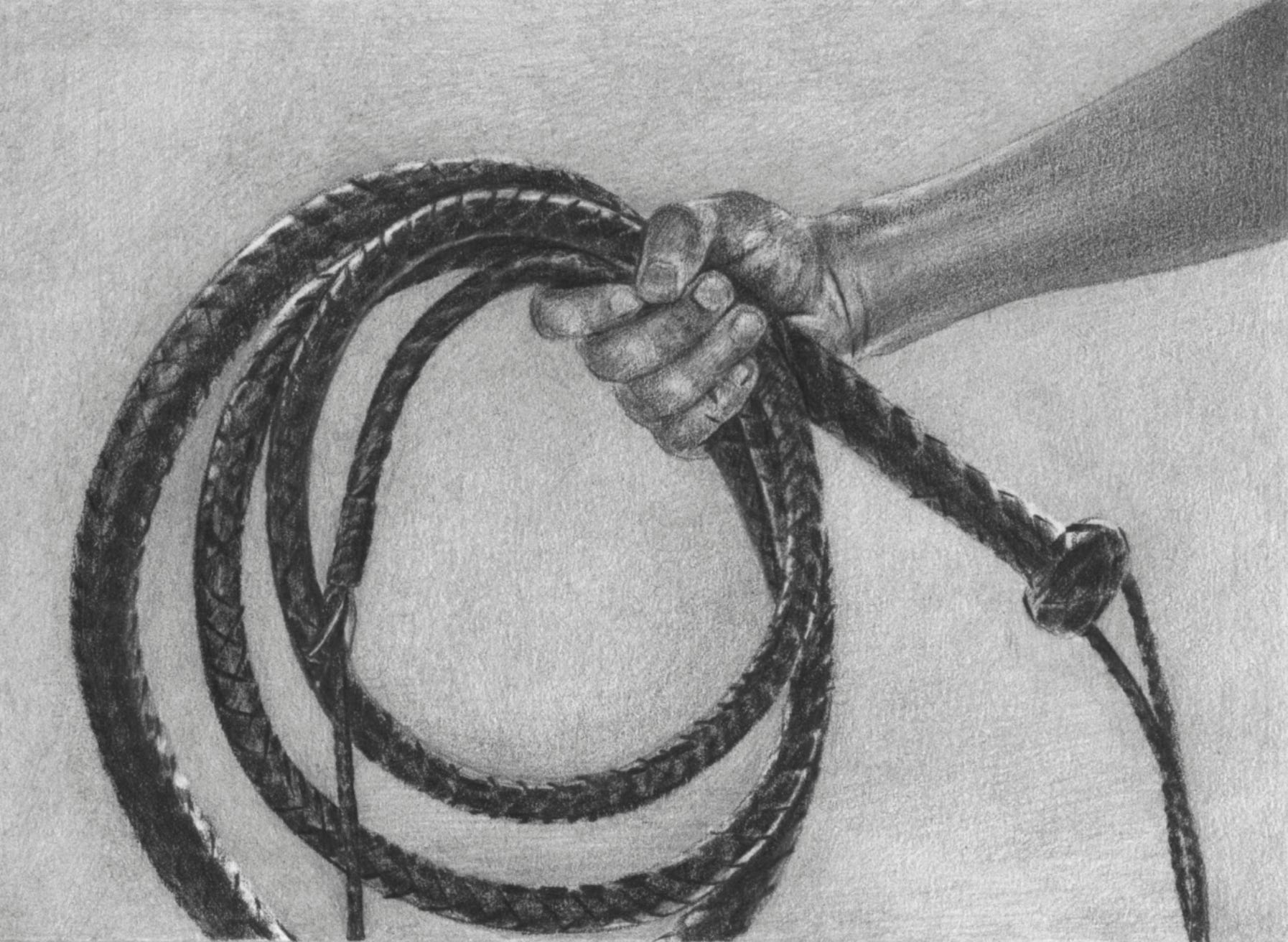
XX
I stay down. I have nothing with me except my Poisons textbook. On the patio all around me, various students are getting ripped apart by automatic gunfire, and Coco’s carefully-selected furniture, all the teak and carved wood, the real upgrade from Jacoby’s island, is getting shot to shreds.
I don’t pay too much attention to any of this. Vendettas break out from time to time between students. Sometimes it’s about gambling debts at the iniquity dens on Grand Cayman, sometimes it’s the fathers of the Russian students sending messages to one another that involve killing their entire families. But when I finally get up from my chair-leg cover, the damage is extraordinary. Everybody who had been sitting there, enjoying their smoothies and granolas, has been shot where they were, in their chairs. And not just shot – shot with precision, in the way that suggests that whoever these unseen gunmen are are top-tier professionals. I pick up the envelope to finish settling my tab, but Coco is keeled forward next to the cash register, his beatific smile still somehow plastered on his features, and there’s no point in taking propriety too far. I grab a pair of Uzis from behind the counter, load up the magazines, while I’m at it take a bit of the cash from the register, and then make my way cautiously to the university, following the trail of death and destruction up ahead of me.
It's mostly the catering and custodial staff sprawled out along this walkway – our ashen-skinned, surly waiters and sinister janitors – but, here and there, I spot a balaclava and tight-fitting ninja suit of one of my classmates.
A familiar face is sneaking through the shrubbery towards the water.
“Jama,” I say, and Jama freezes against the branch of an Ironwood tree. “Jama, it’s just me, Banx Mulvaney.”
There’s a relieved stirring against the tree branch. To tell you the truth, I actually thought I’d shot Jama back on Dr. Jacoby’s island, but apparently not. He’s a year ahead of me at the Academy, not the most diligent student but very bright and usually able to make up for lack of studying with intuition on the exams.
“What’s going on?” I ask.
“Bond,” he tells me. “Bond and, I tink, two others. They’re going classroom to classroom.”
“Why? Why are they attacking us?”
“To ‘end this once and for all.’ Someting like that,” Jama says. I’ve joined him in the shade of the Ironwood tree.
“Most of us are just students. A lot of us have never killed anybody at all,” I point out.
Jama seems interested but unmoved by the argument. “I don’ really know,” he says. “I hear dem talking with the registrar. Dey look at da list. Dey see a whole bunch of names dey recognize. Dey say, ‘dis is da mothership.’”
“The mothership,” I say thoughtfully. That is an interesting way to think about it. On the one hand, an attack on a bunch of innocent college students, most of whom, to be honest, need to go through a great deal more seasoning; on the other, the final battle, with the cream of villainy assembled in one place. “Which names?”
“Well, dey see da professors, and dey see some of di older students. Dey see Sod Job, of course, and dey see you – ”
“They mentioned me by name?”
“Yeah. One of dem say, ‘Banx Mulvaney. He kill my wife.’”
“Huh,” I say. “Do you know who it was?”
Jama shakes his head. “I was hiding in a closet, trying not to breathe.”
“You didn’t think to jump out, catch them by surprise?”
Jama shakes his head sadly. It’s been a rough day for him. “Here,” I say, passing him an Uzi. “Let’s right this wrong.”
Jama locks and loads it. “Jama,” I say as we carefully make our way up the footpath. “Just before we go in there, you’re not still bothered, are you, by anything that happened on Dr. Jacoby’s island? The fact that I shot Milagros, for instance. I know you were close and I know he was your mentor. I liked him too, actually. I liked the way he nursed men to death during our bank robberies, I liked the way he could tell every bird apart on the island, but he did join in with Julius Jacoby, you know that, right, and he did try to ambush me on the docks. I don’t think he would have minded especially that I shot him, and I did try to nurse him to death the way that I’m sure he would have nursed me. What I know he would have said is that it’s all in the business, that we all do what we have to do in the moment, but in the end we have each other’s backs. You understand what I’m saying, right, because it is important that we clear all this up before we face whatever we have to face in there – ”
I’m very curious about how Jama is taking all this, because it does seem to me that there are some leaps in logic in my own statement – why would Jama and I be fighting together, after all, why would we have any bond in particular when we can all turn on each other at the drop of a dime just as Milagros and I did? But, as it turns out, I needn’t concern myself all that much with this point, because when I turn to assess Jama’s reaction he’s already far downhill, past the Ironweed tree where we met and headed straight for the docks.
Well, alright. All the time I’ve spent developing teamwork and it seems like this is going to be a solo job. I am very curious to chat with the registrar about what exactly the three gunmen said and whether the registrar noted any other details – particularly about this mysterious figure whose wife I apparently shot – but it’s a charnel house in the mouth of the cave. Two of the Golden Boy Russians have been shot in the back – they’re unarmed and carrying lattés; it looks like they were just on their way to class. The registrar, with his receded hairline and pale skin, is halfway out the window – in the midst of what looks to have been a not-particularly-well-thought-through attempt to escape. His papers are all rifled through, the course catalog, I note, has various of the professors’ names heavily underlined and then has been tossed onto the ground. I smooth the cover back into place and put where it belongs, in the place of honor on the registrar’s desk.
The university is really a labyrinth of subterranean passages and it is not at all easy to choose which way to go in pursuit of the gunmen. The pock-pock of the automatic weapons is helpful, although not entirely foolproof. Everybody knows that Bond uses a Beretta, but it’s possible that he’s leveled up for a showdown of this scale, and whenever I hear the flurry of submachine gun fire and guttural Slavic curses, I get the impression that it must be the work of one of the three gunmen and they must be using very heavy weaponry.
In the end, I go very slowly, classroom to classroom, in my sweep. Professor Moriarty is dead in his Syndicates classroom, face down in front of the chalkboard, still holding his pointer, a pool of blood around the tweed elbow patches, the series of neat boxes on the board displaying the communication that cells may have with one another without ever knowing the identity of the top man. There’s something about seeing wisdom killed off like this that bothers me, I think, even more than when I see a pretty woman gunned down. That seems to cut off possibility – however evil and conniving the Sonjas may be, you can’t help but imagine the little kids running around them, the rare smile of gratification they may give when some henchman boyfriend of theirs presents them with a rare pearl. But when it’s a Moriarty lying in his own blood, you think about all the years and years of experience, all the many plots, all the cells carrying out their dastardly schemes with no knowledge whatsoever of who they were doing it for, and the idea that they may never find out – something like that, I don’t know, it’s not very henchman-y of me, but something like that really breaks the fibres of my heart.
I’m still thinking about Moriarty, and about Hans Landa, raked with machine gun fire with his hands up over his head, when I poke my head into the canteen and see what’s been done there, and almost immediately duck out again. The bodies all seem cold in any case, it’s very unlikely that any of the gunmen are still hiding out, and I seem not to have it in me to feel grief or even outrage. They were all bad guys, I suppose, they spent all their time imagining different ways of holding cities hostage, and if most of them hadn’t done anything yet, just terrorized their fathers’ servants, they would have sooner or later. That’s the right way to think about it, I suppose – god knows I’ve shot up enough bars and weddings without really calculating it out – but the logic of that doesn’t get through to me either. See enough bodies like that, enough Vityas and Ivans and Olegs splayed out in bloody heaps over their buckwheat portions, and what you’re left with is just a cold pit of fury, some desire to rectify all of it. And maybe it’s illogical to try to rectify it by shooting down whoever did it – maybe that’s just perpetuating the cycle, as Professor John Keating points out in our English elective – but, somehow, however hard I think about it, there doesn’t seem to be any other response that’s appropriate.
In the end, my careful movements, classroom to classroom, seems to be the right approach. I swing through a back passageway to the Dungeon, the classroom we reserve for our Torture instruction and which is kept at a bit of a remove from the other classes in order to not disturb students with the screams, and there, sitting face to face, almost as if they were old friends, Bond is talking to Sod Job.
I haven’t seen much of Sod since we’ve been at the school. We were so close in the Bathosub – I think as close, really, as it’s possible to be with anyone, to be running for our lives and have nowhere to go, no attachments at all, to know only that wherever it is we go next, we will be there together – but, since we’ve been in the Academy, Sod has really kept more to what he knows best, doing super-advanced work in Stealth and Single Combat while I’ve been branching out more into the Syndication and Consortium side of things. Still, Sod and I have lost none of our ability to communicate without even moving at all. He sees me peeking through the brass door and he refrains from blinking in that moment, to mean that Bond has a gun on him but if I come in quietly enough I can take Bond quietly from behind.
And, here, the Stealth course comes in handy, and, cast-iron as the door to the torture cell is, I slide it open and have the drop on Bond, who has foolishly left his back to the door.
“Mr. Bond, we meet again,” I say. He holds up his Beretta, which I take off him and peers, a little perplexedly, over his shoulder. “Actually, we’ve met before, but you may not remember. Banx Mulvaney, Head of Inner Perimeter Security at Blofeld’s. You fought a squad of my men a bit before you leapt onto our U-boat with your bikini-clad colleague.”
He seems to vaguely recall. “Well,” I say, “how interesting that, in the end, it should be an elementary lapse in security, like leaving your back to the door, that proves to be your downfall – along with the wordless connection that Sod and I share.”
I have pocketed the Beretta and now have the Uzi out and am backing Bond towards the back wall where the various torture devices are kept. I gesture for him to sit in a simple, blood-spattered metal chair that our Professor Krueger insists is the basis of creative torture techniques.
He is, I have to admit, an extraordinarily handsome man, and there is something remarkably agile and debonair in the way he seats himself, hands up, with every possibility that he’ll be shot in a moment.
“Sod,” I say, not taking my eyes off Bond for a second. “Do you mind terribly if I give The Speech? I know you lured him here, and I suppose he’s technically your prisoner, and, certainly, you can finish him off, but I do have a few things I’d like to get off my chest.”
“No problem at all,” says Sod from somewhere behind me.
Before beginning, it seems important to develop some ground of mutual understanding. “You really don’t remember me?” I say. “It was Blofeld’s lair. We had two atomic bombs and were prepared to use them to bring the US and the Soviets into nuclear war against each other.”
Bond nods in a way like that’s entirely possible but he sees a lot of faces.
“From what I could glean from the registrar, it sounded like you were looking for me in particular, like I killed the wife of somebody in your party. I don’t think it was your wife – ”
Bond has fallen into his preferred torture posture, a weary resignation, like he’s just waiting either to extricate himself or to deliver a one-liner.
I cough. I know I’m not starting wonderfully. In The Speech class, which is for fourth-years only but which I’ve been auditing, there’s a great emphasis placed on first impressions, on setting the room, on taking the pregnant pause before beginning. But, as Professor Luthor himself points out, theory is very different from practice. In practice, nerves are very much in play.
“I suppose you’d want to know why it is that I’m so eager to shoot you,” I say. “And I suppose you’d want to know why me – there have been so many others, great villains, supervillains, who have come at you and missed, and I can see why you would think that, but that, I would say, is really the point. Because, at the end of the day, I think what bothers me is why you always hit and we always miss, why it’s a really big deal when Felix gets shot or one of your girlfriends is turned into a gold nougat, but if any of us die in some massive gunfight, our relationships, our friendships – all that time we spent together in the canteen just shooting the shit with one another, all that bonding we did – none of that comes into consideration. I guess what I’m doing this for is the injustice. The injustice really bothers me.”
“That’s interesting,” says Bond, breaking his stony silence. That’s such a shock to me that I almost drop the point of the Uzi. The last thing I had expected was to get through to him. “Nobody’s ever put it to me like that before.”
“Right,” I say. “I’m not denying that you’re unusually handsome, or have charisma, or anything like that. I’m not even trying to argue that what you do might not have some utilitarian benefit. But what I’m dealing with is a much simpler injustice than that. What you do is not so different from what I do – or from what any of my friends does. We train, we follow orders, we take life. As a matter of fact, a lot of us train a lot harder than you – harder than I think you can even dream of.”
“I don’t doubt it,” Bond says.
“And it’s like why, given that we are so much the same, Lana Lynx, just to take an example, after years of my trying to win her over, saving up for her, looking at real estate listings in Montclair, she tries to gun me down, while after only a few minutes of acquaintance, she’s saving your life plus whatever else you did in the office together – ”
“Well, you did tie her to the rocks and wait for the tide to come in,” Bond says, and, in spite of everything, I can’t help but break into a grin. In this world of short memories, it’s so nice to realize that somebody was actually paying attention, that somebody – Bond no less – does remember after all.
“I did,” I say, “but that was love. I think you don’t quite know what love does to people, and how thwarted love distorts them. Since you’ve shut down those compartments of yourself, you’re able to just be you, you’re able to flow, but I would say that you’re missing a great deal, you’re missing what it’s like to be on the other side, you’re missing the brotherhood, the camaraderie that we all have, and how much it hurts whenever you break into our lair and gun a whole bunch of us down, and you’re missing what it’s like to spend your whole life longing and to never actually get what you want. I think you don’t know what that energy is, how overpowering it is, how it needs to be expressed in some way, or just heard, and how there is never, ever an opportunity – ”
This is not the kind of speech that Professor Luthor teaches, it’s what he would call personal and digressive, but it does have an impact, it’s possible to see the pixels repixelate behind Bond’s deep brown eyes, it’s possible to see him consider the world in a different way from how he’s seen it before – and it is, after all, what I really want to say. So much blood, so much suffering, so many squads wiped out, so many canteens shot up, and so much inner anguish as well, all the time that could have been spent with Lana that is in fact spent waiting for her to come round, and now it’s out and it does feel good, as I’ve always imagined it would with The Speech, it does feel really good, and the only flaw in it really is that I’ve gone on a bit too long, and now I nod to Sod to crush Bond’s head like a golf ball, but Sod seems hesitant for some reason and Bond seems taken with something just behind my shoulder, and I glance around oh so carefully to inspect, but just in time to see what looks like a rope swinging through the air, and it is in fact a rope and it lassos me around the neck and jerks me to the ground, sending the Uzi flying and now Indiana Jones crawls out of the air vents, which I have neglected to check, and he ties me up and helps Bond off the torture chair.
“Thank god,” says Bond. “I thought he was going to bore me to death.”
“What about this one?” says Jones, meaning Sod.
“He’s a friend,” says Bond. “He’s been mourning the death of his father, but now that he knows how his father really died, he’s with us.”
“Good to hear,” says Jones. “This is the great Sod Job, isn’t it?”
From my trussed-up position on the floor, I am forced to watch Sod, with his great iron-like vise of a handshake, shake Indiana Jones’ hand. Jones grins, in his crooked, charming way, and shakes out his hand at the force of it. “Glad you’re on the side of the angels,” he says. “What about this one?”
“I think he killed John Wick’s wife,” Bond says. “Better let Wick finish him off, once he’s done with the Sociopathy department.”
“Makes sense. Shall I guard him?”
“Sod can do it,” Bond says. “Now that I’ve set him straight. Let’s you and I finish the showdown.”
And off they go, locking the cast-iron door. I’m completely trussed up. Sod is sitting there with a Vityaz.
It had occurred to me that Sod was behaving very oddly – that, for one thing, he was the one speaking when I came through the door. “Sod,” I say, “I don’t understand. After everything we’ve been through together – the Bathosub, the shark-infested waters – twice. After all that – and you heard The Speech I made – after all that, how can you?”
“Ever since you’ve known me, haven’t I been entirely single-minded in pursuit of vengeance for my father?” says Sod in his calm voice.
“Yes, and I thought that’s why you were so determined to catch and kill Bond.”
“I was, but there were a lot of details about my father that I didn’t know.”
“Such as?”
“Such as that it wasn’t really Bond who killed my father.”
“He electrocuted him against a high-voltage fence inside Fort Knox,” I say. “Everybody knows that.”
“Yes, but it was Auric Goldfinger – and Blofeld above him – who set it up. It turned out that he had been giving information to MI6 the entire time, but Goldfinger didn’t have the heart to kill him himself, so he set up this vast raid on Fort Knox just so Bond would take out my father.”
I consider that. It is dizzyingly complex but just within the range of possibility. “But why would Bond kill his own informant,” he says. “It doesn’t make sense.”
“My father wouldn’t listen to reason,” Sod says sadly. “Bond was trying to explain it to him the entire time, but my father wouldn’t listen. In the end, Bond had no choice.”
“So now you’re working with Bond?”
“At heart, I think I’ve always been a goodie,” Sod says thoughtfully. “I thought I had to avenge my father, and now that he’s been avenged – to my satisfaction – I think I can take up my new position with MI6 and devote myself to the good.”
“What position?”
“Personal valet to James Bond,” says Sod.
I sag a bit deeper into my ropes, which – to give Jones his due – are impressively tight. It seems like there is nothing for me to say.
“Sod,” I say, “we’ve been through a lot.”
“We have,” he says with equanimity.
“I really appreciated when you carried me unconscious through the water the first time we escaped from Blofeld’s, and I really appreciated when you shot up Jaws and his entire squad the second time, and I understand that avenging your father is important to you – ”
“I’ve always been entirely single-minded,” he gently points out.
“And I understand that through this…new information, your understanding of everything has shifted.”
“It has,” Sod says.
“I just – I don’t want to give my Speech all over again, it’s just this has to count for something, really it does. All this time spent together, all the times you’ve saved my life, and not even – all that time just shooting the shit, giving Jaws the Heimlich, watching you practice your hat-throwing trick on the Joan Crawford bobbleheads. I know that in the way of things we’re supposed to grow up and forget our friends, but I’ve just never been the best at growing up, and I have a lot of trouble forgetting you. I’d just – I don’t what I can even ask you. I guess I’d just like a little of the same.”
As close as Sod and I have been, I always do find him a bit inscrutable, and that is the case now, as he sits there for a long time, with his Vityaz on his lap, and stares towards the door. Even through the thick walls of the Dungeon, we can hear the automatic fire as John Wick finishes off either the Sociopathy or Syndication departments.
I close my eyes and, as I have so many times before – in the Caribbean, on Mongo – try to think through what lesson I’ve been taught. Too long-winded, that seems to be it. A few of the Russian hotheads in Luthor’s class argue for not giving The Speech at all, just walking in and pulling the trigger – and that offended me as much as it did Professor Luthor – but I can see that they do have a point. Boorstin didn’t waste time on ceremony when he and Lana treacherously stabbed Blofeld, and maybe I shouldn’t have either. I really could have just walked in and shot Bond and that would have been eloquent enough.
“You really are going to have to control that side of your personality,” Sod had said to me once, when I was leaving the diner of Coco’s friend to go off to my jungle job, and I had never known what he meant exactly, but now I think I do. This life is not given to us for reflection. This life is given to us for action. And if I find the reflection to be the best part, the part that really enhances it, that really gives it dimension, well, that’s on me. I’m taking away from the only thing that matters, which is the clean blade-like feeling of doing. I close my eyes and I try not to weep. It wouldn’t do at all for John Wick to gun me down as I’m crying.
Those are long, long moments – the lowest I’ve felt since, I think, I was alone in Blofeld’s office with Blofeld’s body or maybe even since I was floating in the Caribbean looking for the hammerhead fins – and, in the way of these moments, I sort of lose track of time and come to, out of my grief and misery, to the sensation of having my ropes being sawed through by one of the torture implements. What Sod said really got through to me. It seems, to my surprise, that my words had some effect as well.
“Alright,” he says very deliberately. “You make a good point. Just leave Bond for me.”
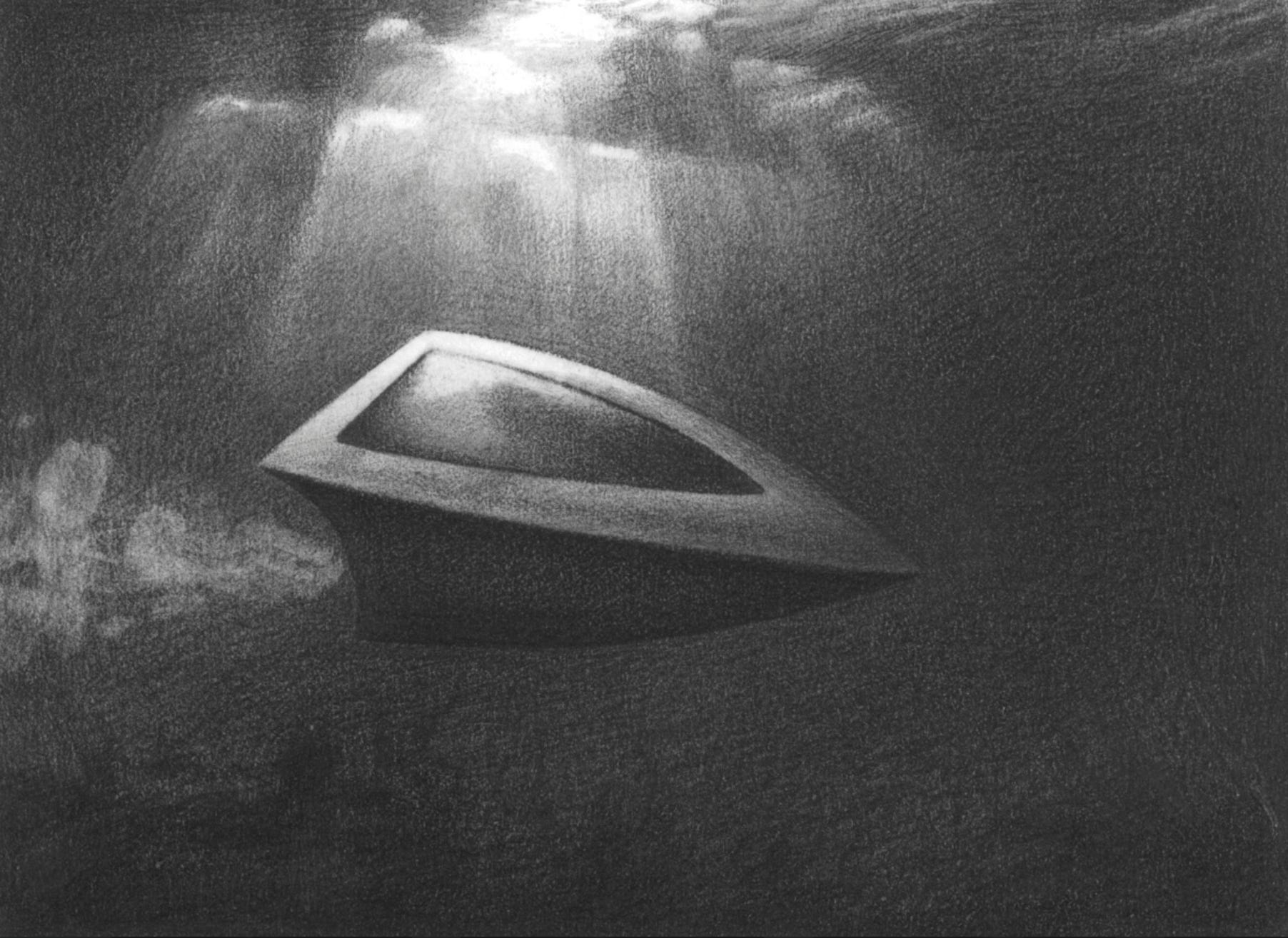
XXI
I go up into the air vent first and pull Sod after me. It’s very tight and, really, very dank in there, but even though we get stuck once or twice with our big bodies we manage to push through. Jones seems to be taking a very humane approach. He’s rounded up a whole group of Tomb Raiders and they’re having a discussion about the dark side of archeology as he lassos them together. But, as I’ve discovered to my grief, having gentle, thoughtful discussions can blind one to an assassin creeping through the ventilation system. I poke my head out and open up the Uzi at Jones. It’s a little sad to see that handsome face of his, and the trademark hat, riddled with automatic fire, but not really. He’s fed god knows how many of my colleagues to the crocodiles and fiery ants. To be honest, a simple burst of automatic fire seems long overdue.
The question with John Wick is whether the bounty is still out and, if so, if it’s in the ten million range or has crossed over in the twenties. Either way, that’s a lot of floor space for Lana and me, but I am far enough along in my henchman career to not be overly distracted with a thought like that. Staying calm and clinical is the way to be in small-arms fighting, and I follow the deceptively muffled sound of the Sig Sauer MPX to where Wick is, in a less-than-humane way, finishing off the remnants of Syndication.
They’re nerds mostly, a lot of bright kids from the outer boroughs of New York City, and mostly keep to themselves. But I’ve gotten to know them pretty well, and it hurts, in the moment I slip through the door and there’s a light from the hallway interrupting the pitch-dark, to see them lining the floor of their study hall.
“Wick,” I say, hiding behind my pillar. “Why don’t you pick on someone who knows how to fight back?”
That brings the gunfire to a temporary stop. “Is that the asshole who killed my wife?” a voice says in an oddly stilted, affectless way.
“Maybe,” I admit. “I have no idea, to tell you the truth. I thought everything you were doing was for your dog.”
“My wife was gunned down too,” Wick says.
“I had no idea. I’m sorry to hear.”
“I think you were one of the ones who shot her.”
“What did she look like?”
“She was beautiful. With dark hair. A smile like the very ray of sunshine at the dawn of day.”
That does sound compelling, and I have a shudder of a thought thinking of Lana and her own interactions with sunlight in the late afternoon. But I search my memory and come up with no one fitting that exact description.
“I’ve been on a lot of hit squads and I’ve shot a lot of women, John,” I say. “I’m a professional, just like you’re a professional. I know it hurts, but I don’t understand why what happened to you should matter more than anything that happened to, for instance, me.”
“I’m not interested in the comparative ethics of it,” Wick says in a somehow very wooden way. “I just know how it felt and I know I have to take my revenge.”
“By killing everyone in Syndication?”
“For starters,” he says.
We have been maneuvering around our respective pillars as we speak, and I’m the first to catch sight of movement and unload my Uzi at a shadow on the back wall. I do know what he’s talking about – there’s a particular pit in the stomach that is assuaged only by mass killing – but, as Wick himself has put it, this is no time for comparative ethics. His return volley is so powerful that it rips apart the pillar and sends bits of ornate stone carving – really beautiful work actually – cascading all around me. I hit the floor and have to pivot very fast in case Wick is closing on me.
Usually the way to kill these heroic super agent types is to remember their signature and then to play into that, but Wick, it seems to me, is kind of a pedestrian figure actually. He’s just very well-rounded, an accurate shot, good with a whole variety of firearms, and in close combat as well, and the thing to do is just to be as disciplined as he is. At the end of the day, there is nothing he does that I can’t do as well. He has gone silent for a long time, which is a bit unnerving. He clearly knows my position and I’ve lost track of where his is. The last groans of the murdered Syndication students subside, and now it’s just the two of us in the dark study hall. It's the moment when the slightest sound makes the difference between life and death, and Wick, I know, is listening for the sound of my breath, as I am listening for his, and so the trick, just as it was when I was underwater and diving away from Dr. Jacoby’s gunmen, is to not breathe for as long as possible.
It's very tedious doing that, and my thoughts wander as they tend to do. This is unfortunate. Wick, as a man of focus, commitment, and sheer will is likely doing nothing but listening for the slightest tremor of my breath and maybe leopard crawling across the floor while somehow not making any sound. But my thoughts can’t help but drift to all the things that have happened to me – to Blofeld’s lair and to Mongo and to Aunt Gloria’s and even to all the things that haven’t happened yet, to the new operation that Sod and I will set up, and then to the house I’ll buy, whether it’s with the money I claim off Wick’s bounty or from the honest profit that Sod and I take. It’s very interesting how it all blends together, fact and fantasy – and what a surprise it would be if it should all come to an end just now, because of one errant breath, one wandering thought. What’s particularly interesting is how, in a moment like this, there seems to be no good or bad, how it doesn’t matter especially if I’m the one pushing Captain Torch into the Bottomless Pit or if I’m the one diving off the pier, it all seems like one intact memory, like a single dream, and the only shame in all of it would be if I don’t get to share it with anyone, don’t get to, let’s say, sit with Lana Lynx on a lazy afternoon in New Jersey with the record playing and tell each other all of this, at which point, no matter who betrayed who and who tied each other to a rock when, it will all play out as it does in my mind at this second, as one single amusing incident.
Just as I am struck by the wonder and splendor of all of it, I run out of oxygen and have to breathe, and as I do, I jerk backwards and a cascade of automatic fire rips through the spot where I just was. Wick seems to be very close to me and I fire right into the spot where the bullets came from. There’s a groan, which gives me just enough time to process that my Uzi is out of ammunition but that I have a chance of closing the distance before he can recover from his wound and fire again. I leap out and, in the pitch dark, get hold of a live body and the two of us go writhing around on the carpeted floor every so often bumping into either a study hall desk or one of the bodies of the Syndication students. Wick, to give him his due, is phenomenally strong and any time I am able to inch my hands up his collar he gets ahold of my wrist or any grip I give him, and all that time I have spent working out in lair gyms and pumping iron in the immense downtime we have in the henchman business is still not really enough, and Wick manages to get on top of me and, not only that, but to hold me down with one hand while he reaches somewhere for what, judging by the sound of the hammer cocking, seems to be a Glock 34 9mm pistol.
“This is for my wife,” he says rather affectlessly, but in the time it takes him to say that he makes the mistake I have made so many times and overexplains the situation to an adversary. He brings his face close to mine in a way that allows him to spit contemptuously on me as he speaks but also puts him in range of my signature headbutt, and even though I am against the floor and can’t swing backwards I have practiced this enough, not least against Lieutenant Thong at the edge of the Bottomless Pit, that I am able to catch my forehead against his and send him reeling, and even though my vision is completely clouded with stars, I have practiced for this too, spring to my feet and, even unable to see, point the Glock in his direction.
“This is for my school,” I say. The first couple of shots only cause Wick to wriggle around a bit on the floor, but after the last two he is still, and, even though my eyes have still not adjusted to the dark or the stars dancing in front of me, I am able to make my way out and reach the fluorescent light of the hallways.
That leaves Bond. Bond, I know from bitter experience, is a wily and formidable adversary. And, unlike Wick, who usually just goes around shooting everything in sight, there usually is a system, and wit, to Bond’s way of working through a lair. Often what that means is finding the prettiest girl there and chit-chatting with her, and I shudder to think what else, while everybody else is running around and fighting. In our male-dominated campus, that can only mean Professor de Vil in Oratory and, carefully, never stinting on my tactical training, the textbook ways of taking entranceways and corners, I work my way through the labyrinthine passageways, the flickering lights, pausing from time to time to check the bodies of my fellow students just in case they’ve been booby-trapped or are some goodie in a cunning disguise.
The careful movements of my tactical training are good also for thinking, for rehearsing what I might say to Bond when I catch him. My Speech was rudely cut off but I feel like I said most of what I wanted to get off my chest. I suppose I don’t really have anything against him, it’s not really his fault that his tuxedo fits him so well or that the legions of henchmen always seem to step out from behind their cover when they shoot at him or go charging pell-mell and present easy targets. It’s just that everything’s gone his way for a long time and I’m tired of it and want it to go my way for a change. Yes, I suppose that’s what I should have said. That’s a Speech that Bond would have understood. Now that that’s settled, I spend the rest of the time working my way to the Oratory department thinking of puns and bons mots. “Double oh severed,” that kind of thing. When fighting with Bond, you usually want to have a few of them just in case you get lucky and kill him before he kills you and gets off his quip. Unfortunately, this kind of word play isn’t really my specialty. I’m trying to come up with something along the lines of “shaken and stirred,” but, really, it’s a relief when I get to the Oratory department and Professor de Vil is shivering over to the side of the room, in déshabillé and covering herself up, and Bond is sitting in the wrought iron throne that de Vil uses for her lectures with his handsome face largely unaffected but the back of his head smashed in like a cantaloupe. Sod Job is standing over him.
“Nicely done Sod,” I say. “Just out of curiosity, what line did you use?”
“Line?”
“This is Commander James Bond of the Royal Navy, double oh seven of MI6, you’re supposed to have some clever line if you kill him.”
Sod thinks about that. “I don’t really know,” he says. “You know, it’s hard work crushing somebody’s skull with your bare hands. It’s harder than a golf ball actually.”
“I would imagine.”
“Should we think of a line now?”
We both look at Bond. Somehow the splattered brains have entirely missed his suit. “I think it has to be done in the moment,” I say.
“Sorry, I didn’t think of that.”
“No, it’s alright,” I tell him. “The main thing is that it’s done. Your father is avenged?”
Sod looks at Bond. “Yes,” he says, “avenged.”
“And there was a point I was trying to make when I was talking to Bond – ”
“Something about the brotherhood of henchmen,” Sod says.
“Yes. I think we got that point across.”
We have the usual moment of satisfied silence and slight panic when a mission is finished. The school is, obviously, annihilated. Wherever we go next, it won’t be the end of the rainbow.
“What about her?” says Sod nodding towards Professor de Vil.
As one of very few women in the place, I would be lying if I hadn’t, in my lonely bunk, spent some time fantasizing about her. And there is something very fetching about the black-and-white boa she has pulled around herself to guard against our glances and to shield herself from the scene surrounding her.
“Forget her,” I say. “There is only one woman for me.”
***
There is no hard currency in the comptroller’s office, but there are enough IOUs and various financial instruments that we are able to present them to the guys at the dock and get our impounded Bathosub back. The Wall Street Journal that I grabbed from Boorstin’s office is still on the dashboard, and it’s a good reminder, I suppose, of how little anything ever changes. It’s a year out of date, but I don’t think that matters much. US Steel is doing well, and so is Lexcorp, even if its founder is now buried within a vast cave expanse. It’s always the rich getting richer, and everybody else sinking a bit, unless Sod and I can do anything about it.
We are very quiet on our journey across the Caribbean. We just have a few technical matters to settle. “50/50 split right down the middle on everything,” I say. “First thing we do, we create a Board of Directors, appoint ourselves to it. Any dispute we have, we settle it by a vote.”
“We’re an even number,” Sod points out.
“We’ll need a neutral third party to arbitrate if it comes to that.”
“Maybe Winston Scott?” Sod suggests.
“That’s a great idea. Anything we can’t settle ourself, we’ll relay to the Continental in New York. I’ll take security – I know just how to train everyone. Anything specialized, anything external, assassinations, that kind of thing, that’s all you.”
Sod nods sagely. “You know, we’re a higher pay grade now,” he says. “You should think about delegating security.”
“I don’t know if there’s anyone I trust is the thing.”
“Think about anyone you’ve worked with.”
“I think they’re mostly dead by now. I know,” I say. “There was that talented young German with the great laugh. What was his name?”
“Hans Fuchs,” Sod says. “He did have a great laugh. But I shot him when he was holding you up on the docks.”
“Ah.”
“Don’t worry about it too much,” Sod says. “We’ll have plenty of time to think all these things through.”
Yes, he’s right. As I’ve discovered at the Academy, a large multinational criminal enterprise is a bewildering array of different components, of shell companies hiding other shell companies, of leveraged risk and double-crosses, of dastardly plots that are really distractions from other quieter but more profitable plots, of really ceaseless worry from traitors in your own midst and vigilante agents who may drop through the ventilation system at any time, of schemes that are constantly hedged against other schemes and always, always, insurance bought and bankruptcy lawyers on hand to turn rags to riches any time a scheme falls apart. But every multinational enterprise, however complex and convoluted, always starts with a couple of ambitious guys in a Bathosub and every one just goes a day at a time, putting one step in front of the other.
And, at the moment, the step that’s in front of us is to massacre everybody in a senior position at Blofeld’s – which is now Boorstin’s. And we do do that. We park the Bathosub in a secret cove.
We move rock-to-rock through the over-water portion of the lair. The outer perimeter guys are of course just chatting with each other next to their weapons and don’t notice a thing. We wait for a coffee break. A busboy comes out of the hatch with refreshment for the guys on sentry duty, and Sod shoots him with a silencer as he’s distracted pushing the hatch open with one hand and holding the tray with the other. I grab the body and tray together to hold it all upright and keep from clattering. And then Sod and I slide in together and we have ourselves a little shooting party.
Boorstin has never been noted for his fashion sense and it’s a bit of a surprise to see the entirety of the inner perimeter crew in Charles Tyrwhitt tuxedos with red cummerbunds and my heart stops a little when I realize that it must be Lana who’s in charge of wardrobe – that anybody who had Lana as their deputy would have a base just as stylish as this one. But they are not, it must be said, very disciplined or well-trained. They are all outfitted with silencers, which looks great but makes no sense for inner perimeter work and badly reduces their accuracy. Sod and I with, respectively, our Vityaz and Uzi have no such hang-ups and we’re able to take our four or five of them in a round as they go charging pell-mell out of their barracks and then toppling over a railing into the pit below.
It always bothers me to shoot up people I know, and that, fortunately, is not the case here. Sod and I have already killed most of our shared acquaintances on our earlier escape from the lair, and these all seem to be trainees, recent graduates from some of the vocational schools, or just a bunch of Slav roughnecks looking for a better life. In any case, we gun our way through the defenses very fast. Sod swings to Boorstin’s office and, on a hunch, I head for the Bathosub docking station where a valet is just craning it into position. I shoot him and then it’s me and Boorstin. He’s in a brown suit with a copy of The Wall Street Journal tucked under his arm. He fixes me with his lazy eye.
“Banx,” he says. “I didn’t know you had it in you.”
“To tell you the truth, I didn’t know either,” I tell him honestly.
“I guess there’s no overestimating adversity, a careful mentor putting obstacles in your path, teaching you – the hard way – to trust no one, to listen only to yourself, and that inner fire of vengeance. I’ve had different mentees over the years, but usually they fall for one of my traps. I have to say that you’ve exceeded all my expectations. I have to say that – I’m proud of you.”
He has his hands up. He makes a gesture meaning do I mind if he moves one hand a bit to adjust the glasses that have fallen down his nose. I nod meaning that that’s acceptable.
“Ready?” I say.
“Just one small thing,” he adds. “I don’t doubt that you’ll make a great supervillain. Really. I think you’ve put it together and you have all the qualifications. But even the very greatest of supervillains, they all need an accountant. It’s not easy stuff, handling bankruptcies, figuring out brokers who will buy up all the debt that you’re going to take on.”
“That’s it? Those are the last words?”
“Yes,” Boorstin says. “I don’t want to plead for my life or anything like that. We’re practical men. Let’s talk practicalities. You need an accountant. I’m a great accountant. Let’s make a deal.”
I’ve switched to a pistol with a silencer in better keeping with one-on-one shooting, and I put two slugs right through his heart. “I can balance my own books. Thank you very much,” I say.
It takes a little while to find Lana. Sod already has all the survivors lined up and he’s shooting every fifth one to send a message and getting all the others to swear an oath of loyalty to the two of us. He doesn’t need any help from me.
Lana turns out to be hiding in a cabinet in the main office stroking Blofeld’s Persian cat. She is wearing a lamé dress designed by Alexander Wang. She looks, I have to say, better than I’ve ever seen her. It seems hard to believe that it would be Boorstin who would bring it out in her but that seems to be the case. She’s using less makeup than before and that accentuates a natural glow that she has. Her hair is less fiery than before – it’s striking to me that I missed how much dye she was using – but her natural black hair is lustrous in its own right and catches the desk lamps of the well-appointed office very nicely.
“Banx,” she says. “I don’t suppose you can ever forgive me.”
I shake my head.
“Well,” she says, “would you at least be interested in understanding?”
“Only if it won’t take too long.”
“It’s really pretty simple,” she says. “We have our wants and, in this world, our wants matter more than anything else. And the only want that really matters is for a woman to choose what man she wants to be with. You do see that, don’t you?”
“I do,” I tell her. I have to admit that, in all the time we’ve been around each other, I’ve never really heard Lana give her worldview before, and there’s something nice about it, something refreshing. I feel like I could listen to it for hours.
“Everything else – all the running around, all the shooting, it’s just a distraction from that, from the choosing. And I can only really choose somebody who’s worthy of me, don’t you think?”
“And you didn’t think I was worthy of you?”
“I was sure of it Banx. I don’t think I was ever so sure of anything. And that’s the deepest truth, the deepest justice there is – I had to listen to what my body was telling me, and my body was telling me it wasn’t you. I’m not saying that that’s kind or that that’s fair, but can you really expect me to argue with that?”
“And now? After everything I’ve done, after everything I’ve been through, after all the ways I’ve proved myself, are you prepared to admit you were wrong?”
Lana looks at me in that particular way of hers that means she’s inspecting my jug ears – and then looking through to the layer of me where all my weaknesses and foibles congregate.
“I could give it a try, Banx,” she says very gently. “You?”
This is one of these moments that I have very frequently where time seems to slow down. I’m holding a Smith & Wesson M&P with the silencer outfitted and whoever I’m talking to can do nothing but stand there with their hands above their heads and wait for me to work through my thoughts. And my thoughts are very far-ranging indeed. They take in Lana at Blofeld’s, the first time I was there, when we’d steal moments just to chit-chat, when she told me once that I was “like the brother she never had,” and they take in when we were on Jacoby’s island and somewhere between flipping through Kevin Costner’s wedding and Natalie Portman’s transformation she told me that she would run away with me, and made me, for about six hours until Jacoby’s gunmen came to murder me, as happy a person as any person can possibly be, and they take in the time I was on Mongo and friendly, chunky Captain Torch was strolling ahead of me towards the Z-O ship and I came up behind and pushed him towards the Bottomless Pit and found a side of myself that I didn’t know existed but, once I’d met it, recognized as I think the deepest, truest side of me; and they take in Aunt Gloria, who has been crowding my thoughts a great deal recently, who gave one of these winding, impromptu monologues once when we were watching television together. She was smoking her Winston-Salems and chewing the cinnabuns with her mouth open in a way that I found difficult to look at, and she wasn’t making very much sense but every so often she did. “Everything that happens matters,” she said. “Banx, are you listening to me?” she said, and I was forced to turn from the television where we were watching a space opera and to look at her and the bit of cinnabun hanging out the side of her mouth. “Nothing goes to waste,” she said. “Everything comes back around.”
Lana seems to be impatient with my winding thoughts. “Banx,” she says, “let’s cut the charade. I know you would never shoot me. I know how the canteen debates play out about shooting women, and I know that it’s beyond the pale. And I know the fantasies you’ve had – about Montclair and Patty Cline. I know you’ve thought about it so many times that it’s become a fact, that it’s become a reality for you – and it can be, it actually can be. We can live in this lair and I can outfit the inner perimeter guys really smartly or we can give it all up and move to Montclair and spend whole rain-soaked afternoons just listening to the same record again and again. What do you think Banx? You would give all that up just because of a little treachery? You’ve understood that by now, haven’t you? – everybody is treacherous to one another, that’s how it all works. You’re never going to find someone who isn’t.”
It's a very good speech and I’m sure she’s right. My Lana, so beautiful, so fashionable – I don’t think I’d ever realized quite how smart she was either, how easy it was for her to wrap me around some line of her reasoning.
“Ok Banx,” she says. “I’m getting tired of holding my hands over my head. I’m going to put them down now. I know you, and I know you don’t have it in you to shoot me, so I think we can cut the crap now.”
She does put her hands down and very demurely covers her belly. Almost everything she has said could be a starting-point for further reflection, and I would like to cover every one of them in detail, but a decision seems to be called for at this moment, and, as reluctant as I am to decide, it seems like an iron law of nature, or something, to not miss the moment.
“Ordinarily,” I say, and there’s a great heaviness in my voice that I’ve never heard before. “Ordinarily, you would be right, and I’m not really disputing anything you’re saying – I’ll regret this always, I’m sure I’ll never find anyone else again – but I’ve been going through a number of changes recently and what they’ve shown me in the end, in the end, is that I’m just not willing to accept things the way they are,” I say and I shoot her twice, very humanely, right in the heart and she dies almost immediately. Or so I assume. I’m not able to watch this.
I turn away just after the bullets have hit home and I go to join Sod Job who is out on the main deck giving everybody their new assignments, and he rewards me with a little smile as I slide in next to him. I think about how much I’ve been missing out in all the time Sod has been silent and focused on avenging his father. His voice is loud and authoritative without pushing it. He’ll make a great leader, and I will too. We’ve both made so many mistakes, so many wrong turnings, and we’ve paid the price for them in so many different ways, but as we survey our lair and all the men looking obediently up to us, that seems not to matter at all. Our real life starts now. We intend to be fair but firm and to treat them exactly as we would have wished our bosses had treated us. We intend to do it right.
THE END
Dastardly. You spared me from reading cormack Mccarthy's Sunsetters Assassins or Bloodorange or whatever isit called? The relentless piling up of bodies in war is here and the feeling of it was in the Road book. I have not told you I was right about Lanthimos's Poor Things. That was another in his continuing thought experiments enacting forms of government. The Frankenstein aspect of it was not the metaphor it was the form of ozempiced bodies battling for the nest seats in the bar. Sam you have anger in you,. i was happy you resolved Banx's weird move to goto school. About your capitalist aesthetics post? Two words: john Fowles. He wore his faults on his sleeve. But he adresses your idea that your widest reach would be coopted in minor villainy by suggesting in that Aristos book of his that the surplus enjoyment we take from excess can be expected to dry up. In times of warts and distress. Then you might be cheered you h been such a straight shooter. The BBC was disappointed in their 1966 Alice in Wonderland, but it has Peter Sellars after Strangelove, maybe beauty can be our own reward?
Sam I got it I hope I can find it again!! I just sent a message to please send to tlctlp@me .com
Just in case I can’t access again via Substack..
I’m so excited that I can read it myself or listen to you!!
I LOVE this story…
Blessings❤️🙏🙏🙏