
Commentator
Nord Stream, Ukraine Escalation, Gender-Affirming Hormones, China's 'Dark Deal'

Dear Friends,
I’m sharing the regular ‘Commentator’ post. These reflect a concerted attempt to find the best journalism of the week—as well as a conscientious effort to try to just ‘think things through.’ I’m linking also to ‘Inner Life,’ which I’ve helped set up—and to Joshua Dolezal’s latest piece there on ‘the cult of positive thinking.’
Best,
Sam
SEYMOUR HERSH VERSUS THE WORLD
The major news story at the moment is Seymour Hersh’s exposé on the U.S.’ destruction of the Nord Stream pipelines.
There’s really a lot to say about this—both from the direction of geopolitics and from media studies. But, in the end, much of the story is really about Hersh himself. At this stage of his career Hersh is, essentially, a media-of-one. He is able to access stories that nobody else can and that creates a very odd funhouse mirror effect in which there is the world-according-to-Hersh, stories having to do with deep cover-ups from within the military industrial complex and disseminated, typically, via the single unnamed source of Hersh’s reportage—and which no one else in media is able either to corroborate or to disprove.
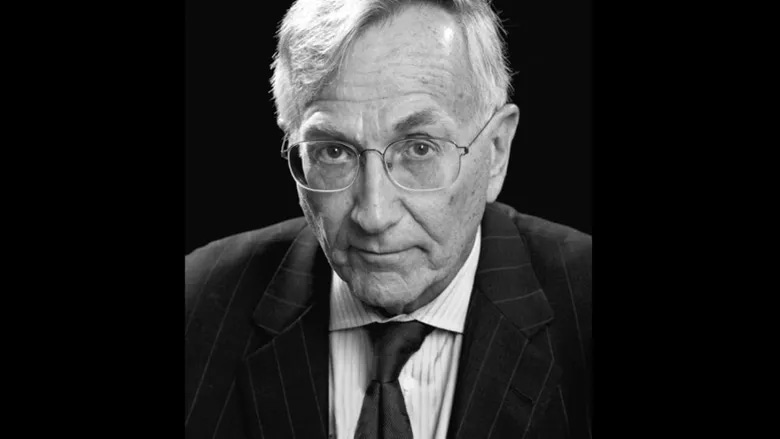
Hersh’s bin Laden story is of course the most famous instance of this phenomenon. Hersh apparently lost his connection with The New Yorker over the story, and lost much of his credibility as well—all subsequent Hersh stories seem to have an asterisk affixed to them. My hunch is that he was basically right about the story, but it’s the sort of thing—and this for an era-defining global news event—that we may never know the truth about. For instance, a New Yorker editor who passed on the bin Laden story is quoted by Natalia Antelava as saying, “We tried and tried but it just didn’t check out.” It wasn’t that the story was refuted—but it becomes difficult to follow past Hersh’s highly-placed and suspiciously omniscient single source.
Same goes for Hersh’s story on Nord Stream. His ‘source’ here has “direct knowledge of operational planning” for the Nord Stream sabotage—and enough so to give the flavor of conversations held by a highly-secret White House advisory group in the run-up to the attack. There’s no particular reason to doubt Hersh or his source, but the anonymized reporting means, also, that the story may never be enterable into the public record.
In the case of Nord Stream, though, the story is a bit more straightforward than Abbottabad—it also seems by far the most likely scenario of what happened. It’s worth pausing a moment to realize that the conventional narrative—what we’re all expected to believe—is that Russia destroyed its own pipelines, forgoing its own leverage over the European energy market. For instance, The New York Times’ reporting on Nord Stream is, really, a dog’s breakfast of hypotheses, none of them making any particular sense. “Some officials speculated about the many ways that Russia might gain, even though the pipeline carries its gas,” The New York Times wrote—although some separate slate of officials surmised that “nongovernmental actors could have committed the pipeline sabotage.”
In fact, as Hersh notes in his piece, Biden had called his shot. He had said, in a press conference on February 7, 2022, “If Russia invades, there will be no longer a Nord Stream 2, we will bring an end to it” and, when asked for specifics by a reporter, had said, “I promise we will be able to do it.”
The rest of the operation is, in Hersh’s telling, fairly clear-cut. The U.S. foreign policy principals—Blinken, Sullivan, Nuland—delegated the planning to a CIA working group, which assigned it to the U.S. Navy’s Diving and Salvage Center, and selected that outfit specifically in order to work around Special Operations and to avoid having to report to Congress. The operation was carried out in collaboration with Norway and using a planned NATO exercise in the Baltic, BALTOPS 22, as cover. The only real hitch, in Hersh’s telling, was that Biden at the last minute wanted to augment the operation’s plausible deniability and insisted that the detonation occur through a timed device so that it would be more difficult to trace to BALTOPS 22—a decision that may have helped to keep the operation covert but led to a failure to detonate one of the pipelines and, apparently, engendered frustration within the intelligence community.

That anger largely accounts for how Hersh managed to get his story. In an interview for Jacobin on the piece, he explains, “There was a lot of anger and hostility. This is obviously reflected in the fact that I’m learning so much about it.” On the one hand, there’s a begrudging respect for Biden’s audacity in pulling off the strike—the epitome of ‘Dark Brandon.’ “I gotta admit the guy has a pair of balls. He said he was going to do it, and he did,” Hersh’s ‘source’ tells him. But, on the other, some tergiversation on Biden’s part upset the mission’s operatives. And there are real questions about whether an operation like this is worth the risk. “This is not kiddie stuff,” Hersh’s source said, adding that if the act were traceable to the U.S. it would be “an act of war.” Which is Hersh’s own view. “I think, basically, that we’ve bitten deep into something that’s not going to work,” he told Jacobin. “The war is not going to turn out well for this government.”
From my perspective, I’m sort of on the side of Dark Brandon with this. It’s easy to forget now, but in 2022 Nord Stream really was a political weapon. Germany’s early response to the Ukraine invasion was anemic and much of that had to do with years of reliance on Russian energy. The U.S. foreign establishment feared—and I think they were right—that Russia’s war strategy hinged on a stick-and-carrot game with Europe. Germany would confront energy shortages in late 2022, which would result in a softening of Europe’s resolve towards Ukraine and would make Nord Stream an ever-more tempting option. By sabotaging the pipeline, Biden removed a key piece of Russia’s leverage over Europe. Hersh calls the decision unconscionable—“the point is that Biden chose to make Germany cold this winter and that to me is appalling,” he says—but this is hardball politics and a cold winter in Germany strikes me as a reasonable price to pay for ending Germany’s energy fealty to Russia. But in the Jacobin interview Hersh hints at the darker forces at work in the strike. “The people in America and Europe who build pipelines know what happened,” he said. “I’m telling you something important. The people who own companies that build pipelines know the story. I didn’t get the story from them but I learned quickly they know.” In other words, Hersh is claiming, what this is really about more than anything is energy geopolitics—the U.S. (with Norway as a partner) cutting Russia out of the European energy market and opening the door for themselves.
In terms of media coverage of the story, what’s conspicuous is the press’ silence. The best journalist ever comes up with a scoop that makes perfect sense—much more sense than The New York Times’ well-it-could-be-Russia-or-it-could-be-unspecified-non-state-actors verdict—and the reaction, where there is one, is to question Hersh’s credibility. The attempted take-downs of the piece—here and here—are pretty lame, with the skeptics more or less accusing Hersh of making it all up and with Tablet chiding Hersh for the use of unnamed sources while sourcelessly accusing Hersh of having been an “asset of Syrian intelligence”?! Where the legacy media is willing to absorb a story like Hersh’s, it’s imported in a curious format—tucked into a Ross Douthat op-ed in which Douthat claims that “the incomplete reveal….is a hallmark of our era” and consigns Hersh’s piece to a miscellany of stories including lab-leak, Epstein’s secrets, and UFOs that started out as ‘crank theories’ but drifted into the ‘mainstream.’

I’m in a somewhat similar position as Douthat—the unnamed source and lack of corroboration do mean that the Nord Stream story for now remains in the conditional tense of the-world-according-to-Seymour-Hersh—but I wouldn’t be so quick to see that as a ‘hallmark of our era.’ Basically, this dimension always exists of states acting in extra-curricular ways and engaging in plausible deniability. It’s not ‘conspiracy’—it’s a realm that very much exists but that we will always have incomplete knowledge of. In an interview on his career, Hersh describes the media of the ‘50s and ‘60s as being really hopelessly naive when it came to what the intelligence world was up to—a naïveté that was overcome in large part thanks to the exertions of Hersh himself. We may be subject to a very similar type of naïveté—some belief that these sorts of covert actions are a thing of the past, accompanied by a conviction that if they actually did occur then the redoubtable press would be quick to uncover the truth of them—and miss the power of plausible deniability as well as the extent to which the legacy media runs interference for the national security apparatus (with The New York Times’ “Sabotaged Pipelines and a Mystery: Who Did It? (Was It Russia?)” article as a case in point). It’s not, as Douthat would claim, that we’re in the ‘age of the incomplete reveal.’ It’s that, much as there was in the ‘50s or ‘60s there’s a fairly tight constraint on what is ‘respectable news’—and which is easily manipulated by the national security apparatus.
And it’s worth taking a moment to beat the drum here for Substack—and how exciting it really is that a journalist of Hersh’s caliber has turned his back on the entirety of traditional media and set up shop in Substack. In an impassioned intro to his Substack he writes:
I’ve put in my time at the major outlets, but was never at home there. More recently, I wouldn’t be welcome anyway. That’s where Substack comes along. Here, I have the kind of freedom I’ve always fought for. I’ve watched writer after writer on this platform as they’ve freed themselves from their publishers’ economic interests, run deep with stories without fear of word counts or column inches, and—most importantly—spoken directly to their readers. Substack simply means reporting is back . . . unfiltered and unprogrammed—just the way I like it.
In other words, the wheel has come full-circle. We’re in a very similar journalistic climate to where we were in the late 1960s with the rise of the alt-weeklies and with Hersh publishing his My Lai exposé through The Dispatch News Service (and getting similarly cold-shouldered by legacy media). The alt-weeklies were a good development then, as a forum like Substack is now. The ‘credibility’ of legacy media often means an overly cozy relationship with the powers-that-be—and nowhere so much so as with stories that pertain to the national security complex. That’s where a genuinely independent public forum is of incalculable value—not because every story it gets is right (it’s not impossible that Hersh is being fooled by his sources) but because it opens the aperture much wider and allows us to glimpse some very uncomfortable truths.
ESCALATION OF THE UKRAINE WAR
If the major story this week is Nord Stream, the major event is of course escalation in Ukraine—Russia initiating its spring offensive and the U.S. (and to a lesser extent Germany) supplying tanks and on the verge of supplying fighter jets.
As has been a habit, I’ve tried to give a hearing to the peaceniks—to Andrew Bacevich in Tom Dispatch, to Thomas Fazi in UnHerd, and, for that matter, to Hersh. And it is worth pausing to consider what we’re really doing here. The United States is steadily dialing up military support to a war on the other side of the world, against a very dangerous adversary, and with little possibility of actually ‘winning.’ As Fazi writes of the delivery of tanks to Ukraine, “This is simply the latest in a long list of red lines that the US and NATO have crossed since the start of the conflict.” He points out, accurately, that the talking-point that Western weaponry would be used exclusively for defense has already been revealed to be a fiction—and the West is now far more embroiled in the conflict than anyone ever intended to be. As Fazi writes, “We need to acknowledge that we are already at war with Russia.”
I would agree with that statement but without accepting Fazi’s extrapolation that that means it’s time for the West to back down. The peaceniks on the Left all seem to be operating from a mindset that the United States is the only power and the only nation capable of imperial action—so that, for instance, Russia’s invasion of Ukraine must be, through some bank shot, the result of NATO’s enlargement in Eastern European. As Bacevich somewhat jaw-droppingly writes, “However grotesque, Putin’s ambitions in Ukraine seem almost modest by comparison [with the Iraq War]. Through an invasion and war of choice, he sought to reassert Russian dominance over a nation the Kremlin had long deemed essential to its security.” This is a classic case of fighting the last war. The peaceniks—Bacevich, as well as Chris Hedges and Jonathan Cook —can’t help but see Ukraine as another iteration of Iraq, Afghanistan, and Vietnam, the United States government cooking up excuses to fight a foreign war that will benefit only private military contractors. Always missing in these analyses is the possibility that somebody else might be capable of independent action—that Russia might be capable of a unilateral invasion; that Ukraine might have a right to self-determination. As much as I respect Hersh, and am taken by his admonition that “we’ve bitten into something that’s not going to work….the war is not going to turn out well for this government,” I don’t exactly see what the alternative is. Russia invaded Ukraine for its own reasons. The Biden administration really was very lukewarm about providing meaningful military aid to Ukraine in early 2022, but once Ukraine proved its willingness to fight and to fight capably there never was any option of disengaging. At this stage, with Russia clearly ramping for a brutal 2023 and a very long war, the failure to provide adequate armaments to Ukraine would amount to acquiescence to Putin—and would lead to the very real risk that Ukraine could still be overrun.
A strategic analysis in Der Spiegel, and an interview with a ‘civil-military relations expert’ in Meduza, paint what strikes me as a fairly realistic view of what to expect over the next months and years. “In my view, Moscow’s logic is that Russia will benefit from a longer war,” says the expert in Meduza. In Der Spiegel, Michael Kofman, the director of Russia Studies at CNA, is quoted as saying that the Russian proposition is “straightforward”—hinges on grinding down the Ukrainian military with wave upon wave of fighters even if under-equipped and poorly trained. The trick to that approach is to simply be tougher than one’s adversaries—and to assume that, sooner or later, the desire to negotiate will be ascendant in the U.S. and Europe. "That is a very Russian way of war,” said William Wechsler of The Atlantic Council. "That’s how they beat Napoleon, that’s how they beat Hitler, by outlasting their opponents.”
For those in the West, that’s a daunting challenge. It means that Putin is betting on an essential lack of toughness—as well as on fissures that will emerge from the democratic process. It means also that it’s not even really worth talking about what the end of the war will look like—it’s unrealistic to expect that Putin will fall and it’s a surety that he won’t withdraw from Ukraine—and what’s called for is the toughness that the Ukrainians have already demonstrated. In Foreign Affairs, Michael McFaul, the U.S.’ former ambassador to Russia, argues persuasively that it’s time to give up on incrementalism—that Putin will respond only to force and to battlefield defeats and that it’s worth meeting Russia’s 2023 campaign with a massively stepped-up weapons package. I suspect that he’s right, although the West still isn’t ready to think in these terms and is still hoping that the conflict will somehow go away. In UnHerd, Fazi writes, “Delaying the inevitable outcome [of a deal] simply means imposing more unnecessary death and destruction on Ukraine”—which is symptomatic of the extent to which so many in the West still do not get what this really about. The West is ‘imposing’ nothing on Ukraine. The Ukrainians are determined to fight and desperate never to fall to Russia. That may be unpleasant to accept for those who would prefer an exit strategy, but it’s the reality—that it’s still essentially a Ukrainian fight and the least we can do is support them.
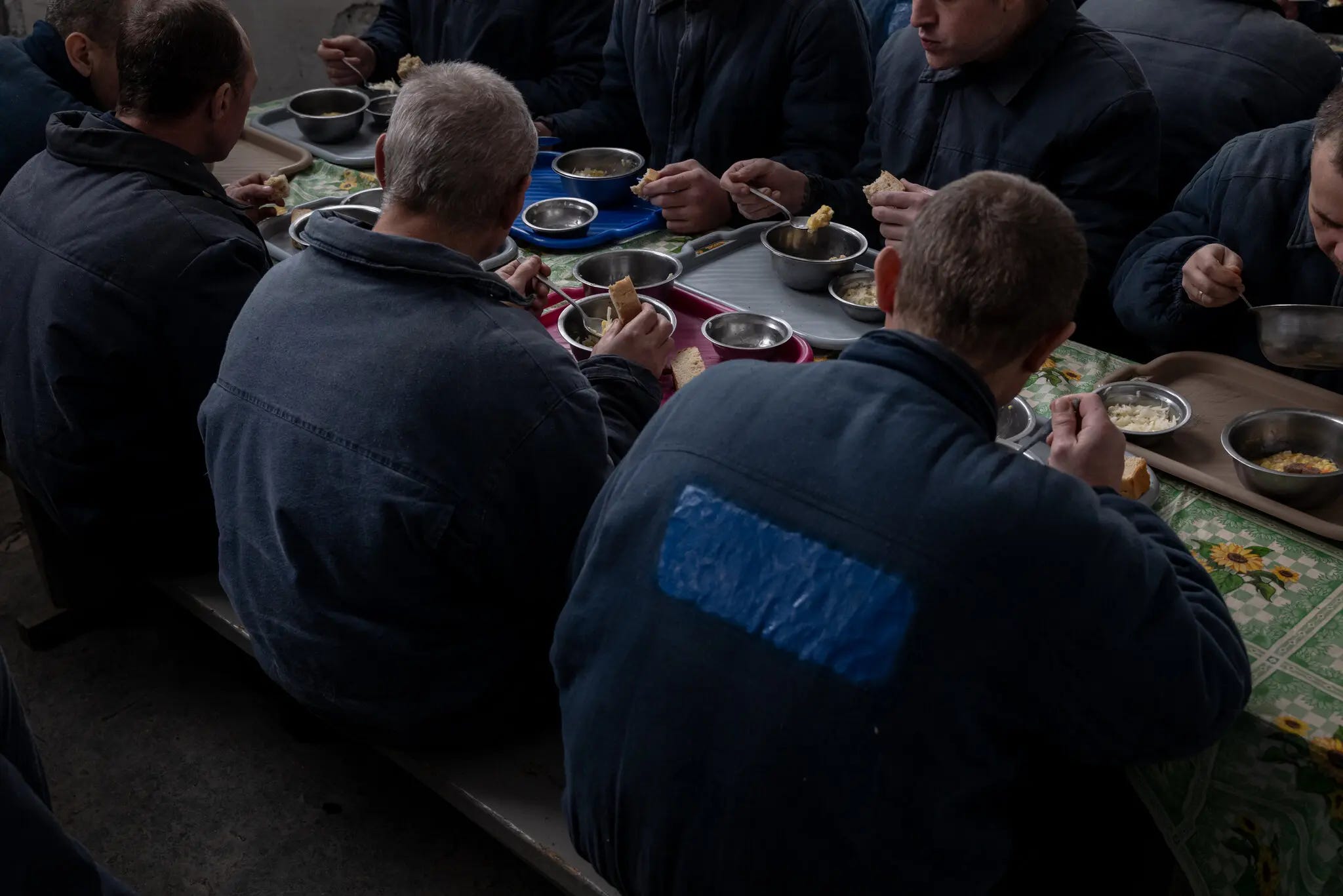
There’s a bracing New York Times piece featuring interviews with captured Russian convict soldiers. These are printed with all due caveats but are completely consistent with all available reporting on how the convict soldiers have been used—as cannon fodder in human wave attacks. “These orders [for a human wave assault] were common, so our losses were gigantic,” one of the captured soldiers said. “The next group would follow after a pause of 15 or 20 minutes, then another, then another… Nobody could ever believe such a thing was possible.” Included in the descriptions of the convict soldiers’ attacks is a tacit acknowledgment that such tactics are effective— they may well have proved decisive in Bakhmut—and are emblematic of Russia’s style of waging war. This is the sort of toughness that Putin believes Ukraine and the West cannot contend with—and, terrifying as it is, we have to stand up to it.
‘GENDER-AFFIRMING’ HORMONES
I’ve avoided writing about trans issues up to now because it’s struck me, on the whole, as being all about personal choice—people should get to identify as whatever gender they want.
That’s a straightforwardly liberal perspective, and when trans issues came forcefully into public space around a decade ago, it seemed like there was almost nothing to talk about. My feeling was that, as a society, we had come to a really wonderful and surprisingly robust consensus on homosexuality—that people’s sexual orientation was their business; and it was up to society to create safe space as much as possible. Transsexuality seemed like a fairly straightforward extension of all the same points— and there was no real issue in, for instance, making bathrooms unisex.
That’s still essentially my position, but, from a cultural perspective, it has been startling to me how much the society has ripped itself apart over trans issues—the Jordan Peterson, J.K. Rowling controversies, etc, are all fundamentally about trans expression. The news this week is about Scotland’s First Minister Nicola Sturgeon resigning over her trans prison policy. And at some point it becomes impossible not to be aware of Tavistock in the U.K. or of the Washington University Transgender Center at St Louis Children’s Hospital.
The Free Press, which has been just astonishingly good, has an anguished whistleblower account from Jamie Reed, who worked for four years as a case manager at the Transgender Center and ended up feeling that what was happening to patients at the clinic was “morally and medically appalling.”
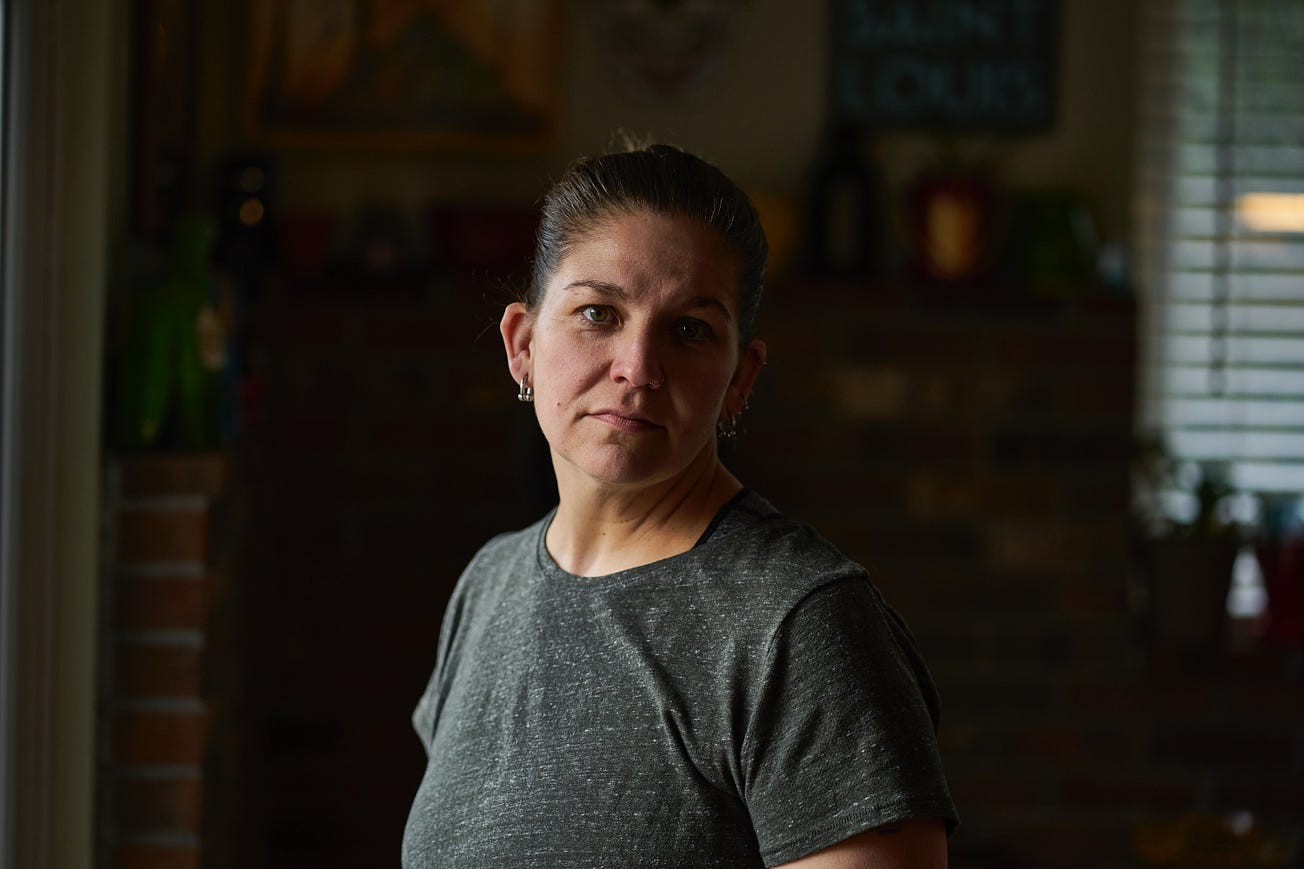
What needs to be clear about this issue is that it’s not about gender self-expression, it’s about medically irreversible medical procedures done to minors without adequate oversight, adequate involvement of parents, or adequate explanations of what hormone treatments entail.
Working as a case manager, Reed noticed the disjunction between the rosy discussions of teen transitioning and the reality at the Transgender Center. Rachel Levine, U.S. assistant secretary for Health and Human Services, said in an interview with Reuters that “Clinics are proceeding carefully and no American children are receiving drugs or hormones for gender dysphoria who shouldn’t.” And, meanwhile, the Center wrote on its site, “The studies we have show [transitioned] kids often wind up functioning psychosocially as well as or better than their peers.” All of which was very different from what Reed experienced. She noticed clusters of girls arriving from the same high school, noticed patients declaring disorders that no one really believed they had, therapists giving the go-ahead for transitioning after “one or two short conversations,” parents using the Center as a way to get at estranged partners, doctors accepting referrals of clearly-disturbed teenagers from the inpatient psychiatric unit at St Louis Children’s Hospital, doctors declining to properly explain to teenage patients the side-effects of highly-potent drugs, including, in many cases, sterility.
The climate Reed describes at St Louis Children’s Hospital feels very similar to Canada’s MAiD program or, for that matter, the prescription-happy trends of North American psychiatry in general. Clinicians know that they are being lied to and manipulated—“the doctors privately recognized the [prevalence of] false self-diagnoses as a manifestation of social contagion,” writes Reed—but seem to be incapable of saying no to patients. And there is a startling lack of willingness to see beyond a very narrow ethic of medical obligations and to think of what truly is in the patient’s best interest. This is the case in the MAiD program and is the case also with ‘gender-affirming’ transgender care—a willful blindness to very stark consequences. “After working at the center, I came to believe that teenagers are simply not capable of fully grasping what it means to make the decision to become infertile while still a minor,” Reed writes.
Meanwhile, the New England Journal of Medicine publishes a two-year study holding that a teenage cohort receiving gender-affirming hormones had “improved appearance congruence and psychosocial functioning.” This was seized on by media outlets to claim that, as The Washington Post put it, “In the largest study of its kind in the US, researchers found that gender-affirming hormones have a positive effect on transgender teens’ mental health.” On Substack, Jesse Singal has a very through take-down of the study’s methodology—revealing it to be essentially worthless. The study intended to test eight variables, but by the time of publication “six of those variables were nowhere to be found.” Two of the participants in the study committed suicide—which was not statistically insignificant in a cohort of 315. (Suicidality was one of the dropped variables.) And the improvements in the two tested variables were minuscule (e.g. 1.6 points on a scale of 100 for ‘positive affect’). All in all, a very different result from how it was spun by The Washington Post or the Transgender Center, but it’s the spin that prevails—and a study like that in the New England Journal of Medicine makes it very difficult to introduce any note of caution against gender-affirming hormones.
Again, these dynamics feel more-than-familiar and from issues that have nothing to do with transsexuality. What we’re dealing with here is the nexus of the pharmaceutical industry, a compliant approach by medical caregivers, and a progressive tendency to fail to exercise any common sense or restraint. My sense of the underlying cultural issue here is that somewhere in the long road to gay liberation, a dictum was established that sexual orientation was nature not nurture. This was effective in avoiding regressive gay conversion therapy, but it created a vision of sexuality that’s different from how anybody experiences it—which was that one’s sexual orientation is fixed from birth and nothing in a person’s life could possibly change it. Carried over into the conversation on transsexuality, that perspective became the famous ‘trapped in the wrong body’ dictum—i.e. that there was a core gender identity, fixed from birth, distinct from physique, and inalienable. Unfortunately, that view moved the emphasis decisively away from choice—and, as in the case of Tavistock or the Transgender Center, away from reckoning with the fraught ramifications of medical transitioning. There may seem to be something odd in the skepticism of the ‘heterodox’ or the ‘intellectual dark web’ towards gender-affirming care, but, really, the debate isn’t about transsexuality, it’s about the ability to make free choices. There’s no issue whatsoever with medical transitioning for anyone over 18, but it’s become clear that something has gone wrong with the teenage cohort—that teens are transitioning at ages where they are overly subject to social pressures and unable to make fully free decisions; and that the medical establishment is unwilling to put up sufficient safeguards.
UFO BALLOONS AND ‘THE DARK DEAL’
I’m pretty uninterested in the balloons saga. New York Magazine has a good write-up on it, which argues that this was a ‘known problem’ that nobody paid attention to for years. A group of ‘aerospace hawks’—notably Tyler Rogoway, who writes The War Zone—had been arguing that, as New York puts it, “Balloons and drones have been probing our defenses for years now; we simply weren’t looking for them in an organized way.” Aerospace defense was alert to attacking bombers or missiles and wasn’t paying attention to slow-moving stray objects. As a consequence, Rogoway argued in a 2021 piece, “It is clear that a very terrestrial adversary is toying with us in our own backyard using relatively simple technologies—drones and balloons—and making off with what could be the biggest intelligence haul of a generation.” In other words, nobody other than the hawks cared much about these things—and then, suddenly, for some reason, everybody cared about them this week.
It’s worth emphasizing that the easily-shoot-downable balloons are different from the fast-moving, hard-to-comprehend objects that had been observed by Navy fliers for years and were reported on by The New York Times in its 2017 story on the Pentagon’s UFO program. There aren’t a particularly good explanation for those—although Rogoway makes an interesting case that they may be radar reflector-toting balloons. The balloons shot down by NORAD this week are in line with what the ‘aerospace hawks’ have been worried about—low-cost espionage hardware that can, as Rogoway writes, “gather intelligence of extreme fidelity on some of America's most sensitive warfighting capabilities.”
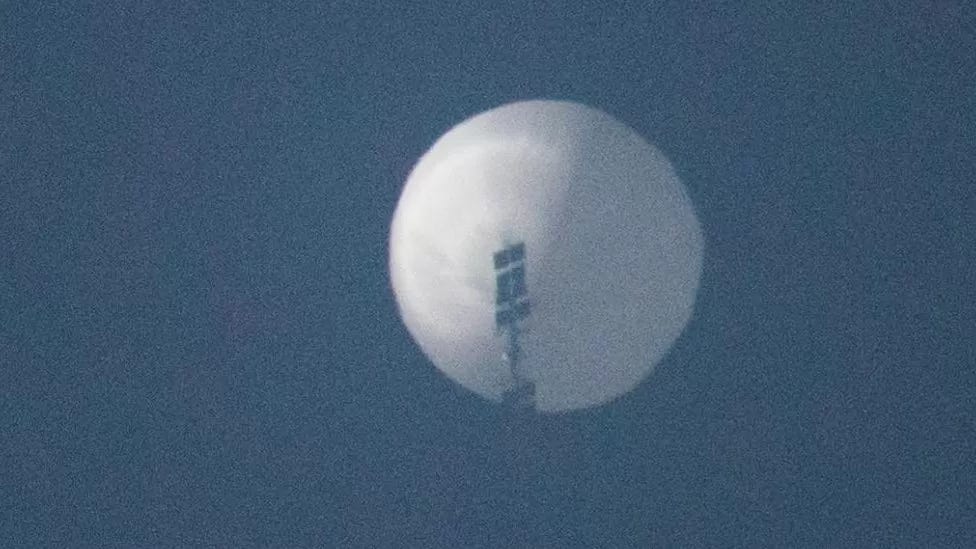
What we may be waking up to with all of this is how robust China’s espionage efforts in the West really are—and cast a wider net than how we would typically think of spying. Curiously, a number of stories—that China has funded ‘police stations’ across the West, that China has funded political candidates in Canada, that China has been hoovering up a variety of business secrets—haven’t particularly registered in public consciousness, and no matter that the FBI and MI5 have been freaking out about it. The spy balloon may be the turn of the dial here—the moment when we acknowledge that China’s infiltration of the West is much more pervasive than we tend to realize.
Along these lines I was struck by an an op-ed by the ever-interesting Yanis Varoufakis, who attempts to see the world at this moment from China’s perspective and argues that China is very close to decoupling from its long-standing economic alliance with the West. Yaroufakis quotes a Chinese official as saying, “Our ‘Dark Deal’ turns on the US trade deficit, which keeps demand for our manufactures high. In return, our capitalists invest the bulk of their dollar superprofits into America’s FIRE [finance, insurance, and real estate]. Once this process got underway, America shifted much of its industrial production to our shores.”
But as China develops its own tech and financial infrastructure, there’s no longer any particular need to invest in America—or, for that matter, in China’s own manufacturing industry. “As America’s new cold war threatens to squeeze Chinese conventional capitalism, China could end the Dark Deal that keeps it tied to US hegemony by mobilizing its homegrown cloud finance and pursuing a growth model that no longer relies on the US trade deficit,” Varoufakis writes.
I’m not sure that what Varoufakis is describing will actually happen. He is particularly taken with WeChat, which he describes as “a potential game changer….amalgamating China’s Big Tech and finance” in a way that the American tech sector has never done—but I’m not so sure that that will have the vast geopolitical consequences Varoufakis assigns to it. And Varoufakis concedes that an abandoning of the industry-first model by the CCP will “incur the wrath of China’s traditional capitalists.” Still, what Varoufakis is describing seems like the right big-picture way to understand our era. The U.S. entered into its “dark deal” with China, which essentially ended American manufacturing and hollowed out its old industrial heartland. As the United States enters into a posture of greater hostility with China—which does seem inevitable given the political incompatibility of the two systems—real leverage is with China, which has the ability more or less to flip the switch and stop floating the U.S.’ debt and trade deficit.
Hii. Just wondering if you have reconsidered any of your thinking about transgender care after the wave of press which better situated Ms Reeds “whistleblower” complaint as inaccurate and ill-construed. (I put whistleblower in quotes because I don’t consider the Free Press capable of the due diligence a major news outlet would need to evaluate a claim like this and also that Ms Reed chose not to take her whistleblower complaint to the large university system she worked for, the local paper or the States AG office ). The recent reporting on her claims are simply that her comments could not be corroborated and in most cases discovered to directly contradict the policies and documented practices of the clinic. Her complaint worried me at first but it seemed off at first glance. I know how difficult it is to get this care anywhere even if you have insurance and how much counseling you need before they even talk about medical intervention but who knows maybe this clinic has so much money they can subsidize their care with grants or something. But no. They see a small number of folks and their care is fairly typical That is In most cases six months to a year even for adults to get any kind of medical intervention. Apparently in the past 5 years 122,000 minors have been diagnosed with gender dysphoria in the US and under 15,000 have had some sort of pharmaceutical therapy for it. So I know you are enthusiastic about the Free Press and Bari in particular but it felt like a pretty shoddy product breathlessly hyped and not responsible journalism in the end.
Thanks for the term "dog's breakfast" (new to me, but a lot of things are) and for alerting me to Hersh's Substack. I've thought about pitching The Free Press, and you've now given me a nudge to do so. You capture the heart of the issue with current discourse about transitioning. It's related to the controversies about certain books in school libraries, which I can't say that I feel strongly about one way or another. But on the NY TImes' podcast The Daily, there was an episode last fall about parents who are concerned about their kids being encouraged, by teachers or staff, to read books that include instructions about how to hook up with someone on dating apps. And it does trouble me greatly to read that teachers and counselors frequently hide conversations about gender from parents. A friend of mine has a child who has changed their name after graduating from an elite women's college where this apparently was a popular thing to do. He is trying to be supportive, but there is real pain there. I'm not saying that a parent has any explicit right to name a child for life (this has always seemed a little odd to me), but there often is some emotional investment in a name, some tie to family history, that it is fairly insensitive to dismiss. It's not just the name, there's a lot of grieving involved regarding memories of a child's early years, maybe some guilt about overt or inadvertent gender norming. It often feels, though, that one must simply pick a side and be either an ally or an enemy, the way Ibram Kendi forces everyone into either racism or anti-racism. What I wonder, about my friend's eldest, is whether they felt that remaining conventionally gay (as they'd been through high school) would have been abnormal, if there was some degree of in-grouping happening there. But I suppose once someone is an adult, they make their own decisions, and it's not as if these newer versions are so different from the hippies who gave up privilege to live off the land and raise their children in ways that their grandparents thought to be feral.