

Dear Friends,
I’m doing my monthly roundup of political news (which I really will try to do on a strict monthly basis going forward). All kinds of interesting things at
.Best,
Sam
TRUMP AND MUSK AND THE CURDLED BROMANCE
Well, this is just embarrassing now. With the Musk rupture, the wheels come off the Trump rebrand, the ‘One Big Beautiful MAGA.’ What’s finished is the notion that he can pivot to an alliance with Silicon Valley — and with anybody else who really gets liberalism stuck in their craw — and what’s finished also is the ‘vibe shift’ and, as
puts it, “the promise of turning his presidency into a broader, more forward-looking project.”What’s left is Trump as he’s always been — a petty tyrant who likes tax cuts and palace drama, and who views the presidency primarily as a stepping-stone to his own enrichment.
What’s helpful for the rest of us about the Musk fracas is that it really does serve to clarify what the faultlines are in the administration and what Trump II is really about. And the reason it seems to have been confusing — the reason that I, for instance, seem to keep saying contradictory things about Trump — is that it is confusing and even Trump’s closest associates aren’t clear on what he really wants to do with his power.
My sense of how this is playing out is that the heart of the administration is Stephen Miller and Co, promoting the straight MAGA line, which is mostly hardcore deportations. The mainline of the administration is similarly in tune with the Republican leadership, which is the old nonsensical position of cutting taxes while at the same time increasing military spending and trying to make the numbers work by depriving the poorest and most vulnerable members of the population, in this case by cutting into Medicaid and SNAP. That’s been the standard-line Republican position for a while. It’s what’s in the Big Beautiful Bill and it’s surprising that Musk objected to it so strongly — it seems that he just doesn’t really understand how American congressional politics actually works, that every bill is ladled with pork, that the GOP always cuts taxes for the wealthy, and that the money that can’t be stolen for the poor is fobbed off into the ever-growing deficit. The Musk strain had been a brief irruption of a kind of Silicon Valley libertarianism into Trump-world — treating government as a company and engaging in layoffs and cost-saving at the moment of acquisition — but that idea seems, once again, to be dust-binned. It is surprising that the split between Trump and Musk — which was inevitable — turned on such ideological points. As Mounk puts it, “Mercurial and self-serving though he may be, Musk does appear to be a man of conviction” — and Musk seems, really, to have bought into the small government crusade. With Musk’s departure, that wing of the administration reverts back to the control of Russell Vought, who, as The New Republic puts it, was really “Musk’s puppet master” all along, and that will likely mean the continued terror campaign against the bureaucracy — the “trauma” that Vought promised back in 2023 but without the same deep budget cuts that Musk was hoping to deliver. Bannon, meanwhile, appears to be auditioning even harder for the role of Grigory Rasputin, and if he had been temporarily aligned with Musk in the vision of deep budget cuts particularly at the Pentagon, he now seems to have moved on to just giving the administration airy and apocalyptic advice. And then Rubio, steadily expanding his fiefdom, will of course conduct a foreign policy tailored entirely to benefiting Marco Rubio.
So the dust kind of settles and we get back to what, actually, I initially thought Trump II would prove to be — Trump would sow the chaos and largely cancel himself out, the deep tax cuts would at some point in the later part of the administration affect the US’ ability to carry out core government services, and the US would, with a great deal of fanfare and showmanship, retreat from relevancy on the world stage.
The Musk sideshow — kind of like the Bannon sideshow in the first term — seemed to point towards something else, a more sweeping vision of what MAGA might stand for. But no longer. And it’s hard not to conclude from this that Musk’s real relevancy in American politics is at on end. As The New York Times reported, “For their part, Mr. Musk’s friends and associates said they were in a state of disbelief over the acrimonious and abrupt break, and spent Thursday glued to their computers and phones as they watched their friend joust with Mr. Trump, unsure of his plan.” The solution to that riddle may well be that there is no plan. If there was a moment, last fall, when it seemed like Musk was the generalissimo of American politics — buying Twitter had been a grand plan to take over the public sphere in order to elect Trump, at which point Musk would be indispensable to the new administration — it seems like he badly misjudged who Trump was, and the political capital of that $290 million he plunged into Trump’s campaign, if not the $44 billion he spent on Twitter, evaporated over the course of an afternoon’s tweet storm. Ah well. What’s money anyway? I’ve always felt that Elon was essentially hot air and I’d expect a long-spiraling spectacular collapse from here on out. As The New York Times recently reported, the drugs are a problem, he seems to get sucked into playing video games for hours on end — so much for having his entire day efficiently scheduled into five-minute intervals — and if he can’t have a merger with the US government, as was clearly the plan, then his political importance rapidly fades.
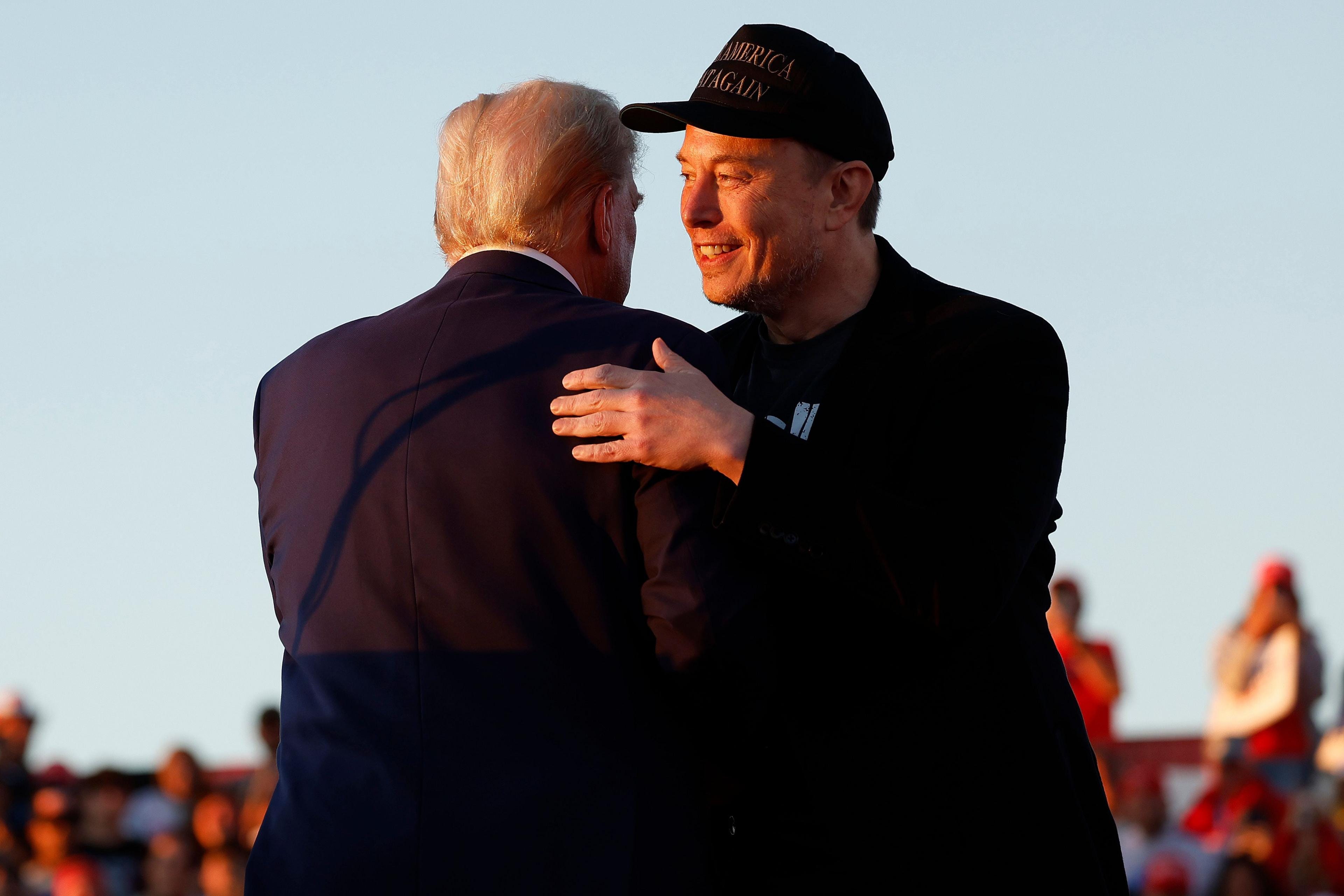
That leaves Trump fomenting the Daily Outrage, Trump running the first reality show presidency — which kind of reached its apogee during the Elon spat — Trump passing the ‘Muslim Ban,’ Trump trying to deport illegal immigrants at the tune of 3,000 a day and at the expense of actually policing crime, and Trump carrying out his vendettas against political rivalries. And that, unfortunately, he does have the capacity to do.
Miles Taylor — the deanonymized “Anonymous” of the famous op-ed — gave a searing interview to Politico in which he discussed how Trump had hounded him, not only removing his security clearance but removing those of people who attended his wedding and committed the crime of also being involved with the University of Pennsylvania where Taylor is a part-time faculty member. “What surprised me was that so quickly into the administration, they made the jump into individualized investigative executive orders against named critics of the president,” Taylor said. “That’s pretty alarming, that the president now wields that pen as a literal sword against free speech.”
Yes it is. I am becoming ever more convinced that Trump represents a kind of tattered version of a playbook that has already unfolded in Russia, Turkey, Hungary, maybe El Salvador. Cultural issues are deployed in order to eliminate as much of the free press and civil society as possible, optimally the judiciary. The result is that the executive becomes a kind of free-floating entity not bound by any particular administrative constraints and with its occupants becoming fabulously rich in the process. In the other countries I’ve named, the leaders proceeded step by step over a decade or two. Trump is trying to do it in a sped-up form but fighting against his own penchant for distractibility and mayhem. So that will be the next years — Trump at war with civil society, courts as the main battlefield, and the conflict playing out with any institution or individual that has the temerity to cross him.
DA DEMS

What is important to understand, though, is that, even as the chaos spirals and the Trump administration loses its ability to do any deep, meaningful reform as in the Bannon/Musk vision, he likely will, barring a global depression, remain broadly popular. He really is a master at handling social media and the news cycle and at letting crises bounce off him. The “One Big Beautiful Bill” is, actually, from a public relations point of view, exquisitely designed. It’s, I would say, pretty much exactly what the ‘base’ wants. They like the original 2017 tax cuts. They like the idea of cutting Medicaid and welfare, which is coded as essentially benefiting the urban poor. The loss of tax revenue and escalating debt that the bill represents doesn’t particularly bother the base. And tax exemptions for tips is likely to be an electoral winner.
The combustion all around Trump isn’t going to help the Dems, unless they do something and figure out a narrative pronto. I haven’t actually read the Tapper/Thompson book, and, based on the excerpt of it in The New Yorker, may not have the stomach to. What it should serve as is a wrecking bill for the current iteration of the Democratic Party — proof that the building is rotting and the shell needs to be knocked down. The point was the vast cover-up — the apparatus of the Democratic Party both hiding Biden from the public and from real decision-making, Obama gingerly leading him offstage at fundraisers when he got confused about where he was, everybody maintaining a conspiracy of silence. “It was like watching someone who was not alive,” one Hollywood star recalled of seeing him in 2022. Nobody was able to get through to him in the entire period from fall 2022 to summer 2024, and it seems that nobody really tried. The ensuing race is dismissed by David Plouffe as being “a fucking nightmare,” with Kamala — in probably the most condescending description that has ever made of a US presidential candidate — described as “a great soldier” but unable to compensate for Biden’s selfishness. “He stole an election from the American people,” one Democratic strategist said.
The problem, of course, goes much deeper than any of that, and is about the Democrats retreating into a fearful, self-protective echo chamber with no ability to reach out and connect to voters. The solution, actually, is very simple. They just need to learn how to tweet — or to go on podcasts or to fight for the airwaves of new media. Yes, James Carville suggested “a strategic political retreat,” but Carville has a hard time resisting a reporter looking for a quote and he is wrong here. This is the time — actually, it’s been the time for a while now — to just speak as loudly and as frequently as possible. The Democrats who are rising — AOC and Jasmine Crockett — are doing it just by being active on social media. The ones who will reshape the party — Gavin Newsom and JB Pritzker, most likely — are doing it by bypassing any of their communications people and addressing the public directly, Newsom on his show, Pritzker by having incendiary and interesting things to say. This is what politics is now. There’s not a lot of room for reticence. Trump got to where he is — and has held on to his base — just by sensing that new media rewards engagement and charisma. It’s really not that hard for Dems to do the same.
The Dems do have the somewhat vexing problem that, over the past four years, they have managed to lose control of the social media platforms. X is MAGA now, as is Truth Social. But the thing to do is to just play the keys that are available to them. And I know that I’m kind of turning into, like, a door-to-door knife salesman, but the obvious platform for them is Substack. Substack doesn’t really code one way or the other. It’s not run by some mercurial tyrant twisting the algorithms around to favor preferred content. It rewards thoughtful, long-form engagement. If I were
, or anybody on the Dem side, I would be posting on Notes at least once a day, and then with thoughtful policy paper-type articles on the site. That doesn’t mean that it’s the only platform available. Newsom is doing well on YouTube. Bluesky is pointless echo chamber but it’s there. X is of course an option — and Musk himself may be back in play politically, although that seems unlikely. And Democratic politicians should be hitting the podcasts and streamers the way they used to do the morning talk shows. The party panjandrums still believe that they can communicate through The New York Times, Washington Post, CNN, and network news, and they still haven’t come to grips with the fact that the undecided voters, and the popular will, isn’t in any of those places. It’s important in analysis to know when things are actually very stupid and very simple — and this is one of those times. The Republicans are imploding from combustible egos and disarray but the Democrats aren’t necessarily poised to take advantage. The only way they can do so is if they just talk, talk, talk until they’re blue in the face, to anyone who will listen.DA WORLD
And then, meanwhile, there are actual people dealing with actual life-and-death problems, like, for instance in Ukraine.
The surprise is that Putin wouldn’t call it quits at this point with the territory that he has and figuring that he’s at his peak moment to negotiate, but, obviously, he just doesn’t feel like it — either he thinks Ukraine really will crack without US backing or he just likes what a wartime atmosphere does for his domestic standing, and enough so that he’s willing to sacrifice 1100 Russians a day for it.
Ukraine’s intransigence is even easier to understand — since any talks can’t possibly lead to a security guarantee, there really is no point in having talks.
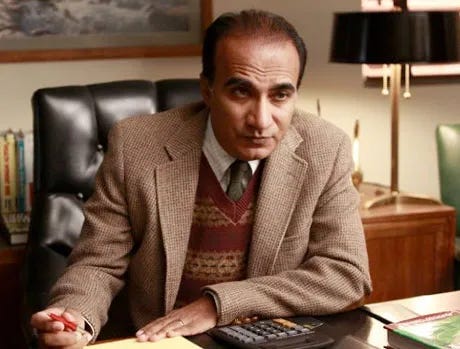
What may well be happening at the moment is that everybody is discovering that the US is not all that relevant to Ukraine. Nataliya Gumenyuk, a Ukrainian journalist, has an absorbing article in The Atlantic in which she claims that Ukraine, basically, can go it alone. The face of war has changed, since the start of the invasion, to being almost entirely drones, and, since Ukraine manufactures the majority of its drones, it has essentially adapted its way to sovereignty, “What’s keeping Ukraine in the fight is not Russian mercy, or even solely American arms: It’s innovation,” she writes. This may well be wishful thinking though. The drone operator Gumenyuk interviews comes across like the calculator-toting school principle in Glee making his combat decisions in a strictly bean-counting way. “If he could [destroy a Russian tank], he’d be removing a $1 million piece of Russian equipment from the field,” she writes. “He expended five drones, each costing $500 to $600, then agonized over whether to keep going.” I’m not sure that that particular anecdote yields much confidence in Ukraine’s long-term war-making capacities.
Former US Senator Jeff Flake has a piece also in The Atlantic in which he claims that Europe has already moved on from the US and is well on its way to taking the lead on Ukraine. “It used to be that before we committed to a position on any significant matter, we would wait to see where the United States stood. Now? We really don’t care anymore,” Flake says that a European diplomat told him.
This may also be wishful thinking, though. The Europeans are starting to get good at talking about beefing up their militaries, and their support for Ukraine, but actually doing it is another matter. They have the problems of unified command structure, of its not being clear who really is leading the way.
On a broader lens, that’s basically, though, what’s happening in the world. “Those countries that still believe in free trade need to work together to promote new free-trade arrangements (and extend existing ones) that do not involve the United States,” Malcolm Turnbull, the former prime minister of Australia, wrote in Foreign Affairs. We’re going back to the nineteen-teens, before Woodrow Wilson inserted the US in world affairs and before FDR launched the ‘national security state’ in 1937, in which the US doesn’t really matter and the world does its own thing. It must be unprecedented for any superpower to do this to itself and make itself so irrelevant.
In terms of Ukraine, where we’re going back to is essentially early 2022, before US arms have caught up and where Ukraine is defending itself through their own pluck and the good fortune of the Russians having their own problems. In seeming wonderment, Steve Bannon said, “Zelensky didn’t give the president of the United States a heads-up to say he’s going to do a deep strike into strategic forces of Russia, which is going up the escalatory ladder as quickly as you can.” I have a feeling that he suspects — as I suspect — that that’s not the whole truth. It seems very unlikely that the Ukrainians would be able to launch an attack of that sophistication entirely on their own, and what that suggests is that elements of the US security state are helping out Ukrainian operations without Trump’s knowledge. That really does bring us back to early 2022 and to US intelligence operating in totally undisclosed ways in Ukraine. So it turns out that Trump is less important to the course of the war than anybody thought. I figured that Putin’s long game was to play for his election and then, if he was elected, Ukraine would pretty much have to sue for peace, but the long game may be longer than that — with the war grinding on for the indefinite future, as long as Ukraine can keep making weapons and the Europeans (and, clandestinely, Americans) can chip in.
Do you know how Rasputin finished his life? It is ironic that the American presidents, European presidents, the Ukrainian President can't deal with one criminal, but nobody thinks about how small the Ukrainian army is and how tired the soldiers are to continue to defend the country.
Steve Bannon tap dancing for the role of Rasputin. Laura Loomer will need to raise her game.